
To stay up to date on the latest economic insights, subscribe to Macro Musing on LinkedIn.
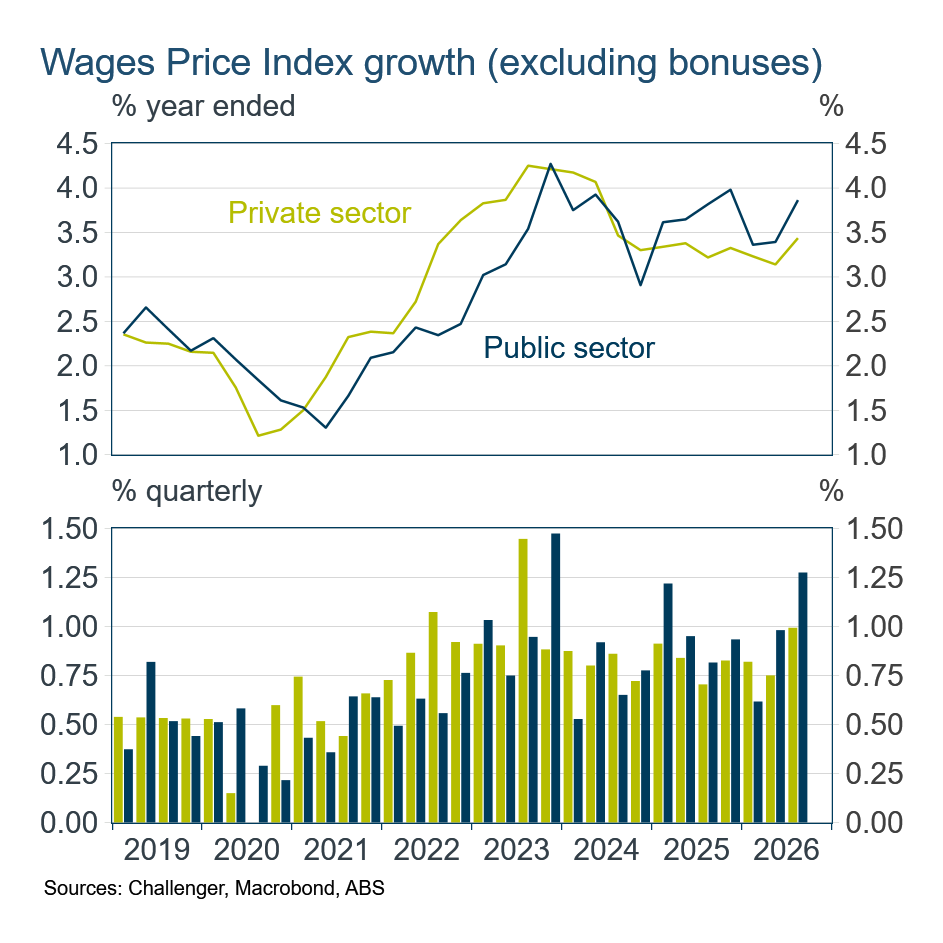
Public sector wages, as measured by the Wage Price Index (WPI), grew by 1.3% in the September quarter and 3.9% over the year, stronger than the 1.0% quarterly and 3.4% annual growth in private sector wages. Seasonally adjusted aggregate wages growth of 1.1% in the quarter was slightly higher than economists expected. The stronger-than-expected tick-up in wages growth is not great news for inflation, although given it was small it is unlikely to change the RBA’s views on policy.
Also on wages, the annual Gender Equality Scorecard reported a small decline in the gap between male and female earnings, although it remains substantial at almost 20%.
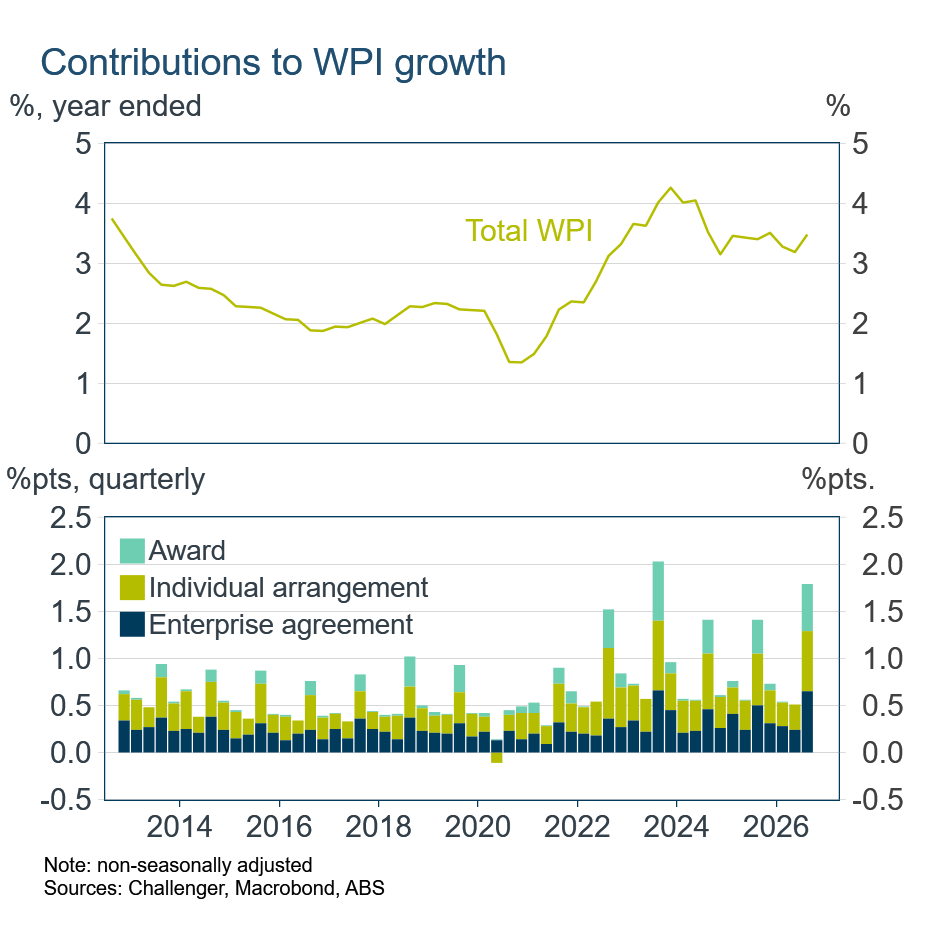
Wage growth has a strong seasonal pattern, with many wages reset in the September quarter following the annual wage review by the Fair Work Commission. Non-seasonally adjusted wages grew 1.7% in the quarter, the second highest quarterly increase in the 28-year history of the series, reflecting strong growth in the three streams of wage determination: awards, individual arrangements and enterprise agreements. Wage growth across all three streams highlights the breadth of wage pressures.
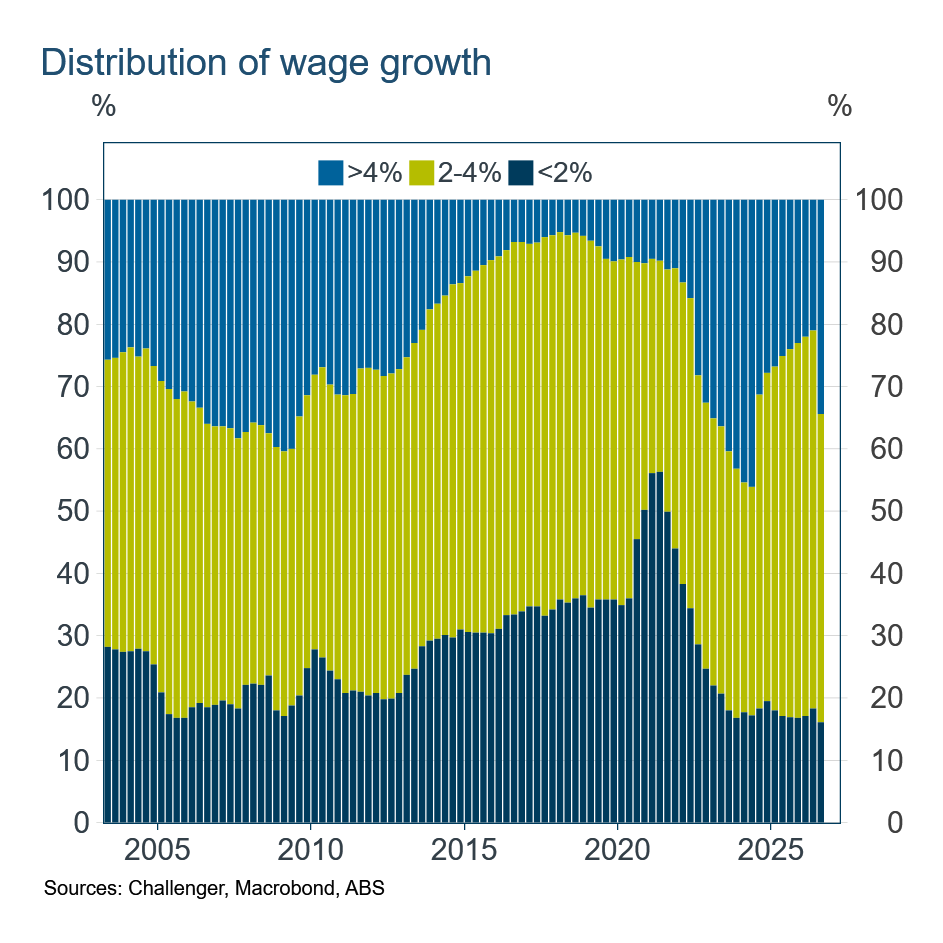
The tick-up in wage growth reflected an increase in the share of workers getting wage increases greater than 4%, to almost 35% of workers. The share getting increases smaller than 2% edged down to 16%.
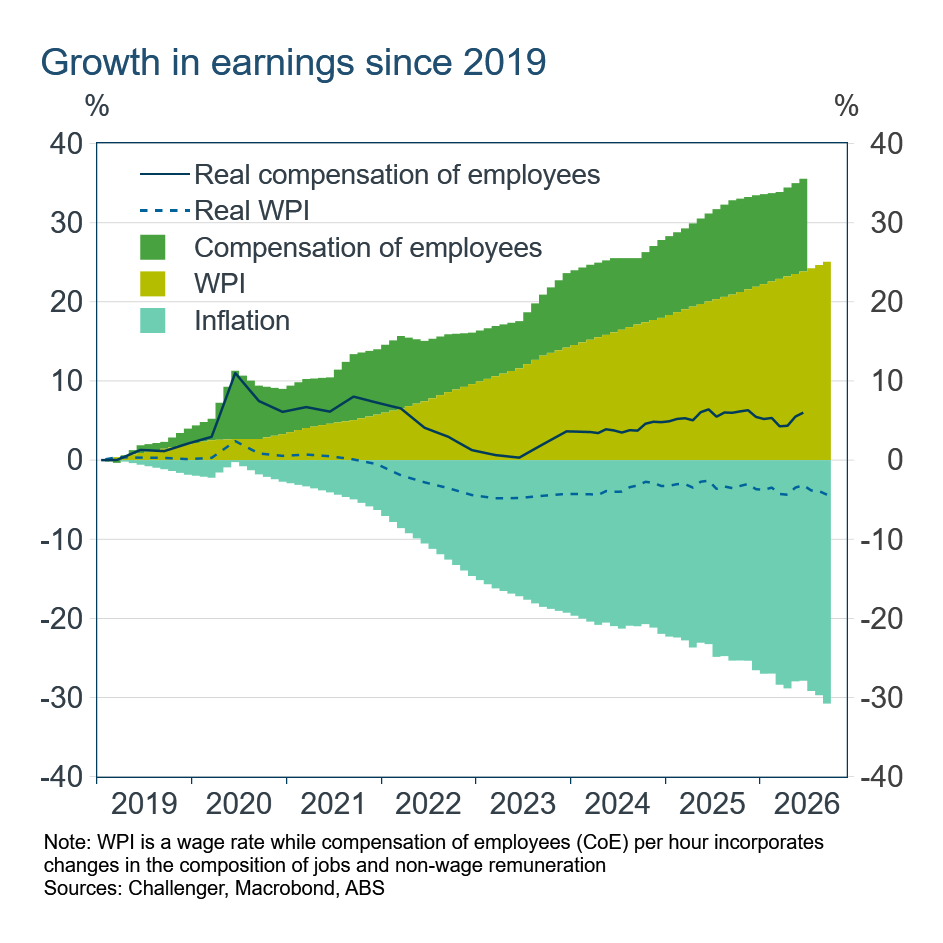
While wages, as measured by the WPI, have grown by 25% since the start of 2019, cumulative inflation of around 30% over that period implies that real wages have declined by more than 4%. However, the WPI measures wage rates for a fixed basket of jobs and does not capture changes in the composition of employment or other benefits paid to staff (although one measure does include bonuses).
A broader measure of workers’ earnings, compensation of employees per hour worked, captures these other elements, but is more volatile and so less useful as a measure of wage movements over short horizons.
This broader measure of earnings, compensation of employees per hour, has grown almost 36% since 2019, implying workers’ real hourly earnings have increased by 6% over that time, rather than falling as real WPI implies.
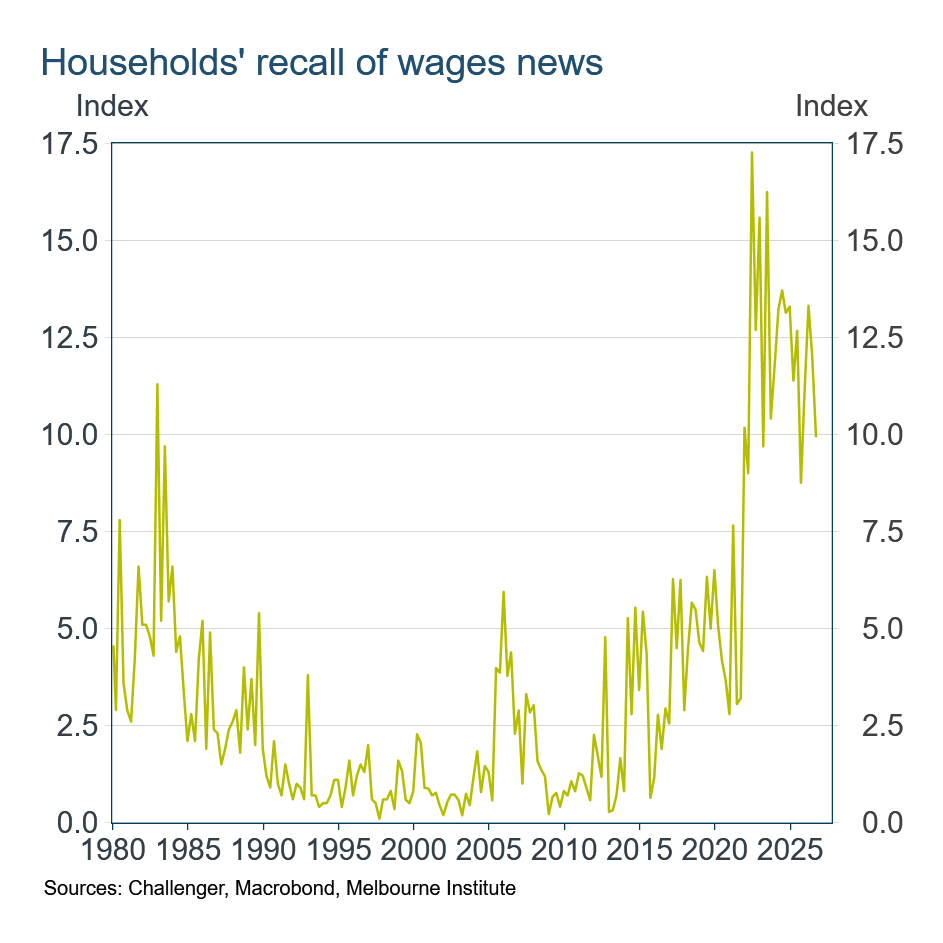
High inflation, and hence only modest growth in real wages, has led to significant media focus on wage growth and high recall of news on wages by households. Given relatively modest growth in real wages, which reflects weak productivity growth, wages will no doubt remain top-of-mind for households.
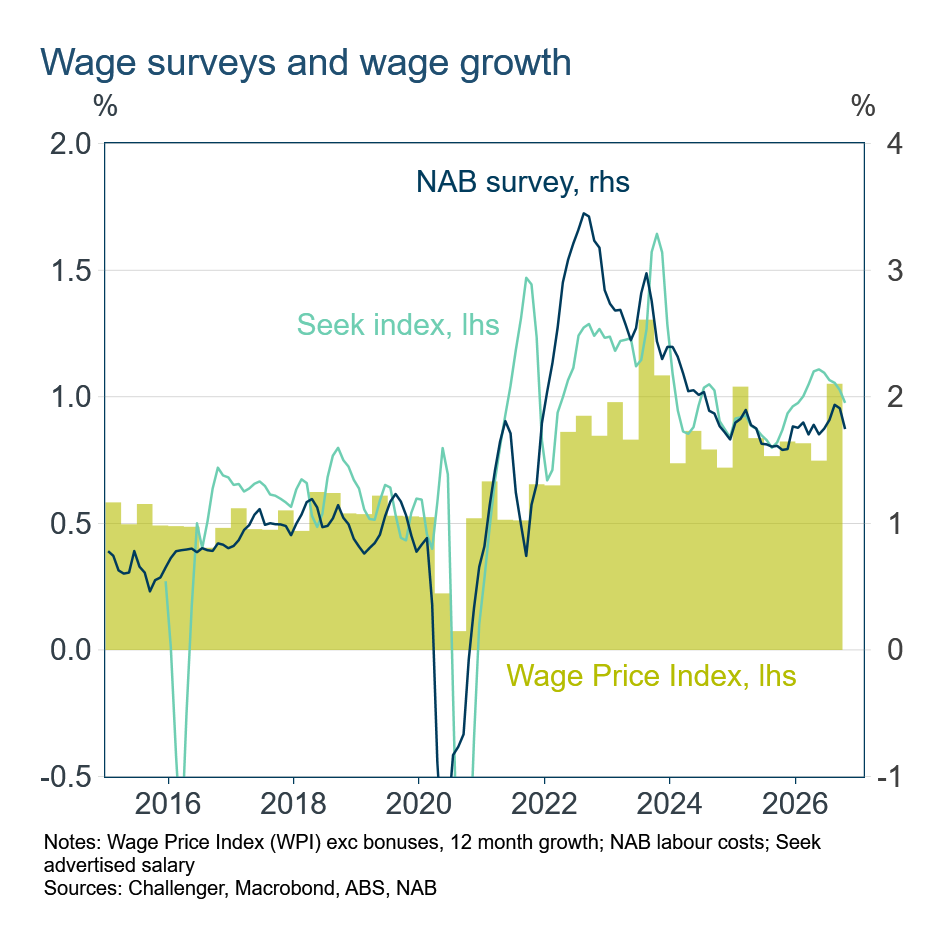
Surveys of wage pressures, based on firms’ responses and advertised salaries, confirm wage pressure is firm, but provide tentative evidence that it may be easing.
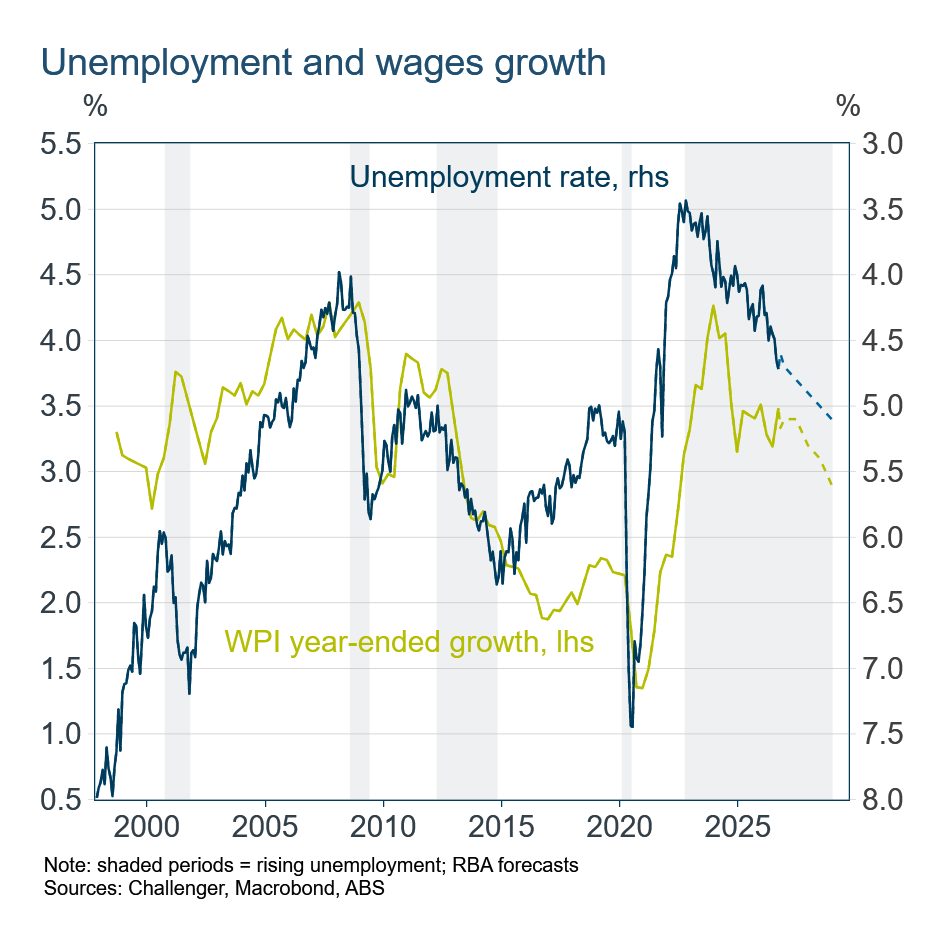
The RBA forecasts the unemployment rate to continue its gradual trend higher, from 4.7% to 5.1% by the end of 2028. This easing of labour market pressures is expected to see WPI growth slow to just under 3%, which should see inflation return to the RBA’s 2.5% target, so long the long-awaited pick-up in productivity growth does materialise.