
Loading component...
Loading component...
Loading component...
Loading component...
Loading component...
Loading component...
Loading component...
Loading component...

To stay up to date on the latest economic insights, subscribe to Macro Musing on LinkedIn.
Inflation was strong again in the September quarter, highlighting that the RBA has more to do to reduce excess demand in the economy. The RBA faces a delicate balance: restrain demand enough to slow inflation, but not too much. The RBA will have to hike on Melbourne Cup day, delivering a rate rise that will stop the nation, but hopefully not the economy.
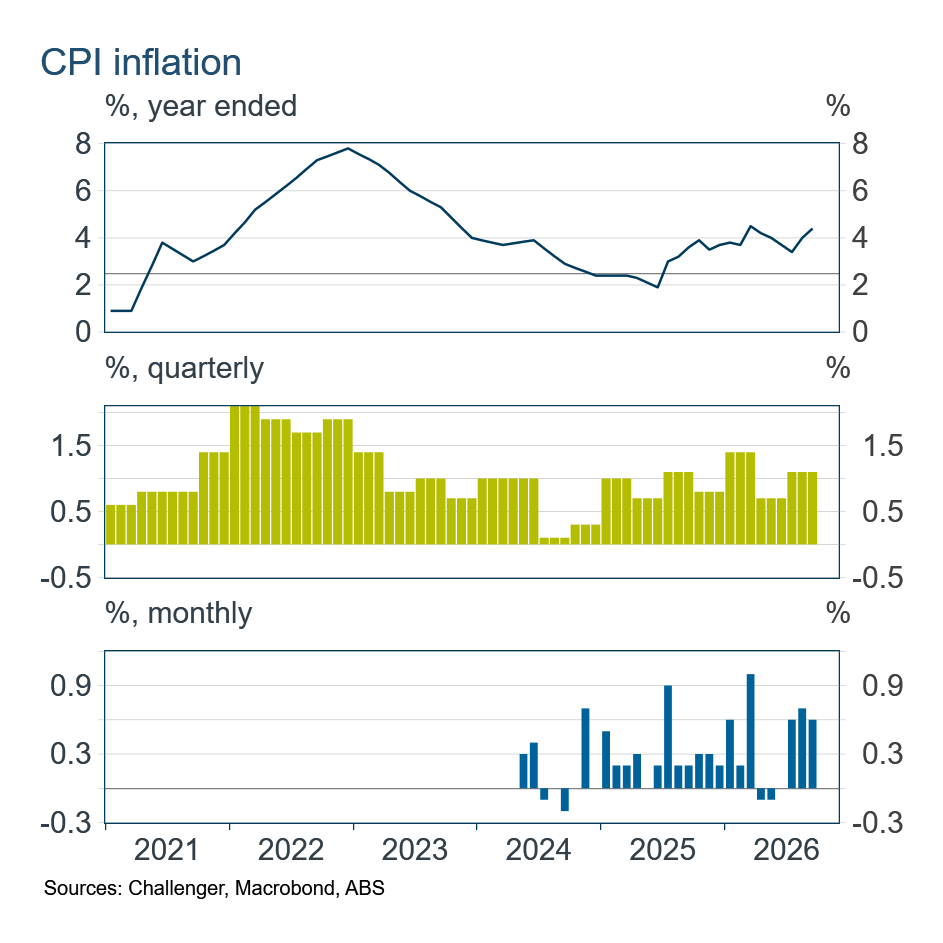
Inflation was 4.4% over the year to September, having increased by 0.6% or more in each of the past three months. However, CPI inflation is not the best measure of demand pressures in the economy, given the significant impact of oil prices and energy subsidies over the past year.
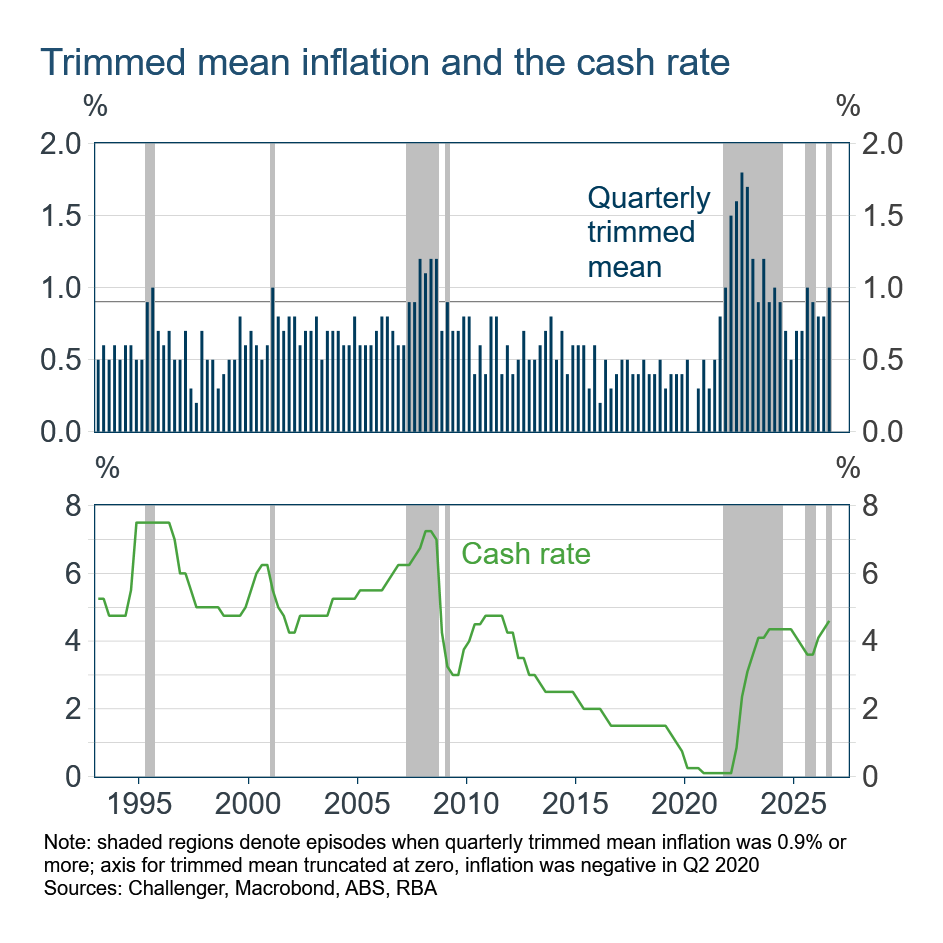
The clincher for a November rate hike is that trimmed mean inflation, which gives the best read on demand-driven inflation, was 1.0% in the quarter. Quarterly trimmed mean inflation of 0.9% or above sets off alarms at RBA HQ.
In 1995, 2001 and 2007, the RBA anticipated building inflation pressures and hiked before the trimmed mean inflation alarm sounded. In 2021, the RBA was late to hike, partly because it needed to be sure the economy had escaped its Covid-19 slump and partly because it did not appreciate how strong inflation would be.
The RBA has again been surprised by the strength of demand pressures, through the second half of 2025 and into this year. With the benefit of hindsight, the resilience of inflation pressures means the 2025 cuts were too early, and the hikes this year have been catching up to where rates need to be. A November hike will take the cash rate to 4.85%, which should give the RBA the opportunity to pause at their December meeting. By the time the RBA Board returns from its summer break, the economy will be slowing under the cumulative effect of 125 basis points of hikes starting 12 months earlier, and high inflation, making further rate hikes in 2027 unlikely.
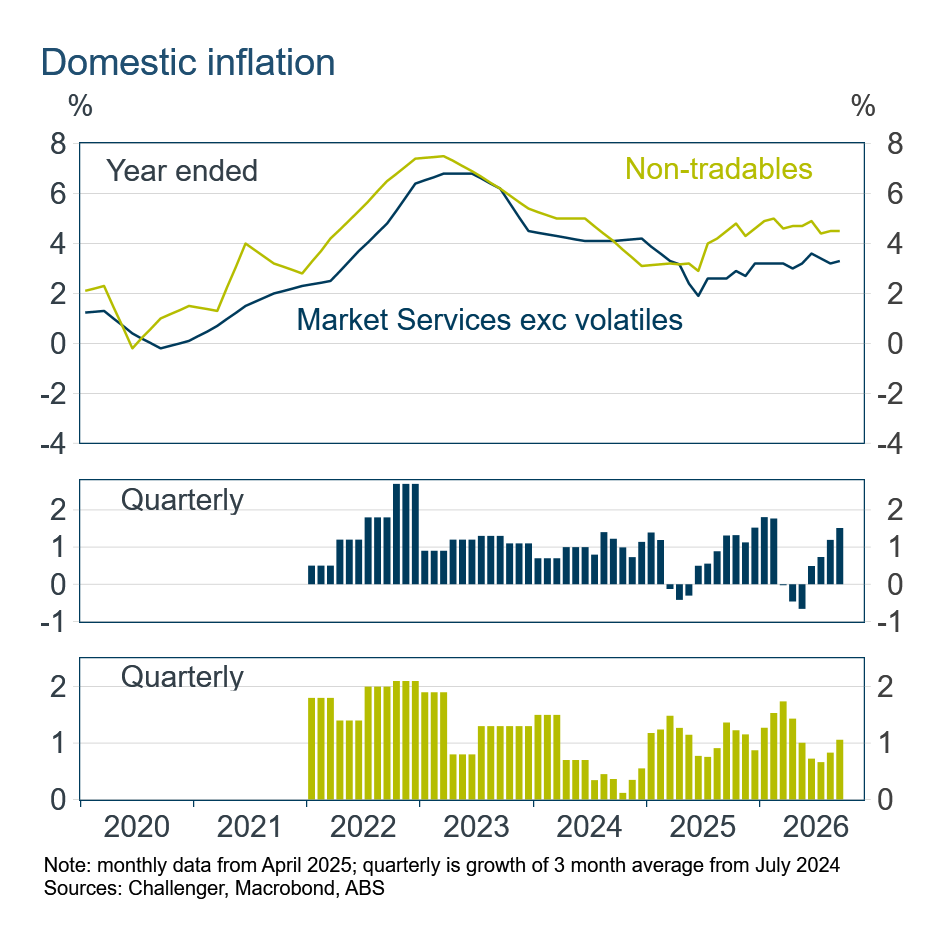
The strength of demand-driven inflation is also evident in key measures of domestic inflation: non-tradables, and market services excluding volatile items. While annual rates of inflation have remained stable this year, three-month inflation rates display clear strengthening of inflation pressures.
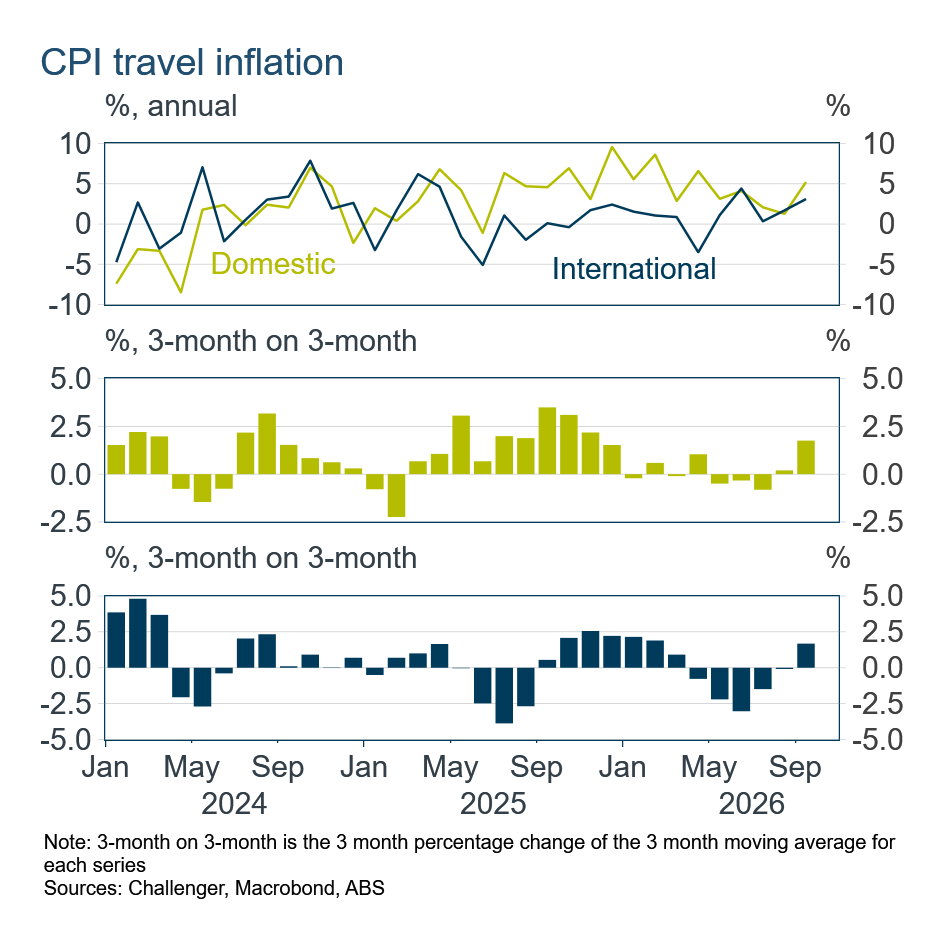
The second-round effects of the higher oil price are becoming more evident. The cost of both domestic and international travel has increased with eh effect of higher fuel costs feed through to airfares in recent months evident in the three-month inflation rates.
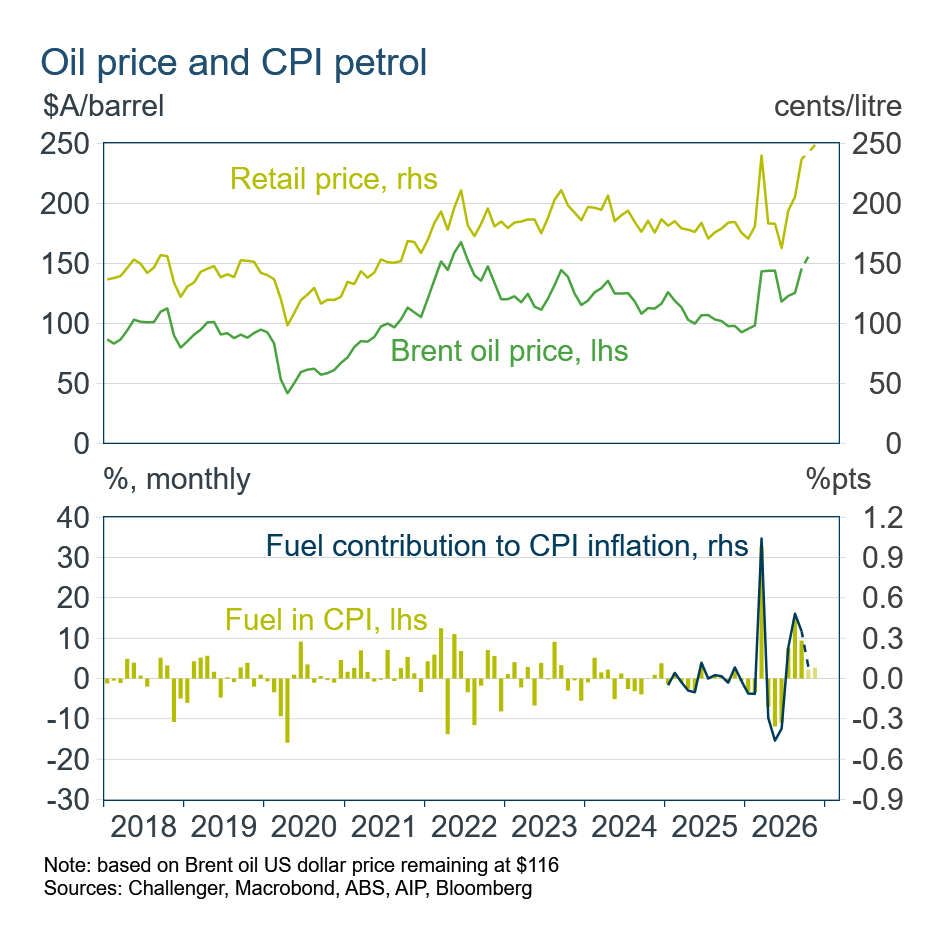
The resurgent oil price has also pushed up retail petrol and diesel prices directly. Automotive fuel rose 9.4% in the month, adding 0.4 percentage points to inflation. The cost of fuel is up 24% over the year.
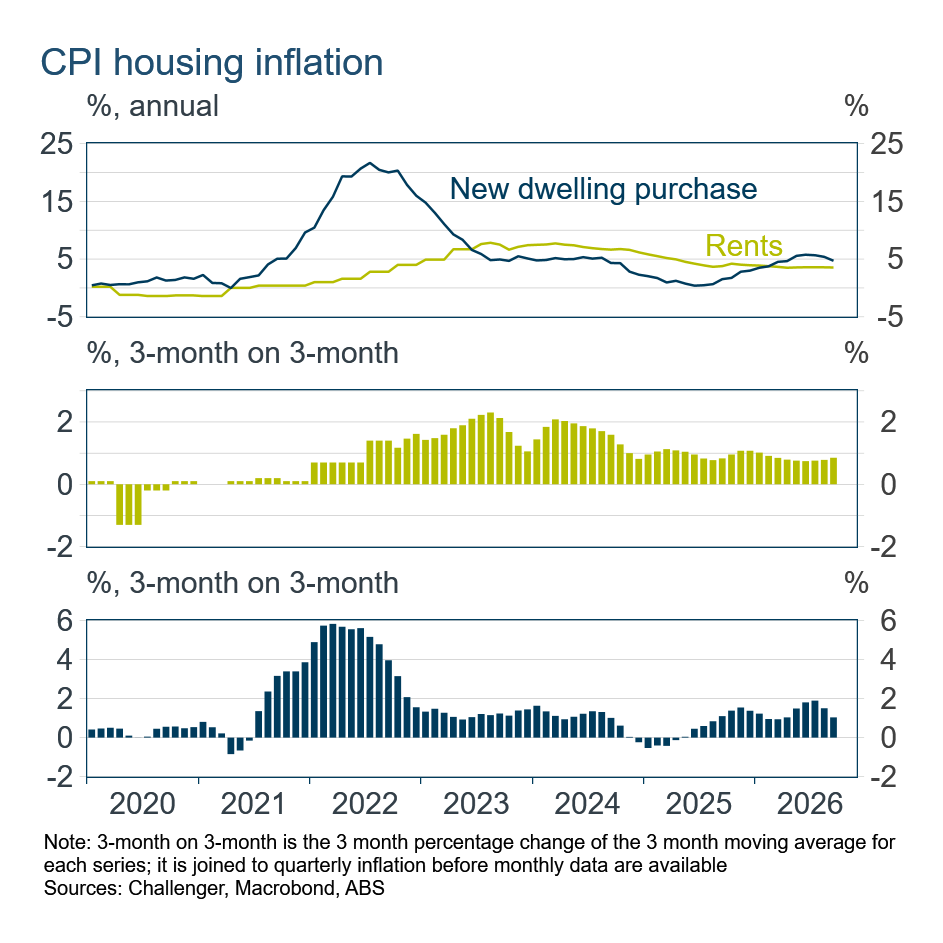
The effects of earlier rate hikes are beginning to show in the CPI. The fall in housing prices triggered by higher rates has reduced demand for new housing, resulting in weaker inflation for new dwelling purchases, again most evident in the three-month inflation rates. However, weaker housing demand is also leading to less new construction, which will not help a still-tight housing market, where low rental vacancy rates are contributing to ongoing strength in the growth of rents.