Macro Musing
Pump it up! Volatility returns to markets
Dr Jonathan Kearns - Chief Economist
29 October 2026
To stay up to date on the latest economic insights, subscribe to Macro Musing on LinkedIn.
Volatility has picked up in the US equity market as more questions are raised about whether AI companies can generate sufficient future revenue to justify their substantial investment and valuations. While relatively modest for now and after an extended period of calm in markets, increased volatility highlights the uncertainty and risks in AI-related trades.
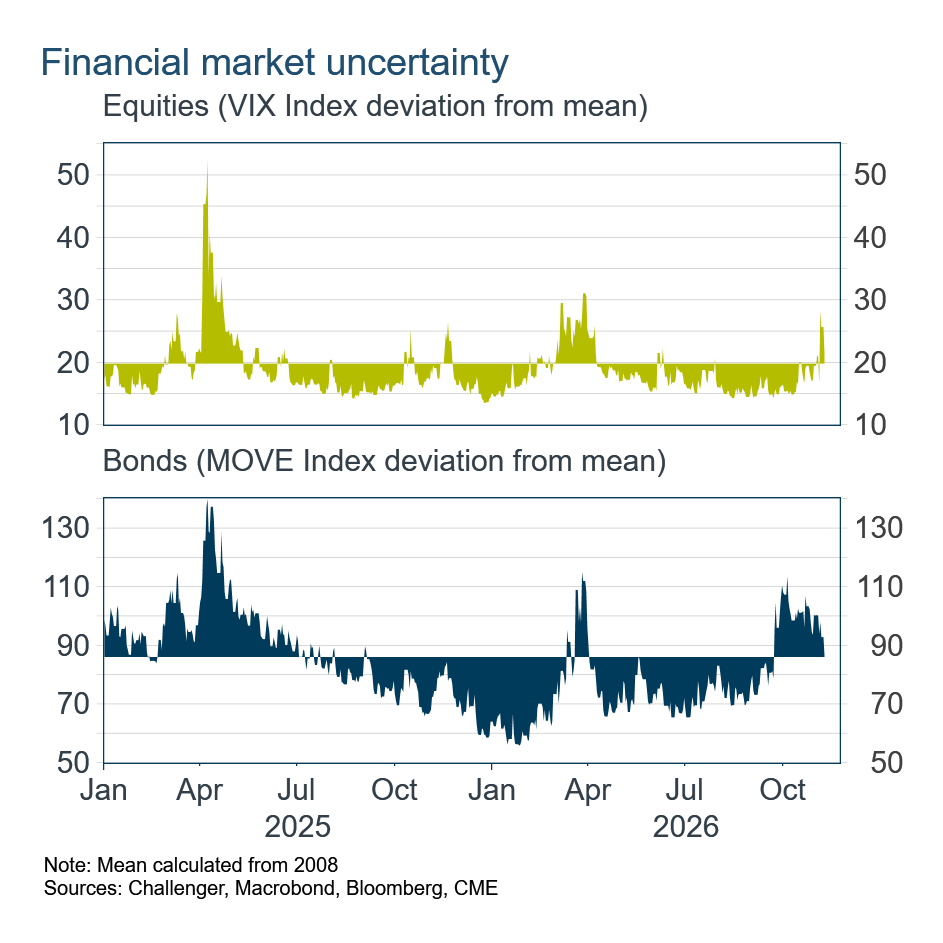
The VIX index reflects the implied volatility of the S&P 500 and is often referred to as a measure of the market’s risk aversion or the fear index. It has increased to be above its historical average for the first time in over six months but remains below the peaks in the early stages of the Middle East conflict when oil prices spiked and the ‘Liberation Day’ announcement of tariffs in April 2025.
The VIX having been below average this year despite AI, economic and geo-political uncertainty needs to be put in context. Volatility outcomes are highly skewed: there are very large peaks when there are major shocks to markets, such as the Covid-pandemic and Global Financial Crisis, and so the VIX is below average more often than not.
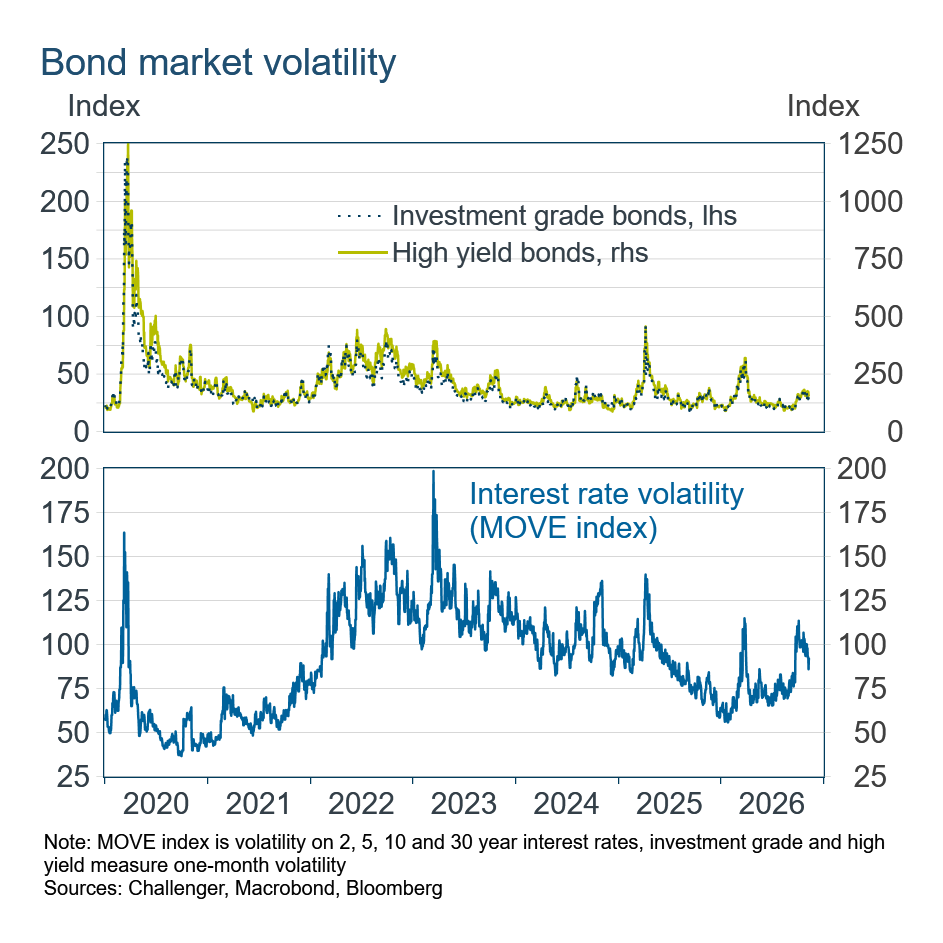
Volatility in US interest rates, as captured by the MOVE index, increased before volatility in equity markets and has been above average since September. Increased bond market volatility was driven by rising bond yields given concerns about inflation and fiscal sustainability.
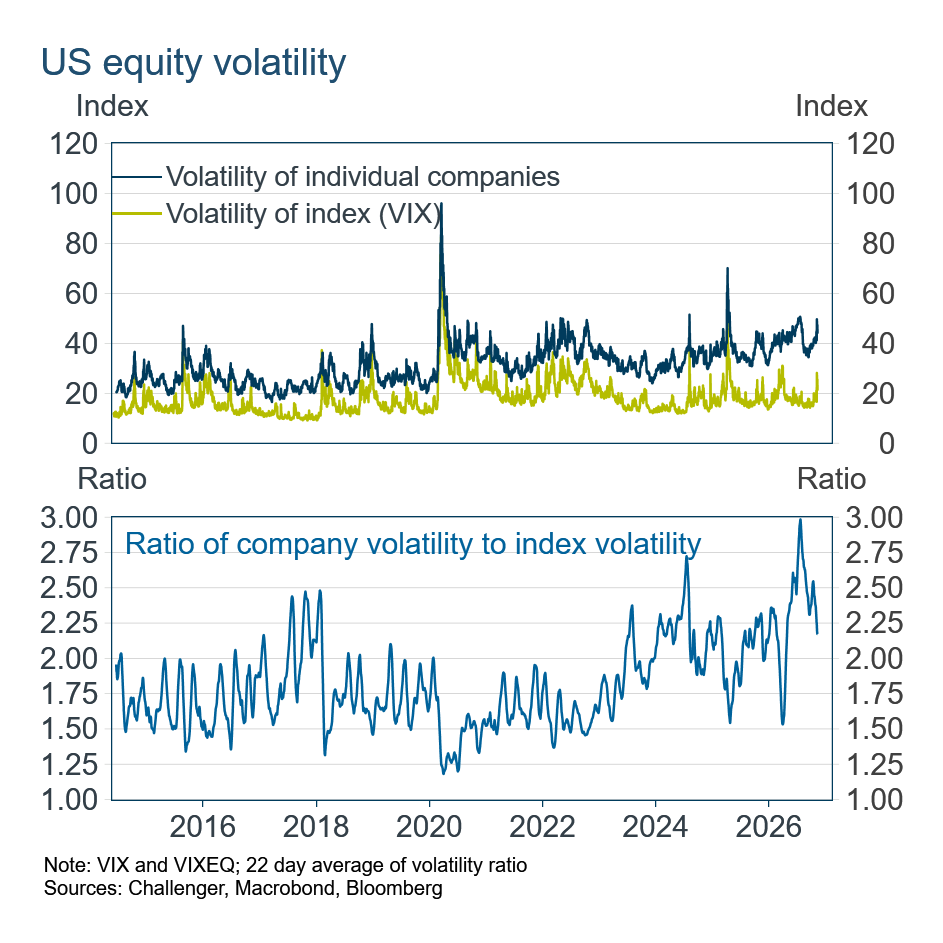
This year, volatility of individual companies has been significantly greater than volatility of the equity market as a whole. The ratio of individual company to market volatility reached a peak in July this year with growing questions about the outlook for AI trades. Individual company volatility has been driven by significant growth, and periodic falls, in value of AI-related companies.
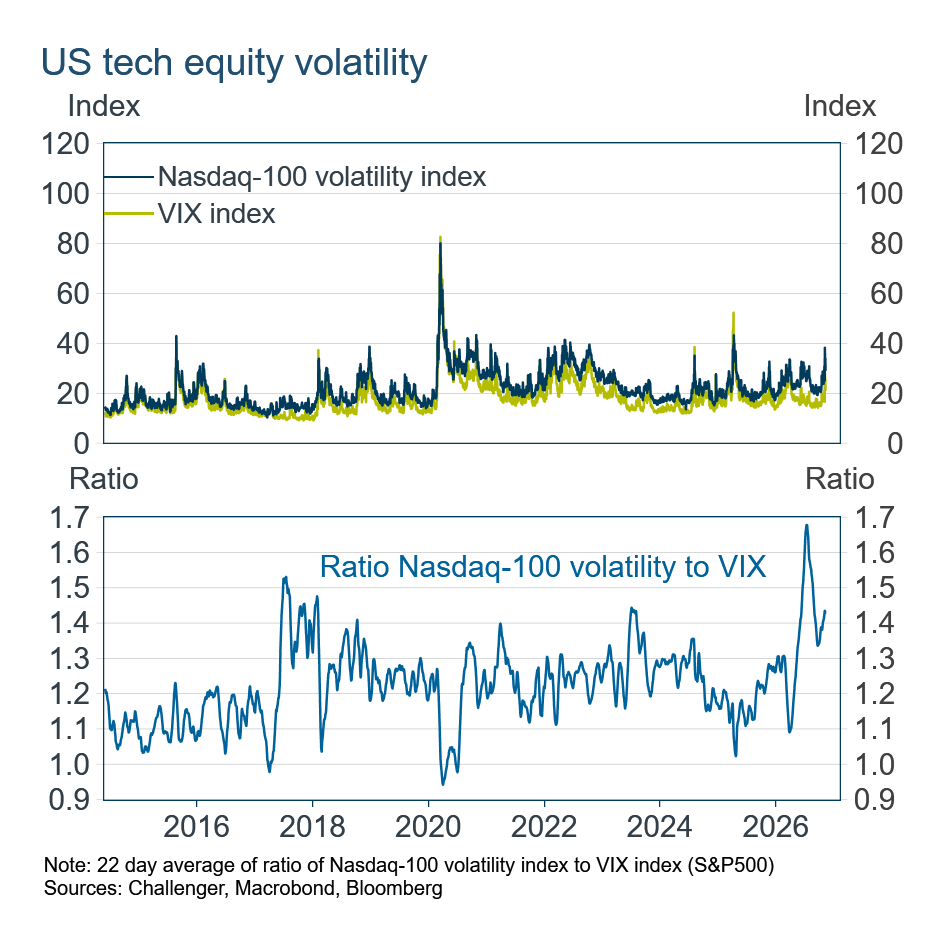
The role of the tech sector in driving higher volatility is also seen in the larger increase in the Nasdaq-100 volatility index than for the broader S&P500 VIX index. The Nasdaq-100 is dominated by the tech sector, including Apple, NVIDIA, Microsoft, Amazon, Alphabet (Google) and Meta (Facebook).
The increase in the MOVE interest rate volatility index has been matched by a small increase volatility in investment grade and high yield bonds. While spreads on highly-rated bonds have generally remained low, spreads on bonds of some technology companies have increased reflecting more cautious sentiment toward AI-trades.
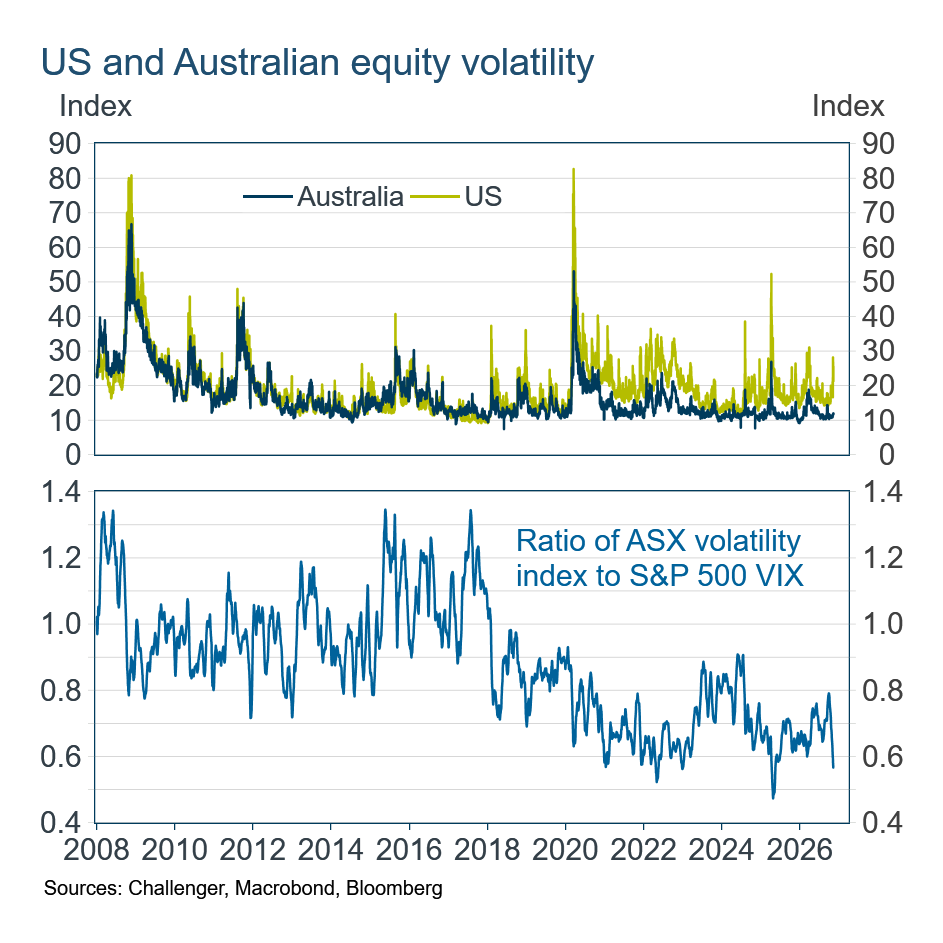
The Australian equity market has also been largely immune to increased equity volatility in the United States given the small share of domestic companies in the tech sector. Australian equity market volatility has been lower than for the United States since 2018, and has not matched the current increase in US equity volatility. While Australian equity returns have not kept up with the US market, they’ve also been less risky.
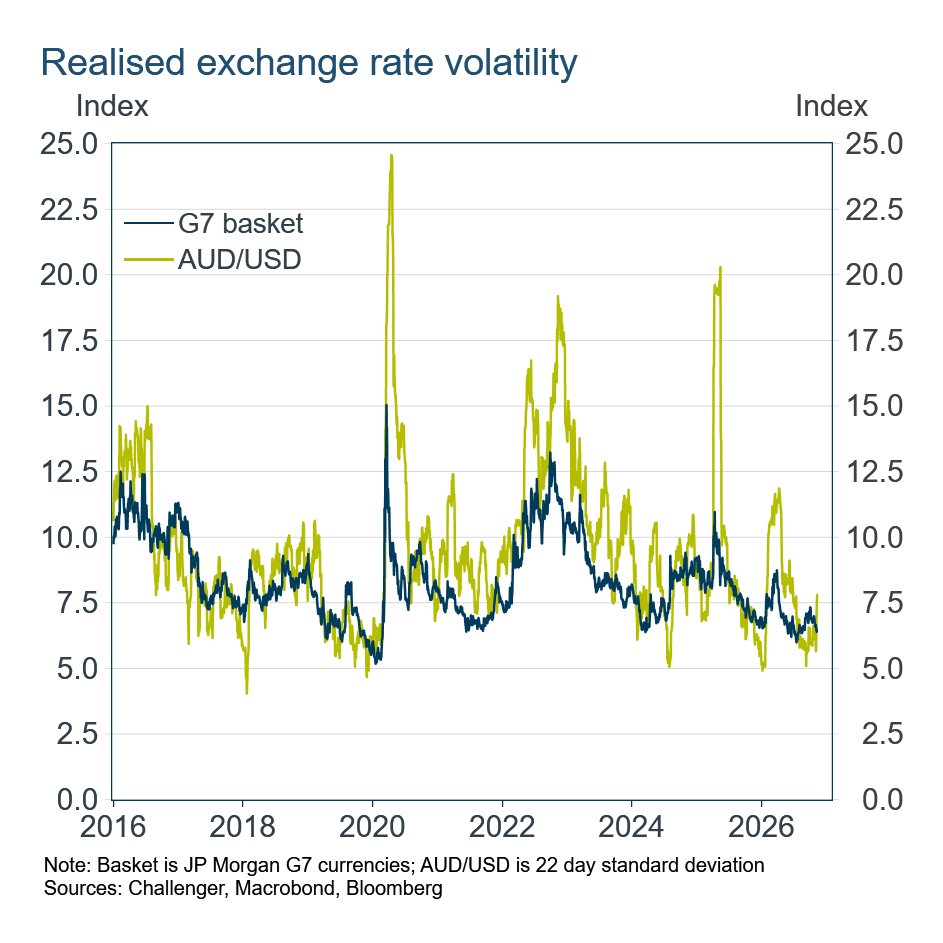
Increased volatility has not spread to foreign exchange markets, indicating that for now higher volatility largely relates to AI trades and the level of interest rates rather than reflecting broader financial market uncertainty. Volatility for the currencies of seven largest economies, the G7, and Australian dollar remains low.