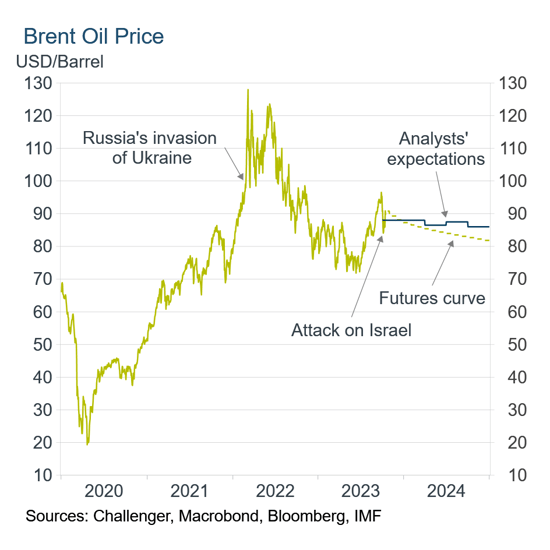
The slowdown in economic activity globally over the next 1–2 years from tighter monetary policy (and higher inflation) will ease demand for oil and put downward pressure on the oil price.
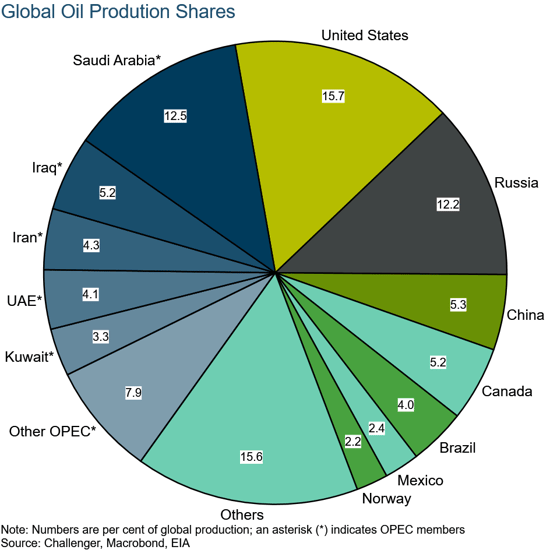
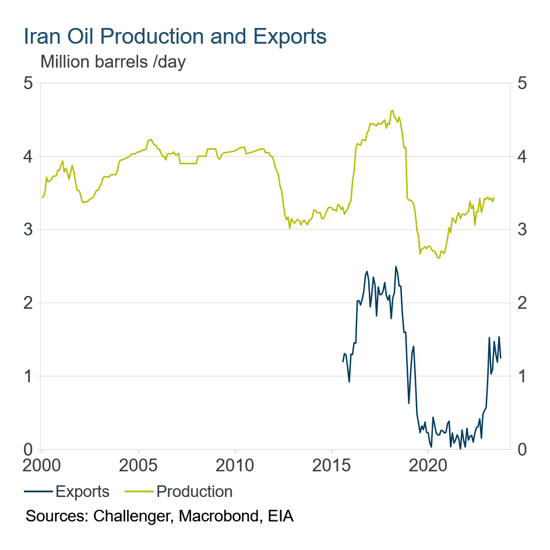
But currently there is a greater focus on the impact of events in the Middle East on the oil price from the potential impact on supply. While the oil price spiked by over $20/barrel when Russia invaded Ukraine, the jump was much smaller for the attack on Israel. Russia accounts for 12% of global oil production and significant sanctions were imposed on its oil exports, but Israel and the very immediately surrounding regions are not significant producers. The $4/barrel jump following the attack on Israel reflected a small risk premium for the chance that existing sanctions on Iran could be tightened if it was implicated in the attack. While sanctions were imposed on Iran, which accounts for 4% of global oil production, when the agreement on its nuclear program broke down these sanctions have been loosely applied recently enabling Iran’s exports to recover to around 1.5 million barrels/day having been close to zero for several years. The risks from a broader escalation in the Middle East are significant given tankers travelling through the strait of Hormuz transport about 17 million barrels/day of crude oil and refined products from Saudi Arabia, Iraq, Kuwait and the United Arab Emirates.