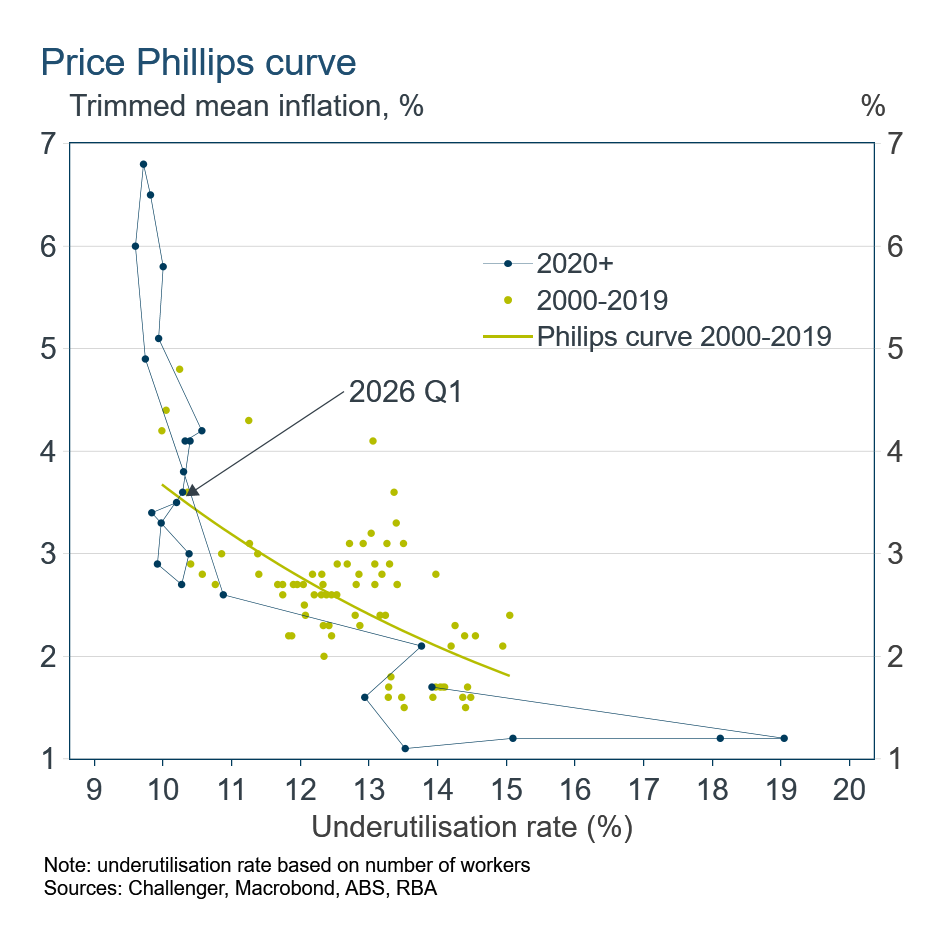
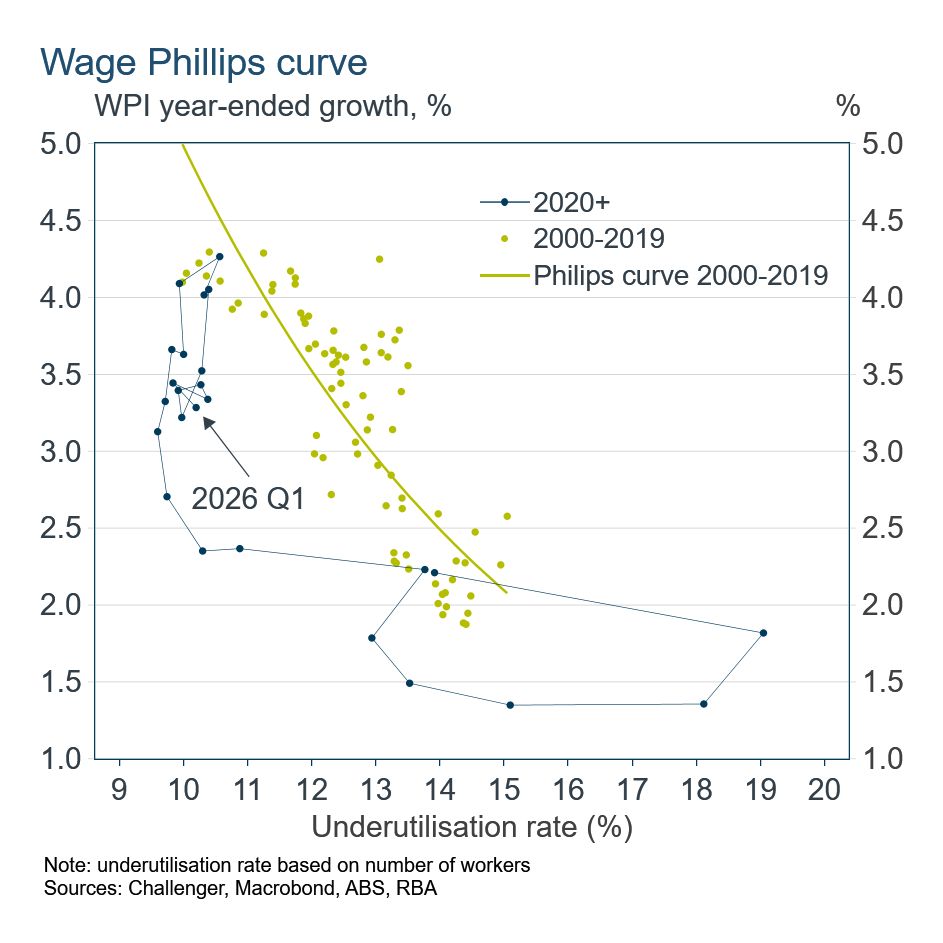
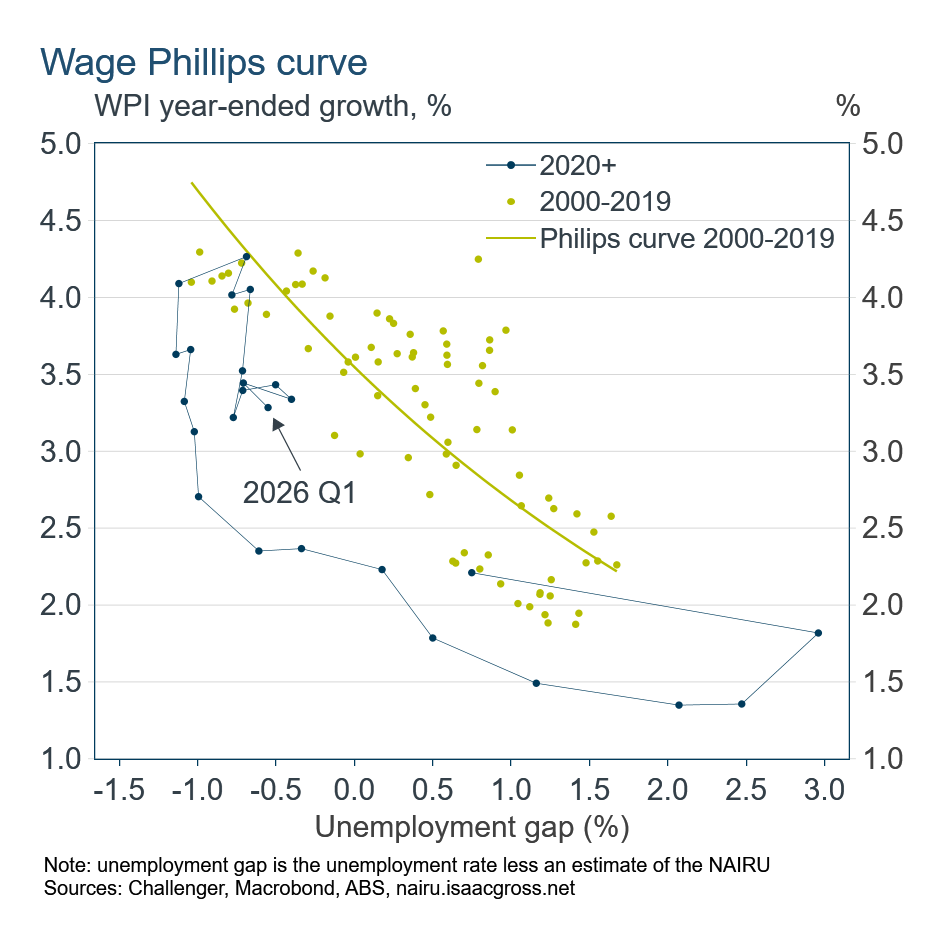
However, labour market conditions that deliver stable inflation can change. That is, the ‘NAIRU’ varies through time (NAIRU = non-accelerating inflation rate of unemployment). The NAIRU can change in response to labour market laws and practices, as well as recent labour market conditions affecting the employability of workers given their skills and experience.
The wage Phillips curve using the unemployment gap between the unemployment rate and the estimated NAIRU also highlights the risk of increased wage inflation given the tightness of the labour market. However, it is possible that given job uncertainty given the rise of AI will see weaker wages growth than the historical relationship implies.
The RBA is forecasting an increase in the unemployment rate to 4.7%, which is close to estimates of the NAIRU. However, given the NAIRU is estimated and not observed, there is significant uncertainty around its level. That leaves the RBA finely balanced, watching how wages and inflation respond to the labour market to determine its next move.