

For adviser use only
Home care reforms FAQ
Sean Howard, Technical Services Manager
01 September 2025
Download the article below.
In November 2024 Challenger Tech article “Aged Care reforms FAQ”, we provided the answers to the most common questions about the aged care reforms. In this month’s article we provide further clarification on specific home care reforms questions.
The Support at Home Program will have a defined service list which outlines the home care services provided. The service list will have three categories of home care services including clinical supports, independence and everyday living.
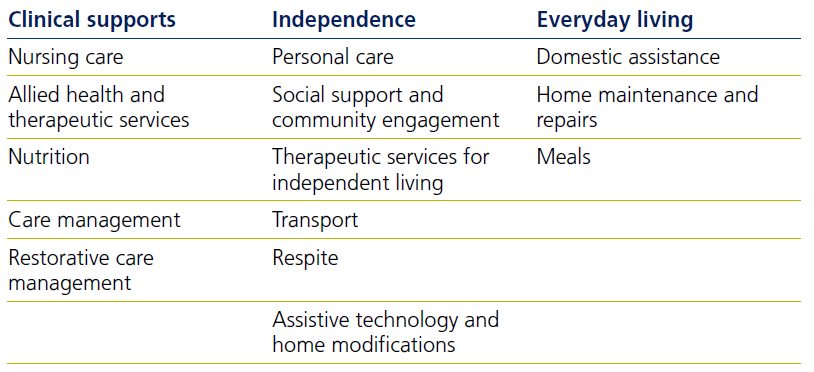
The Support at Home service list is published on the Department of Health, Disability and Ageing website Support at Home service list | Australian Government Department of Health, Disability and Ageing.
Home care providers will set their own prices for home care services; however, the Government will set price caps from 1 July 2026. Providers must publish their prices on the My Aged Care Service and Support Portal and document their prices in the Support at Home service agreement.
Indicative Support at Home prices are published on the Department of Health, Disability and Ageing website Summary of indicative Support at Home prices | Australian Government Department of Health, Disability and Ageing.
The Support at Home Program will have eight ongoing service classifications and three short-term service classifications, which provide funding for home care services. The ongoing and short-term service classifications will be determined as part of the aged care assessment.
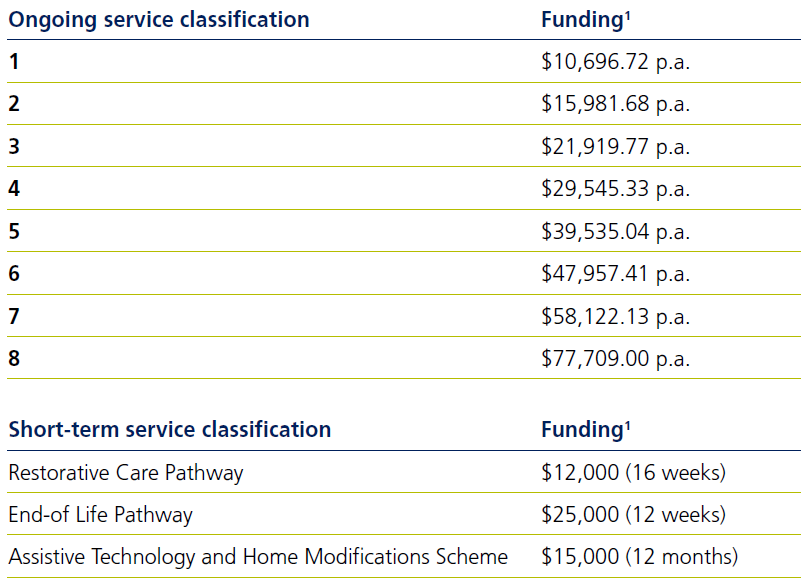
The funding for ongoing services will be paid quarterly for each Support at Home recipient into a home support account managed by Services Australia. Home care providers can claim payment from the account after ongoing services are provided to the recipient.
The funding for short-term services will be paid for each Support at Home recipient into separate accounts for each service managed by Services Australia. Home care providers can claim payment from each account after short-term services are provided to the recipient.
Support at Home ongoing services can be provided at the same time as accessing funding for restorative care and assistive technology and home modifications. Support at Home ongoing services and restorative care cannot be provided at the same time as end-of-life care. End-of-life care can be provided at the same time as accessing funding for assistive technology but not at the same time as home modifications unless already commenced.
Home Care Package (HCP) recipients will receive the same funding for ongoing services under the Support at Home Program. HCP recipients who require higher funding will need to be reassessed under the Support at Home Program at a higher ongoing service classification.
10% of the quarterly Support at Home budget for ongoing services will be deducted from each recipient, and pooled together in a care management account held by Services Australia. Home care providers can claim payment from the account for care management services provided quarterly.
There is no limit for care management and no separate care management account for short-term services. Home care providers can claim payment from each separate short-term service account for related care management services provided.
The unspent budget for ongoing services will automatically carry over in the home support account to the next quarterly budget. The carryover amount will be capped at the higher of $1,000 or 10% of the quarterly budget for ongoing services.
Support at Home recipients may have a participant contribution, which will be a percentage of the price for home care services. The percentage will depend on the home care service category and the pensioner status and means of the recipient. Support at Home recipients who do not disclose their means will be subject to the maximum participant contribution.
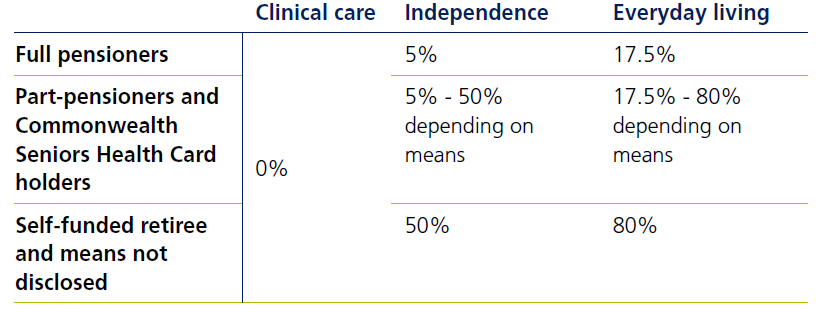
The participant contribution will have an indexed lifetime limit of $130,000 after which there will be no further contributions. Services Australia will notify the Home Care provider and recipient when the lifetime limit has been reached.
Home Care Package (HCP) recipients who were approved for a HCP on or before 12 September 2024 will be grandfathered for participant contributions. Grandfathered recipients who were not paying an income tested care fee will not pay a participant contribution. Grandfathered recipients who were paying an income tested care fee will pay the same or less as a participant contribution.
The participant contribution for grandfathered recipients will be determined similarly to that of new Support at Home recipients. The participant contribution will be a discounted percentage of the price for home care services and will have an indexed lifetime limit of $82,3472.
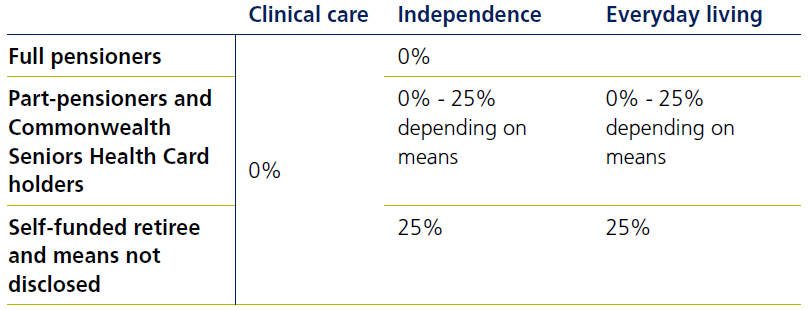
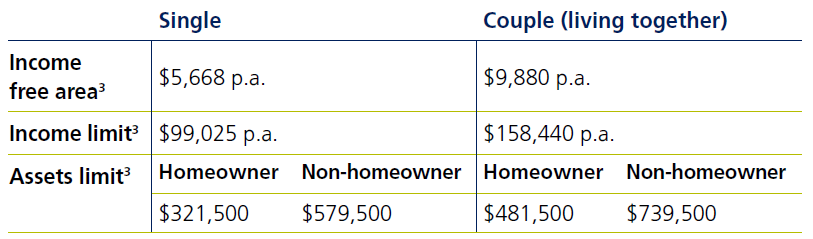
Support at Home recipients who are part-pensioners or Commonwealth Seniors Health Card holders will be means tested for independence and everyday living home care services. Assessable income and assets for the Support at Home Program will be the same as those assessed for Centrelink.
Services Australia will means test Support at Home recipients to determine their participant contribution as follows:
Step 1: Work out the income reduction amount (Assessable income - income free area) x 50%
Step 2: Work out the assets reduction amount (Assessable assets - asset free area) x 7.8%
Step 3: Work out the maximum reduction amount (Income limit - income free area) x 50%
Step 4: Work out the input contribution rate (Greater of Step 1 and 2 / Step 3) x 100
Step 5: Work out the percentage contribution Independence (Step 4 x 0.45 + 5%) Everyday living (Step 4 x 0.625 + 17.5%)
The Restorative Care Pathway will replace the Short-Term Restorative Care Program from 1 November 2025. The Restorative Care Pathway will provide funding for intensive allied health/nursing services to improve and regain function to live independently at home.
The Restorative Care Pathway will provide funding for episodes of restorative care for up to 16 consecutive weeks. Restorative Care recipients can access funding of up to $6,000 for two separate 16-week episodes or funding of up to $12,000 for a single 16-week episode over a 12-month period.
The End-of-Life Pathway will provide funding for individuals with less than three months to live who want to remain at home. There will be a high priority assessment process to determine eligibility for home care services and funding will be provided immediately.
The End-of-Life Pathway will provide one-off funding of $25,000 for 12 consecutive weeks4 and will work in conjunction with other palliative care services. End-of-Life recipients can access home care services from the Support at Home service list as determined by the aged care assessment.
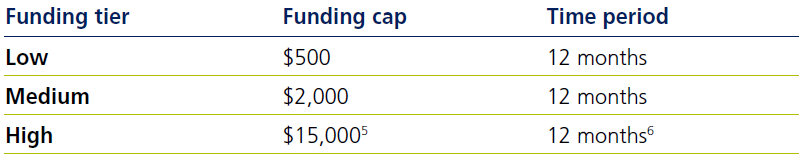
The Assistive Technologies and Home Modification (AT-HM) Scheme will provide funding for products, equipment and home modifications to live independently at home. There will be three funding tiers for assistive technology and home modifications with limited funding periods.
The AT-HM Scheme will have a defined AT-HM list which outlines the products, equipment and home modifications that can be accessed. The AT-HM list is published on the Department of Health, Disability and Ageing website Assistive Technology and Home Modifications list (AT-HM list) | Australian Government Department of Health, Disability and Ageing.