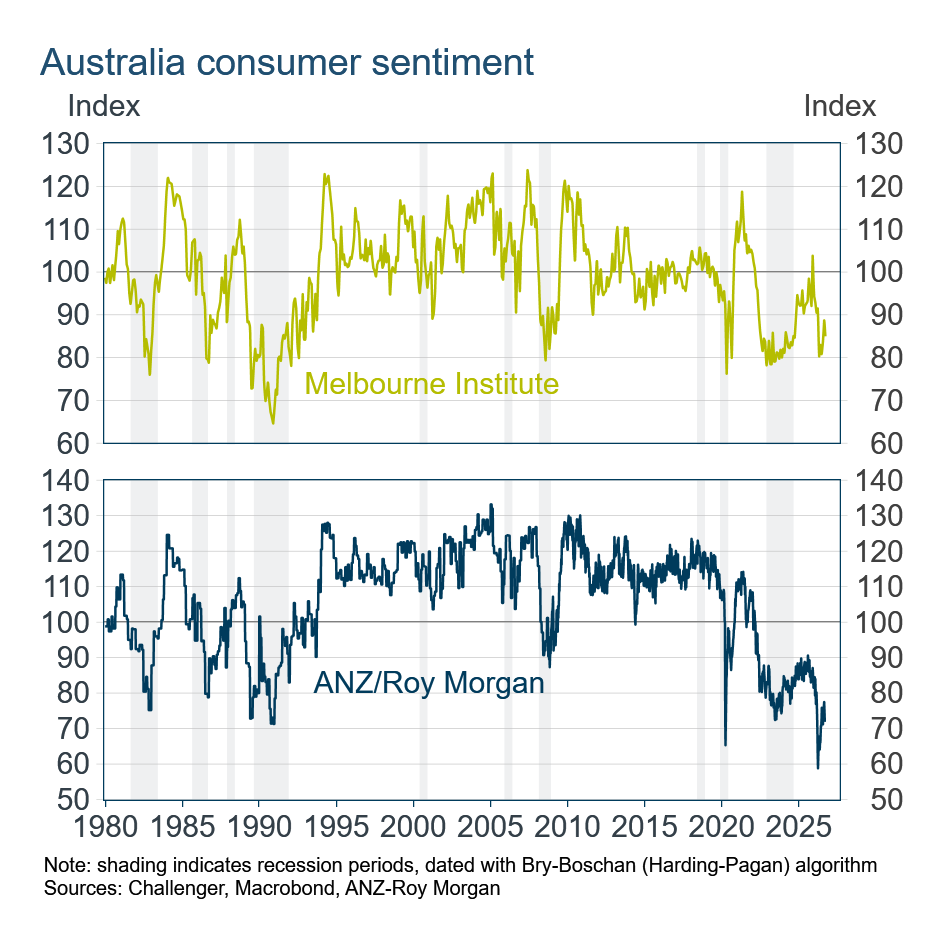
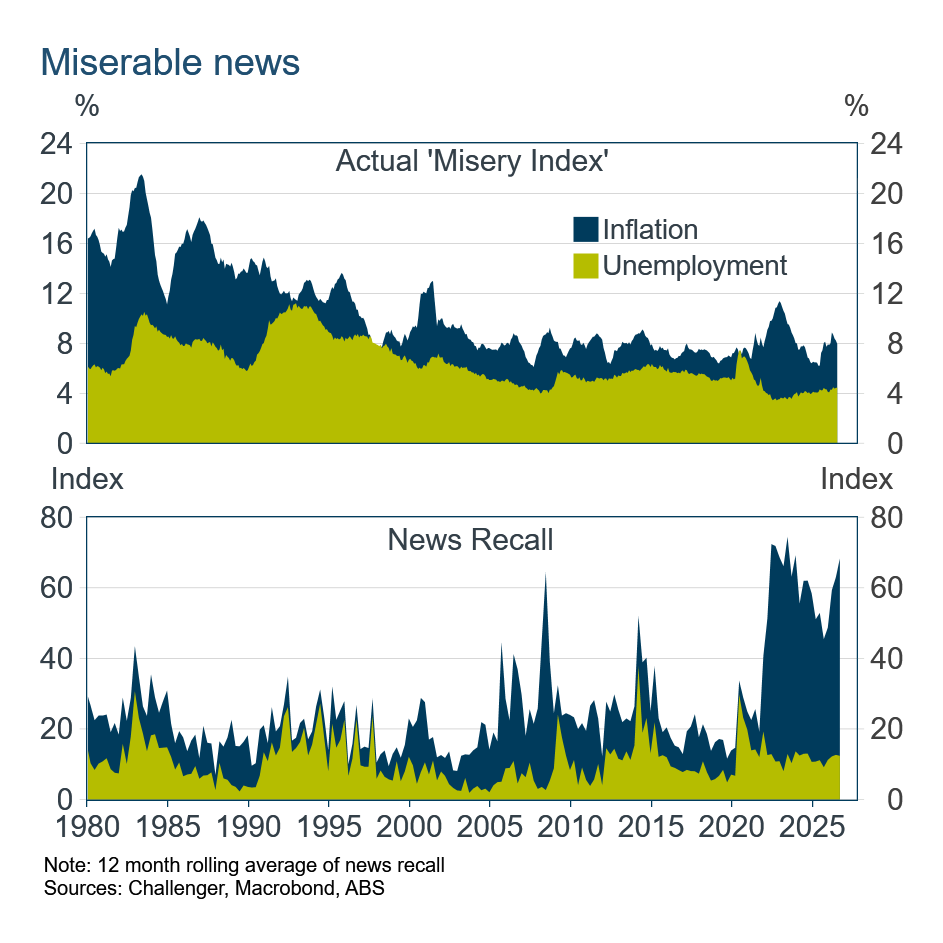
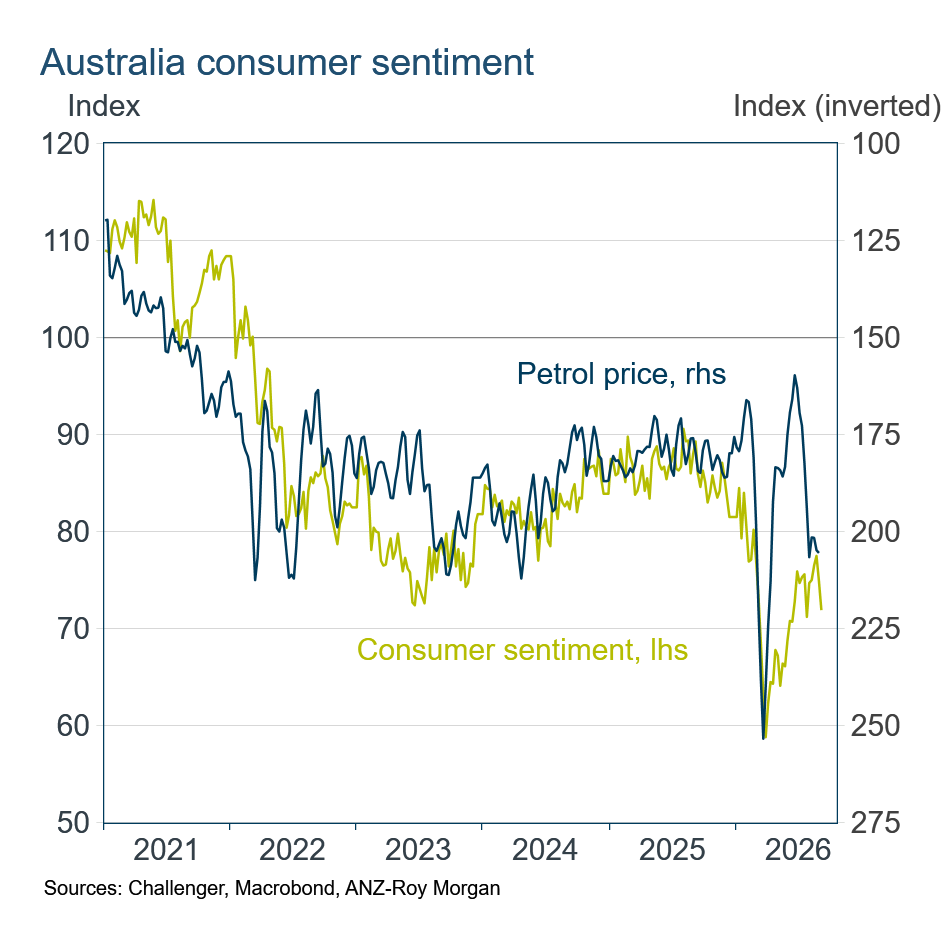
The challenge in boosting consumer sentiment is that it is not just inflation that affects households’ mood, but the price level itself. It is the price of petrol they drive past, not the petrol inflation rate, and the cost of their basket of groceries that disappears from their bank account. So even if the RBA is successful in bringing inflation back to its 2.5% target by early 2028, households might still not be happy.
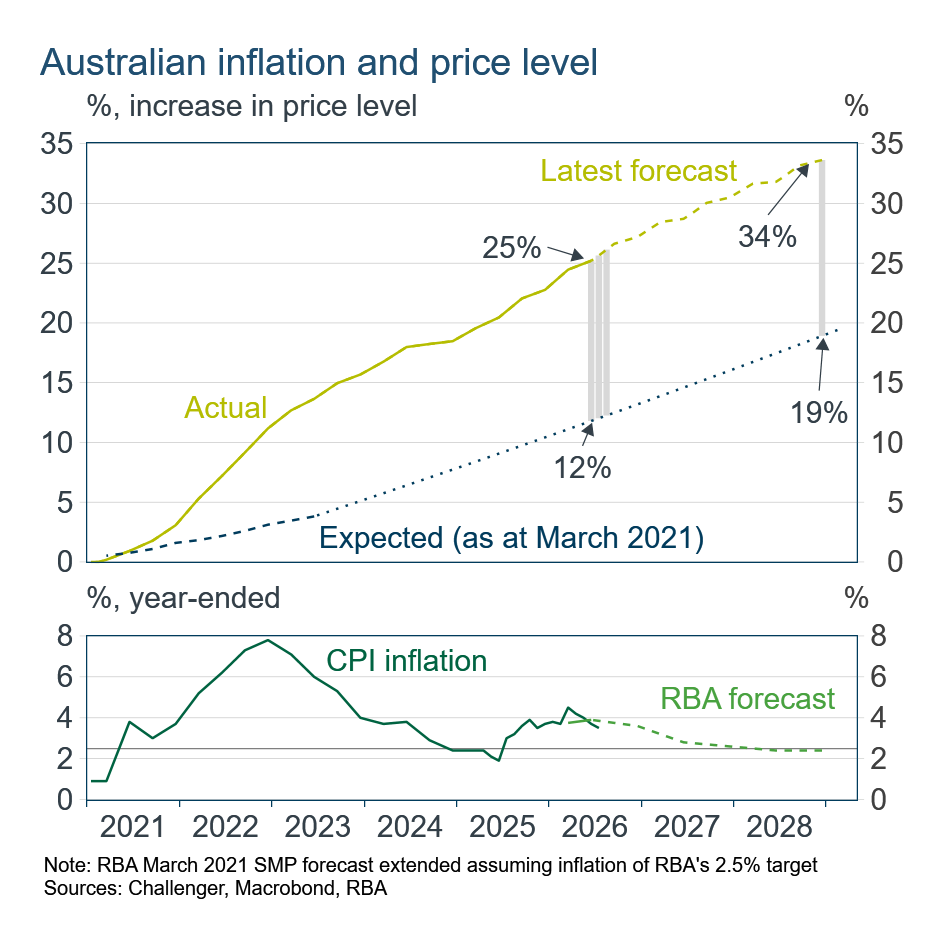
High inflation over the past few years has left the price level substantially higher than expected. Since the period of high inflation, began in 2021, the price level, as measured by the CPI, has increased by 25%, more than double the expected 12% increase. By 2028, RBA projections imply that the price level will have increased by 34%, 15 percentage points more than expected.
The unexpected increase in the price level erodes the purchasing power of households whose incomes do not adjust with inflation. In this way inflation is particularly harmful to self-funded retirees who tend to have portfolios with large allocations to cash and deposits and do not have years to wait for their growth assets to recoup the purchasing power losses imposed by inflation.