Why is Australian consumer sentiment at recession levels?

Subscribe to Macro Musing
To stay up to date on the latest economic insights, subscribe to Macro Musing on LinkedIn.
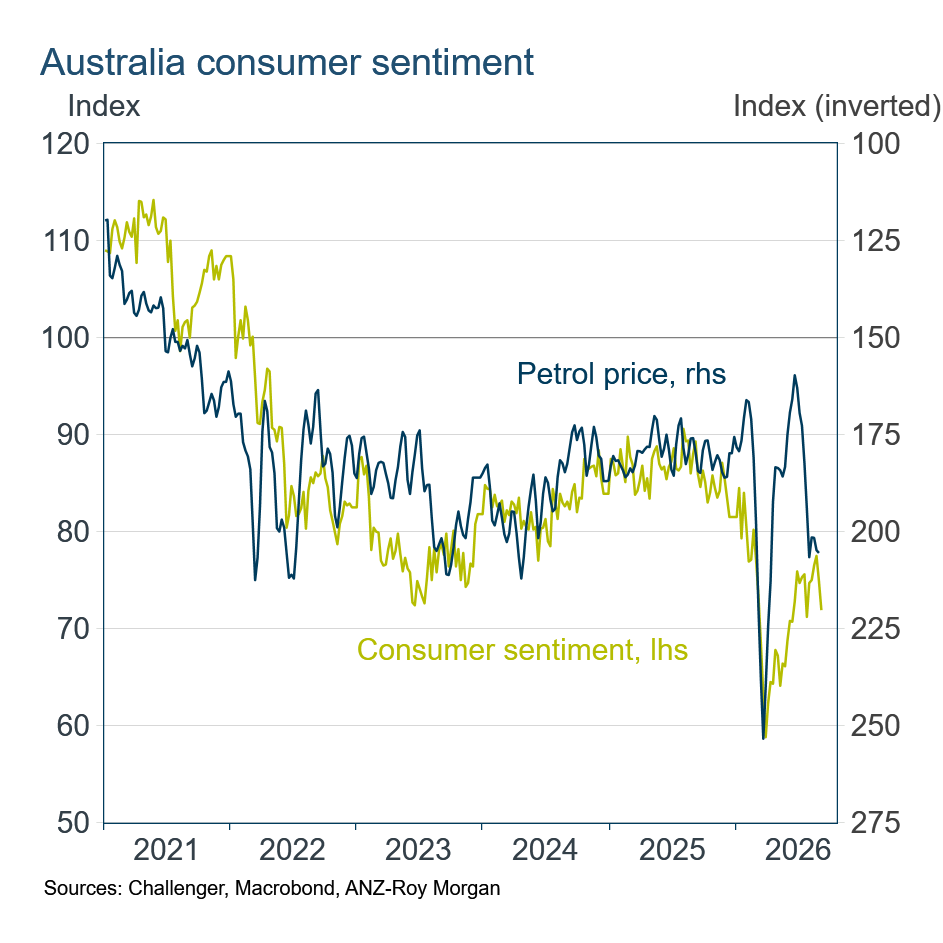
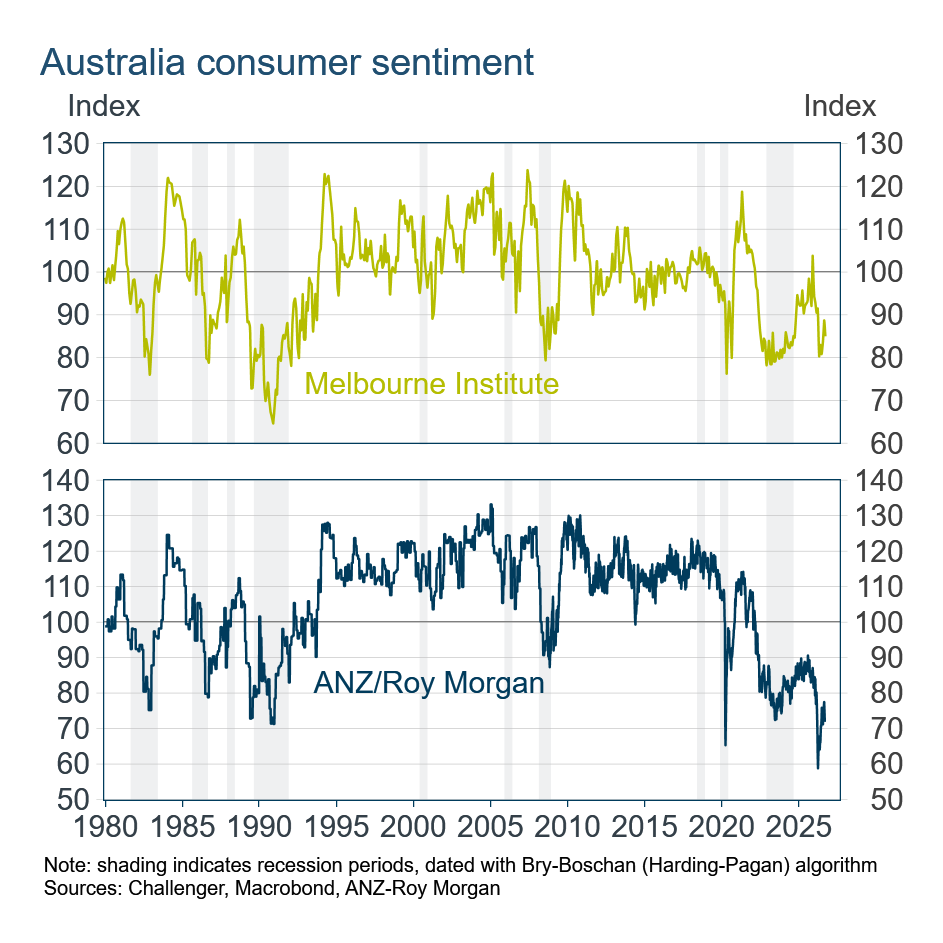
Consumers have been particularly downbeat this year with sentiment in Australia at levels usually seen only in recessions. As RBA Deputy Governor Andrew Hauser put it in an interview on ABC TV this week “Consumers are very unhappy, frankly.”

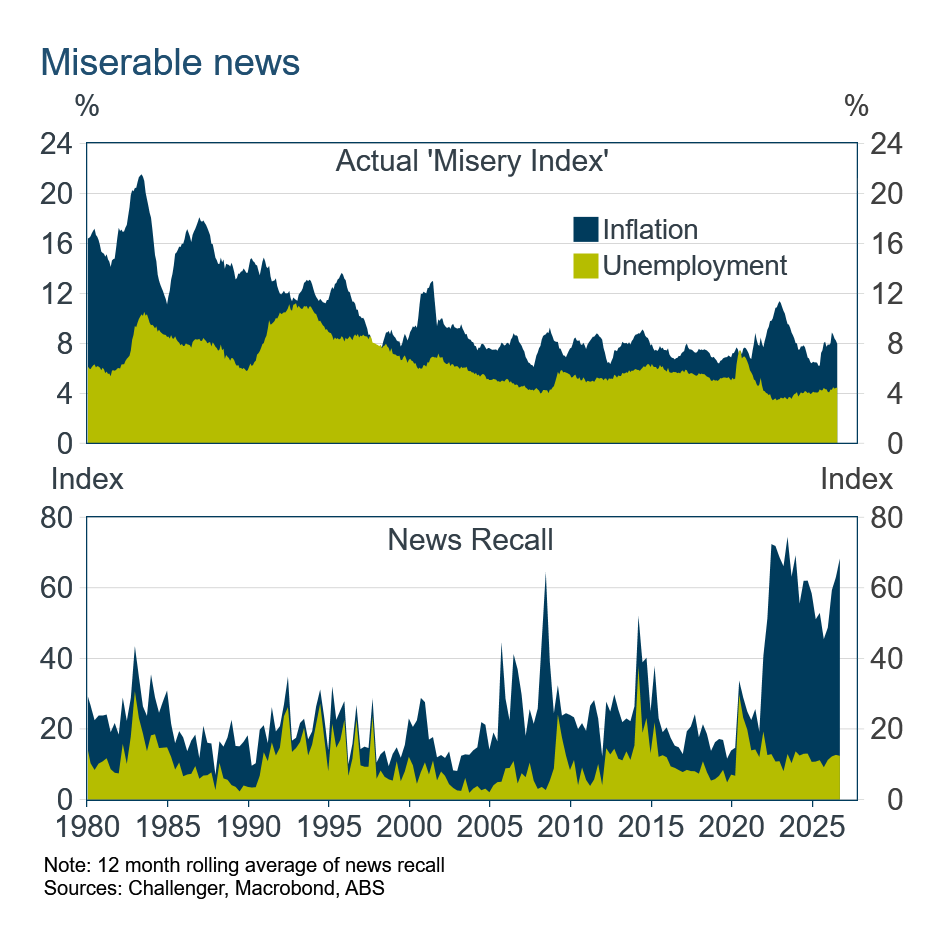
A range of factors are no doubt contributing to households pessimism. Top of the list is inflation. One way of conceptualising bad economic news is the Misery Index, first used by Arthur Okun ironically after the first oil shock in the 1970s. The Misery Index, which adds the inflation rate to the unemployment rate, spiked in Australia with the post-Covid inflation breakout, but otherwise has not been overly elevated as low unemployment offset high inflation.
However, a misery news recall index, which combines indices of consumers’ recall of news about inflation and unemployment, has been at record levels as inflation remains top of mind for households.

A key driver of inflation and low consumer sentiment has been petrol prices. Prices that consumers regularly face have an outsized influence on their perceptions of inflation and their expectations for future inflation. Filling up the car, perhaps weekly, or even just regularly driving past illuminated petrol prices staring down at them, makes petrol a key contributor to perceived inflation and consumer sentiment. Movements in petrol prices driven by Russia’s invasion of Ukraine and more recently the conflict in the Middle East have driven oscillations in petrol prices and Australian consumer sentiment in recent years.

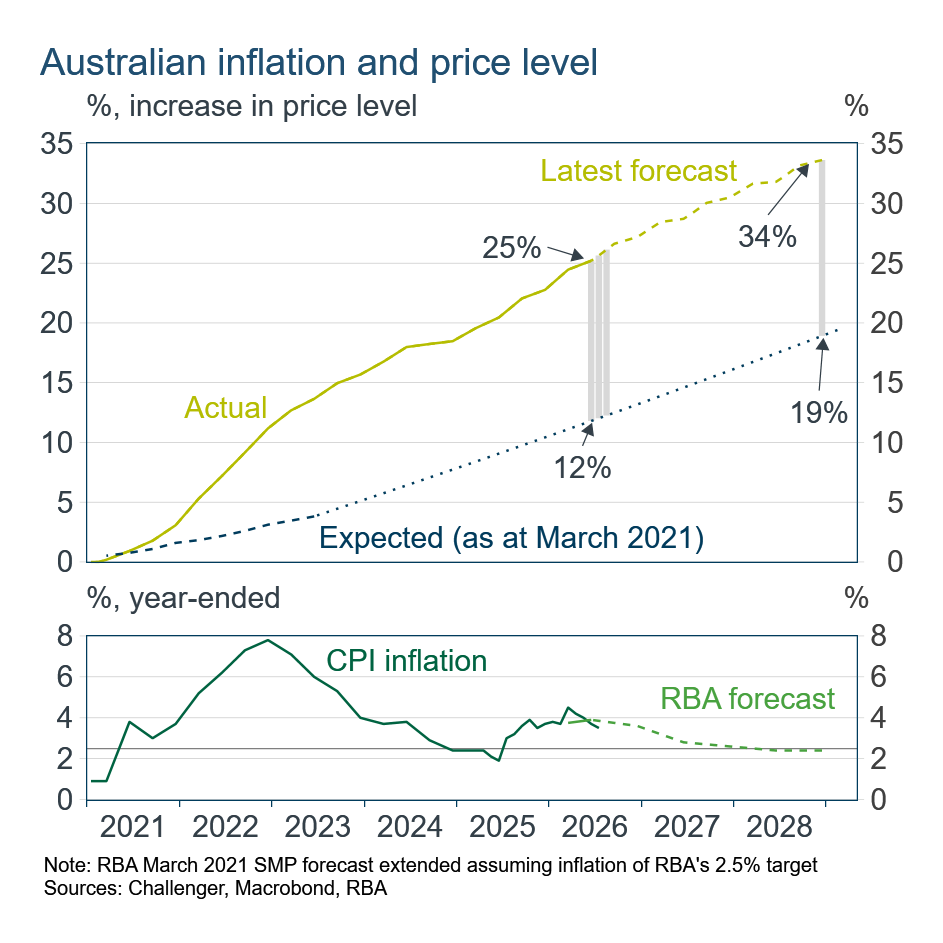
The challenge in boosting consumer sentiment is that it is not just inflation that affects households’ mood, but the price level itself. It is the price of petrol they drive past, not the petrol inflation rate, and the cost of their basket of groceries that disappears from their bank account. So even if the RBA is successful in bringing inflation back to its 2.5% target by early 2028, households might still not be happy.
High inflation over the past few years has left the price level substantially higher than expected. Since the period of high inflation, began in 2021, the price level, as measured by the CPI, has increased by 25%, more than double the expected 12% increase. By 2028, RBA projections imply that the price level will have increased by 34%, 15 percentage points more than expected.
The unexpected increase in the price level erodes the purchasing power of households whose incomes do not adjust with inflation. In this way inflation is particularly harmful to self-funded retirees who tend to have portfolios with large allocations to cash and deposits and do not have years to wait for their growth assets to recoup the purchasing power losses imposed by inflation.

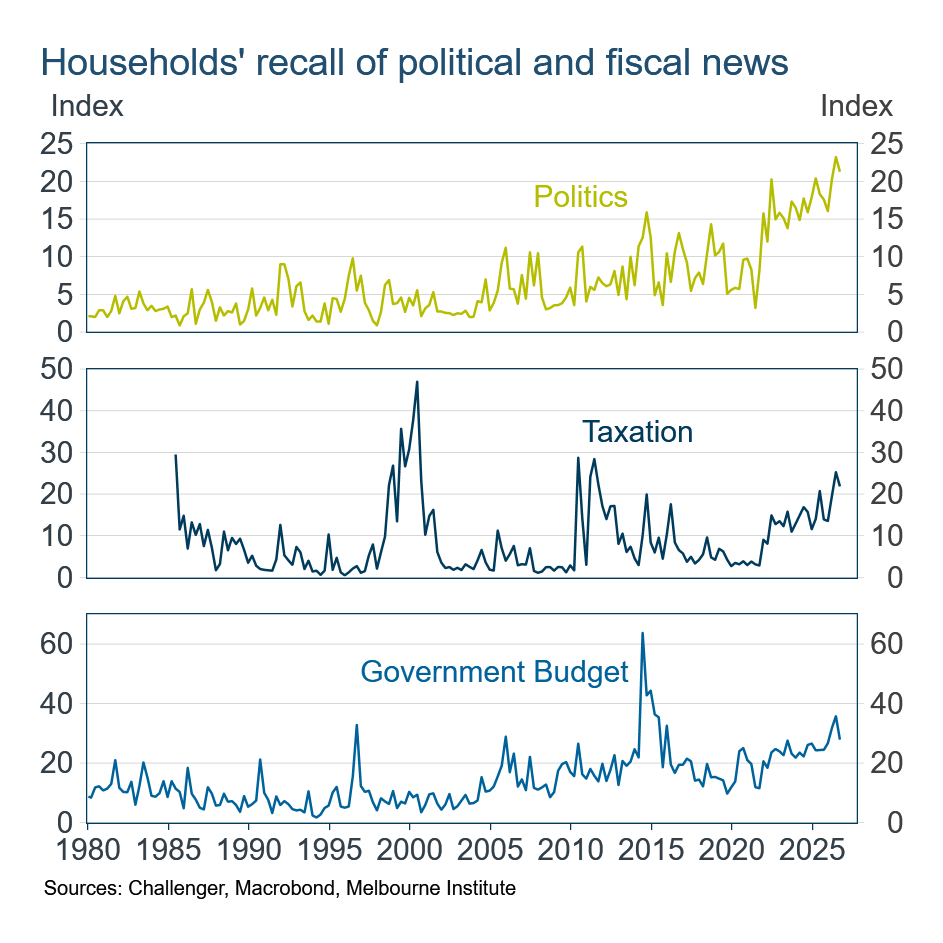
Inflation is not the only thing on households’ minds. Households report greater recall of news about politics, taxation and the government budget. While it is possible that this increased news recall reflects an admirable increased interest in important political and fiscal issues, reporting on politics, tax and the budget rarely has a positive tone. It is therefore likely that this greater news recall is also weighing on households’ mood.