Australian GDP grows, but weak productivity growth remains evident

Subscribe to Macro Musing
To stay up to date on the latest economic insights, subscribe to Macro Musing on LinkedIn.
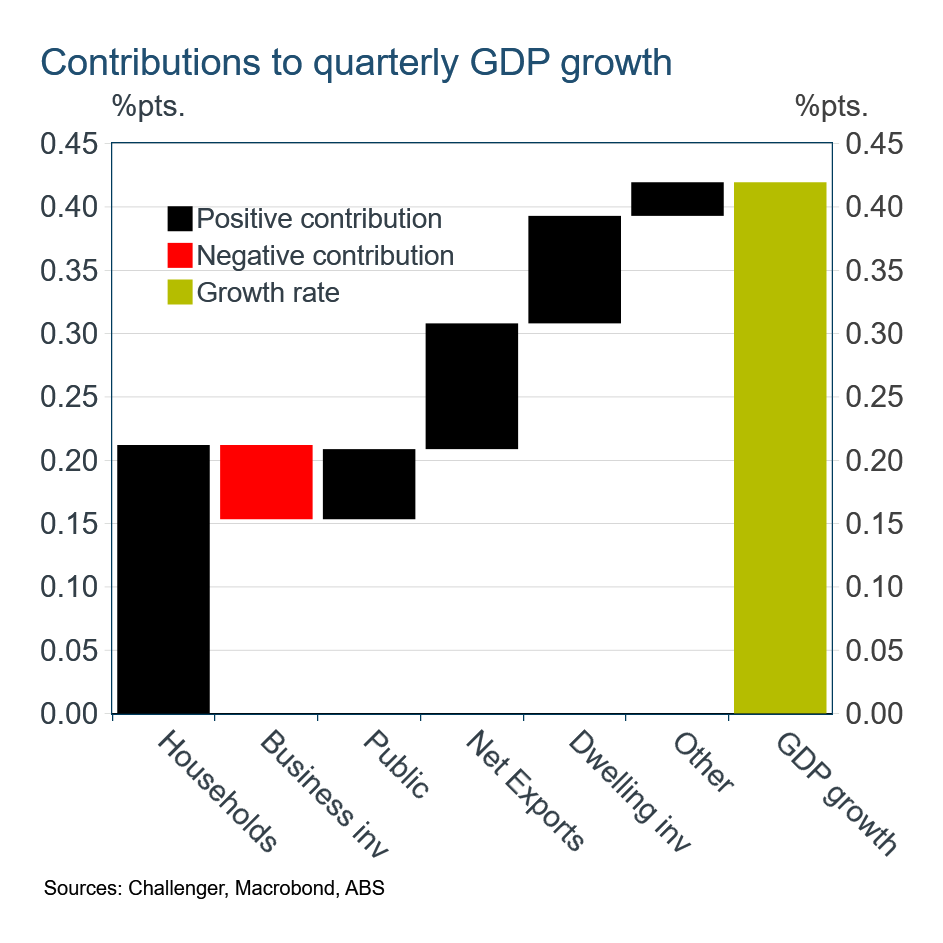
GDP grew by 0.4% in the June quarter to be 2.1% higher over the year. Quarterly growth was broad-based, with contributions from household consumption, public demand and dwelling investment. Net exports contributed to growth for the first time since the end of 2024, as export growth outpaced import growth. Business investment subtracted from growth. It is being driven by data centres, which are proving to be lumpy from quarter to quarter, much like investment during the mining boom.
Vehicle purchases grew by 10.3% in the quarter, contributing almost 0.3 percentage points to the 0.4% growth in household consumption. Given all vehicles are imported in Australia this consumption spending does not contribute to GDP. Purchases were dominated by EVs and hybrid vehicles as households responded to high and volatile fuel prices. This suggests that the underlying strength of household spending is weaker than the published data indicate. Vehicles are a one-off purchase, and specific factors drove this spending, so their strong contribution to household consumption is unlikely to persist in coming quarters.
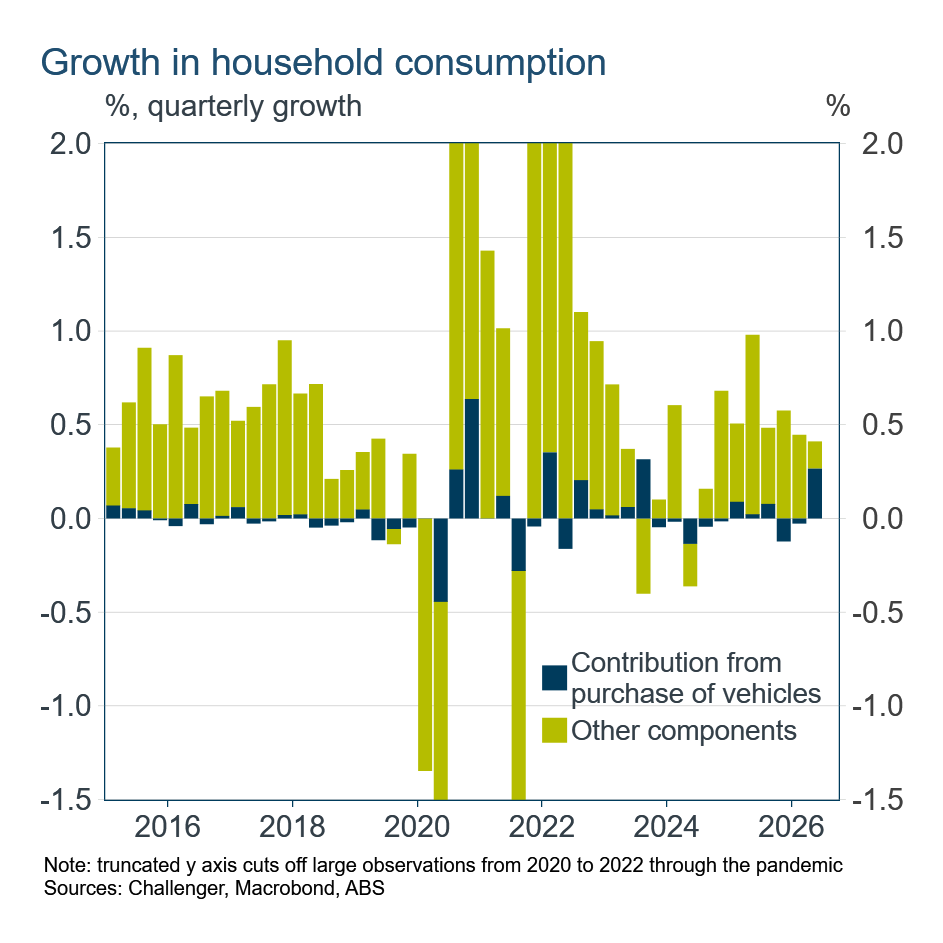
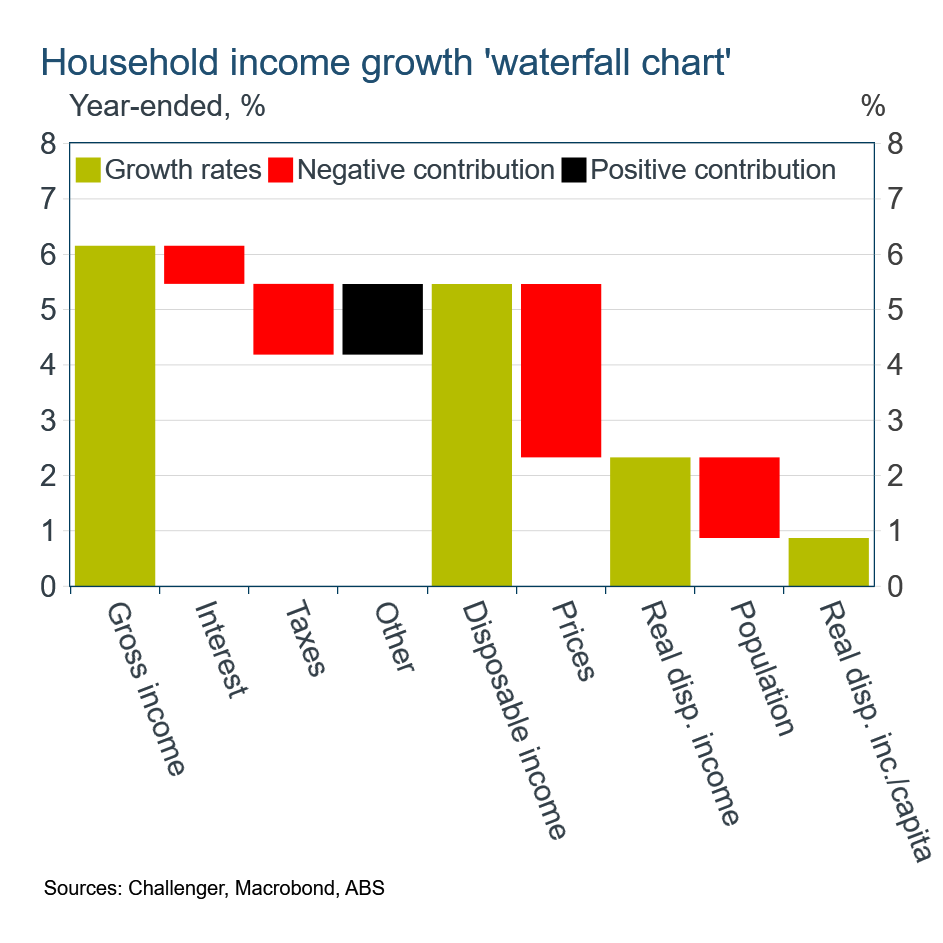
The RBA will be confident that household consumption growth will slow in coming quarters as household income growth moderates. Higher interest payments, taxes and still-high inflation are weighing on growth in household disposable income. Real household disposable income grew by 2.3% over the year to June.
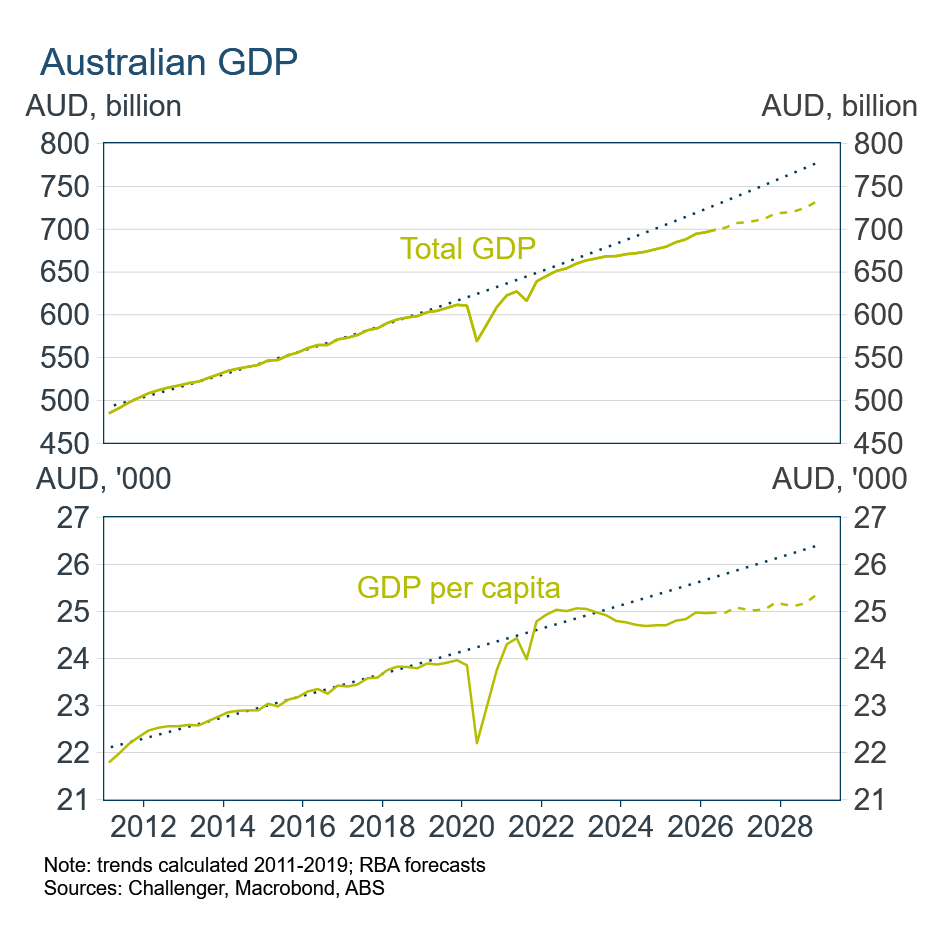
There was no productivity growth in the June quarter, and GDP per hour worked fell by 0.2% over the year. Productivity growth has averaged just 0.1% since 2018, making no contribution to growth in living standards. It is also making the RBA’s job more difficult in slowing economy-wide demand to match aggregate supply given that supply is growing more slowly.
GDP growth in the quarter was effectively offset by population growth, leaving GDP per capita unchanged. GDP per capita remains below its 2022 peak and, based on RBA forecasts, will only slowly move past that previous peak. Growth in GDP per capita has clearly slowed compared with the pre-pandemic period. Perhaps AI will eventually boost productivity growth and improve the trend in GDP per capita and living standards. But that will take time and does not lessen the need for productivity-enhancing reforms and winding back red tape.
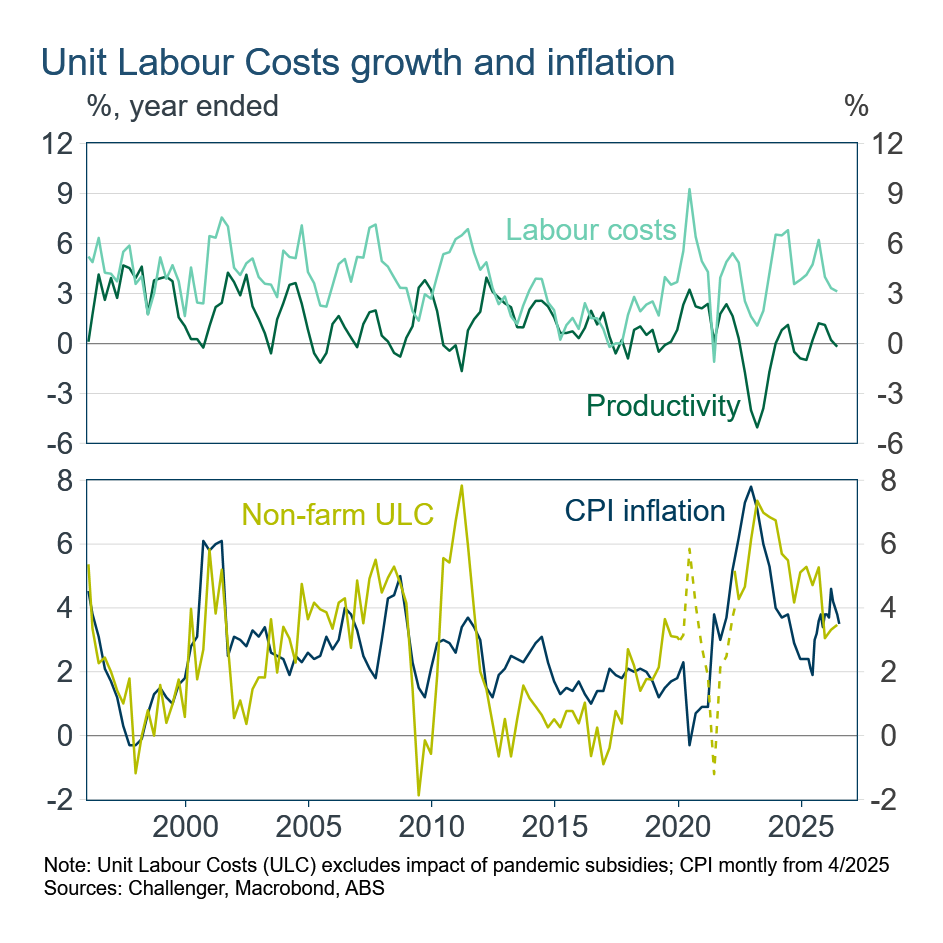
While labour cost growth has slowed over the past year, the absence of productivity growth means non-farm unit labour cost growth remains around 3.5%. Growth in this major driver of domestic inflation remains too high for the RBA to be confident that inflation will sustainably slow to its 2.5% target. Without a pickup in productivity growth, labour cost growth will need to slow further.
While the RBA will receive two CPI readings between its September and November board meetings, the strength of the economy removes a key hurdle to a rate hike in September. Increasingly, there appears to be little to gain from waiting. Inflation is clearly too strong, and it is hard to imagine any information released after the September meeting showing that a September hike was the wrong decision. The market agrees, with the probability of a September hike rising to around two-thirds after the GDP release.
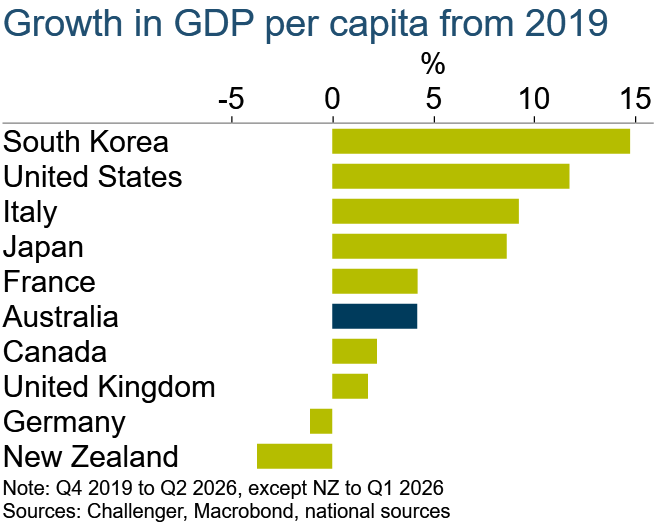
The effects of weak productivity growth are evident in international comparisons of GDP per capita. In the six and a half years since before the pandemic, GDP per capita in Australia has grown by just 4.2%, placing Australia in the middle of a group of peer economies. This is well below the 12% to 15% growth recorded in the United States and Korea. Notably, with the exception of the United States, growth in the Anglo-Saxon economies has been weak, lagging growth in Italy and Japan, two countries not usually associated with rapid growth.