Australia's inflation eases before oil price shock

Subscribe to Macro Musing
To stay up to date on the latest economic insights, subscribe to Macro Musing on LinkedIn.
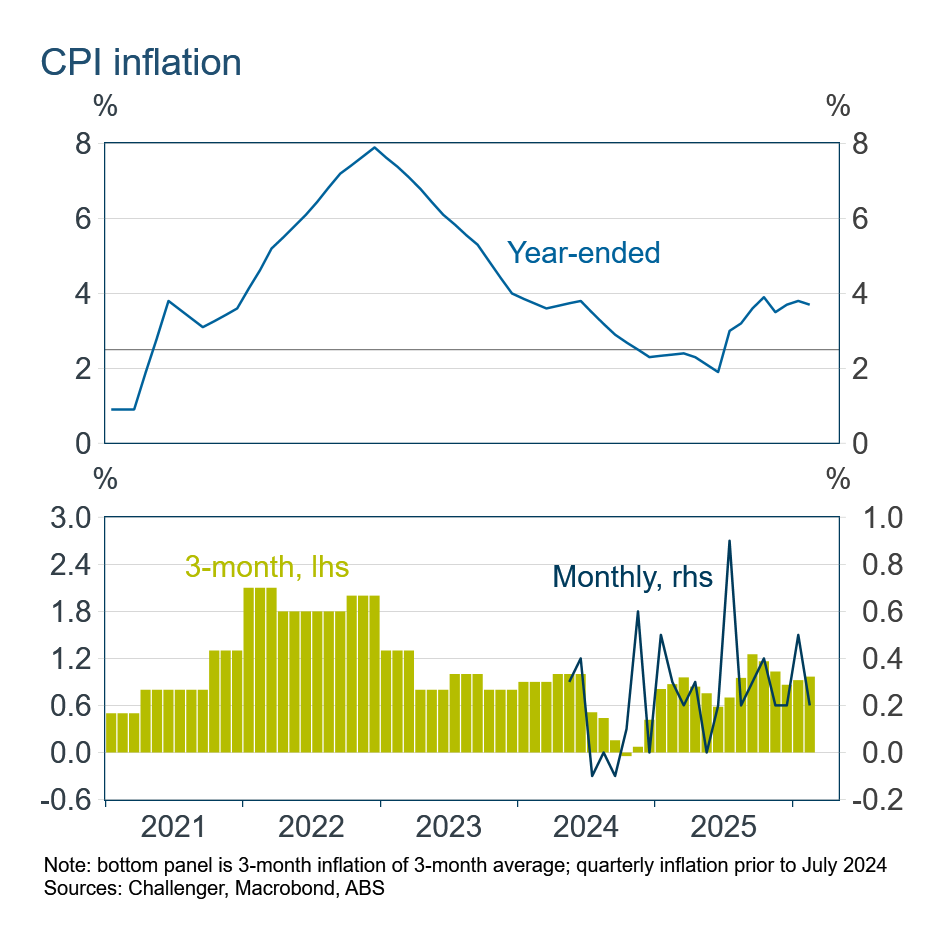
Inflation in February – before the oil price shock – was 3.7% over the year, a touch below expectations. Monthly inflation is volatile, even abstracting from seasonality, but the 3-month average which is akin to the old quarterly rate, was stable at around 1.0%.
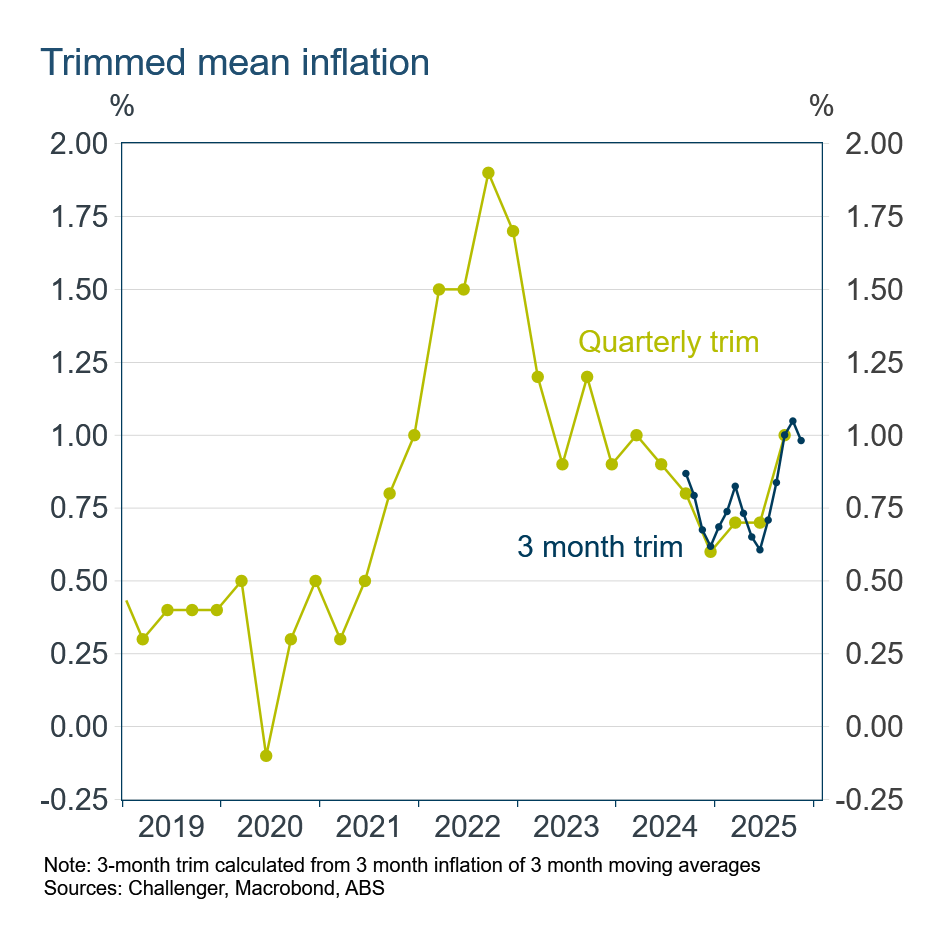
The 3-month trim I calculate – which provides a monthly measure akin to the quarterly trimmed mean that the RBA focuses on – was 0.83%. This is a slight tick up from 0.8% in January, but still well down on the 1% rates at the end of last year. This indicates inflation pressures have eased a little, but not enough to bring year-ended inflation back to the RBA’s 2.5% target. Of course, February inflation is too soon to show any effects of the RBA’s February and March rate hikes.
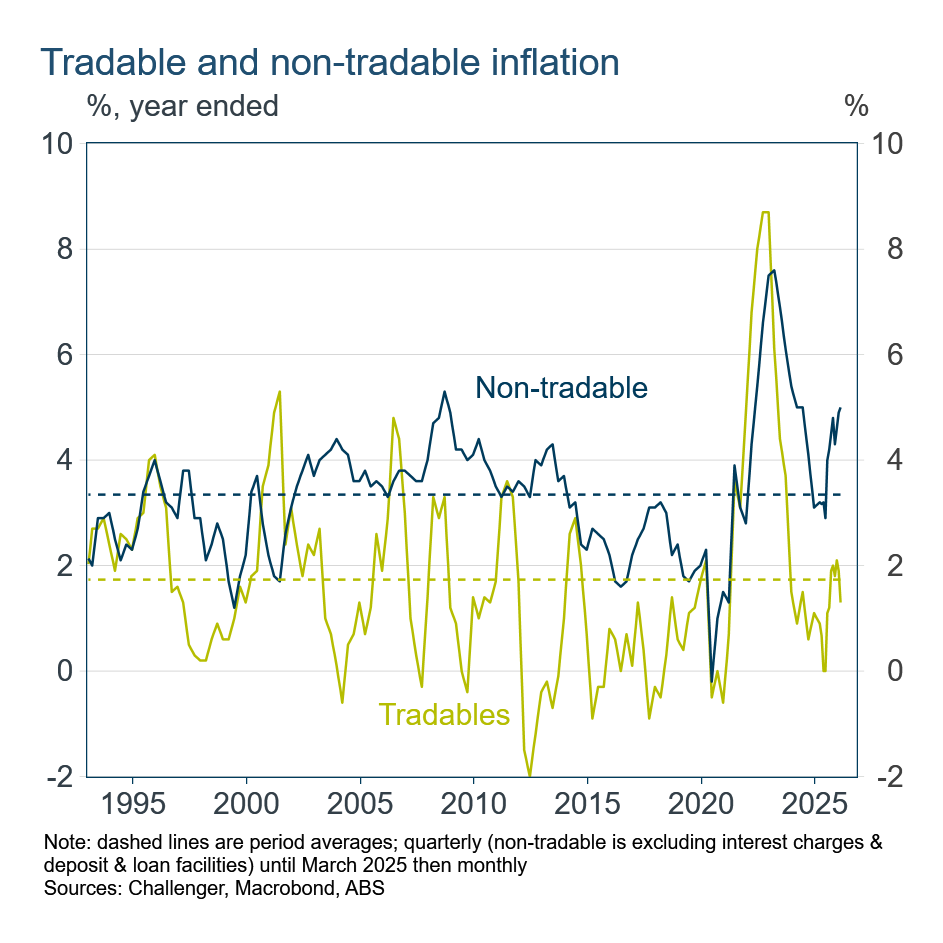
While the slight easing in trimmed mean inflation is good news, measures of domestic inflation paint a less rosy picture. Non-tradable inflation was 5% over the year – well above its inflation era average – and the highest rate outside of the post-Covid breakout and pre-GFC period. The RBA also pays closer attention to domestic inflation measures, given they depend more on labour costs which respond to domestic capacity constraints. By contrast, tradable inflation has been well contained.
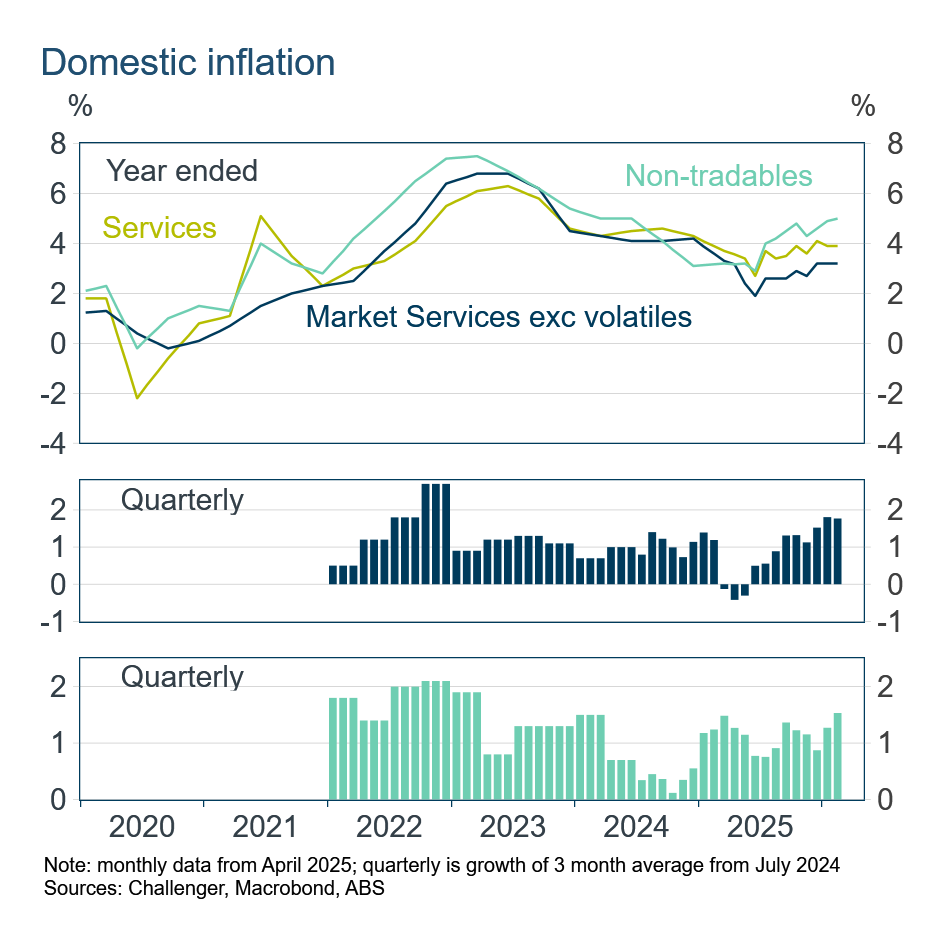
An alternative measure of domestic inflation, market services excluding volatile items, accelerated through 2025. Within this, inflation has been strongest for domestic travel (8.7% over the year), maintenance and repair of vehicles (6%), vet and pet services (4.9%), and cleaning, repair & hire (4.4%). Ten of the fourteen components in this measure have inflation exceeding the RBA’s 2.5% target.
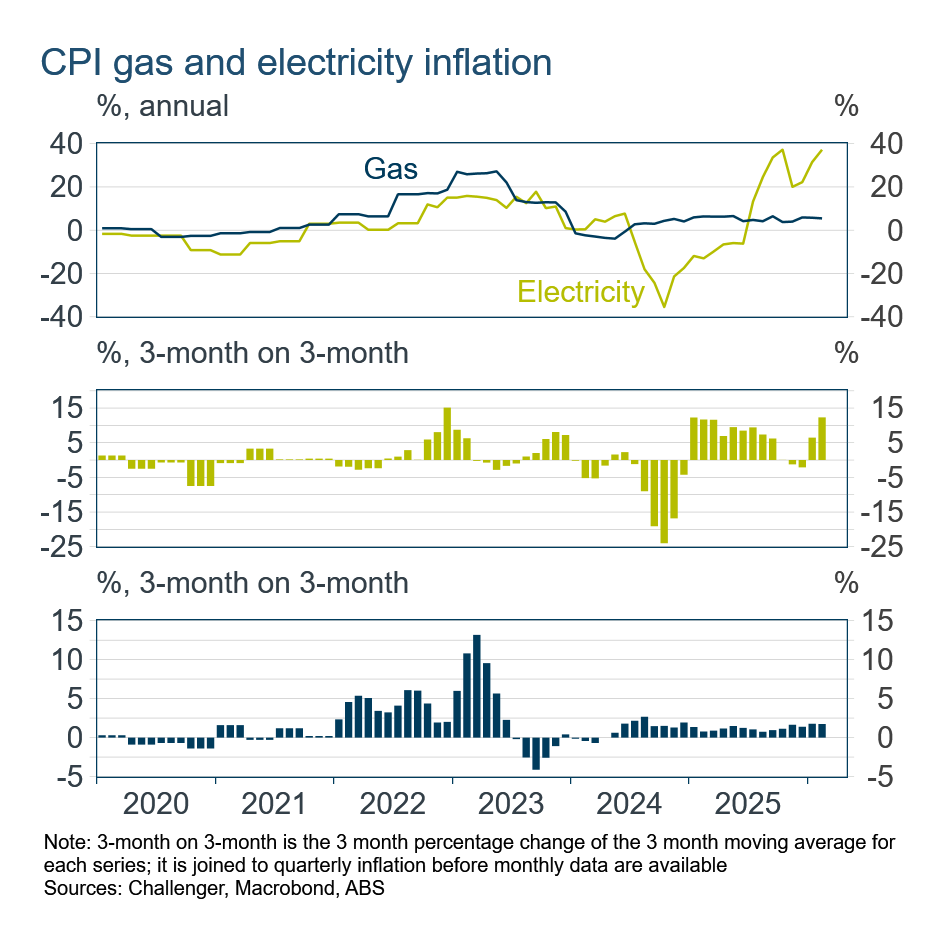
One component that continues to have a large impact on inflation is electricity which increased by 37% over the year. The large rise reflects reductions in the electricity rebates provided to households by governments. Excluding the effects of rebates, electricity prices rose 4.9% over the year.
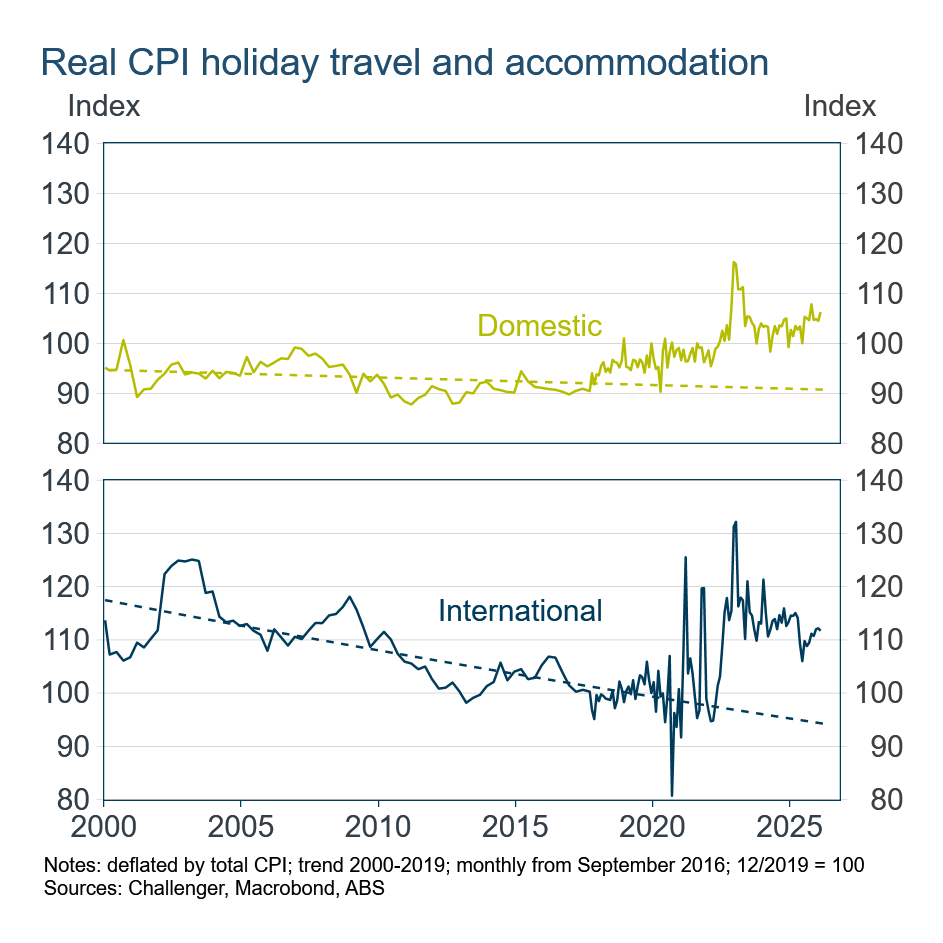
Prices for domestic holiday travel increased 8.7% over the year, far exceeding the 1.2% increase in international holiday travel. But before you rush out to book an international holiday, it’s worth noting that the real price of international travel (i.e. accounting for the increase in aggregate prices) is 12% higher than on the eve of the pandemic. This reverses the long-run trend decline in the real cost of international travel. Real domestic travel prices are 6% higher, unwinding the years-long decline in real domestic travel costs.
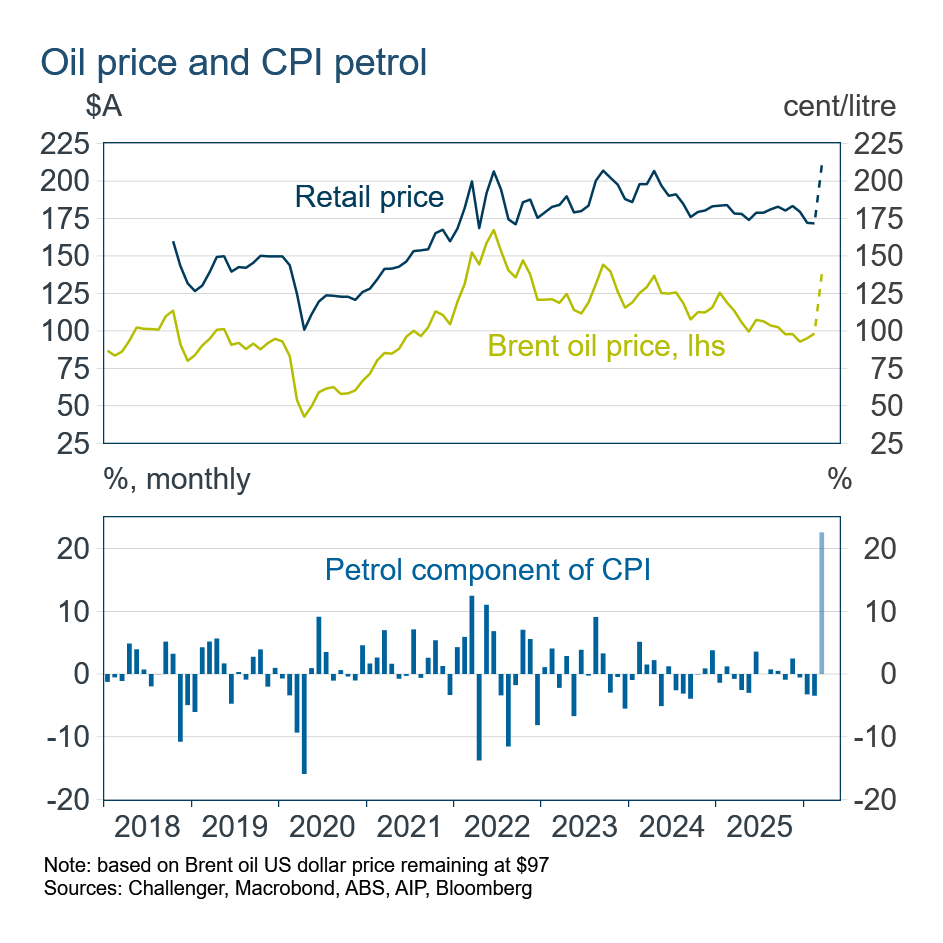
Now it’s all about oil prices. March petrol prices are going to be significantly higher than in February. On current estimates, the petrol component of the CPI will record monthly inflation exceeding 20%, contributing at least 0.7 percentage points to March CPI inflation, with the broader effects of higher oil prices likely pushing aggregate inflation to around 5% in coming months. With the oil supply shock increasing inflation, but slowing economic growth, the RBA will struggle to keep the economy on an even keel.