Imagine there is no inflation
Subscribe to Macro Musing
To stay up to date on the latest economic insights, subscribe to Macro Musing on LinkedIn.
The RBA may wish there was no inflation, but it’s not that easy. Despite keeping the cash rate unchanged, the RBA may still need to hike again to be confident that inflation will slow to its 2.5% target.
Superficially, the RBA’s forecasts suggest that the cash rate has peaked. Inflation forecasts were revised lower and now reach the RBA’s target in early 2028, while unemployment forecasts were increased. These forecasts are based on a market path for the cash rate that prices in only half of one further hike, which would make very little difference to the outlook.
However, the policy risks are skewed towards higher rates. Inflation has been above target for too long, and the RBA can have no tolerance for further upside surprises. The Board’s statement noted that “inflation is still too high. It is not expected to return to around the midpoint of the target range until late 2027 and there are upside risks to this projection”. In her press conference, the Governor noted that it is “quite possible that we may need to raise interest rates again”.
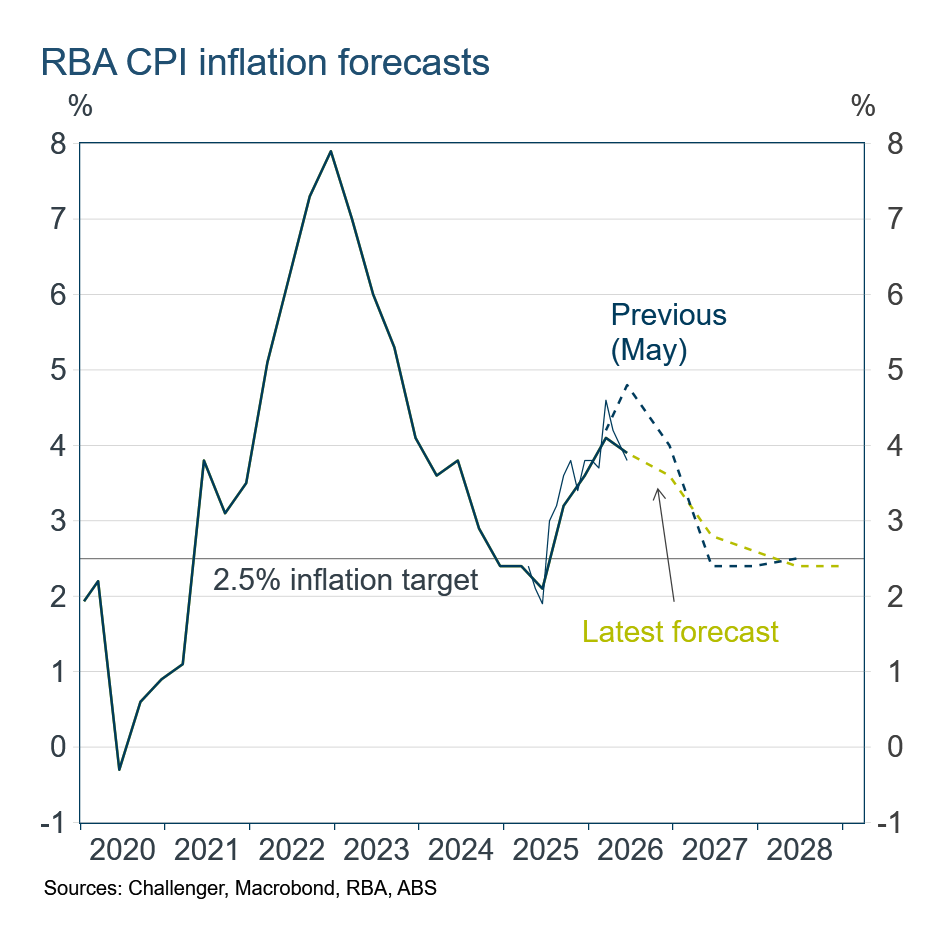
CPI inflation is forecast to continue declining, having peaked well below the 4.8% peak projected in the RBA’s May forecasts.
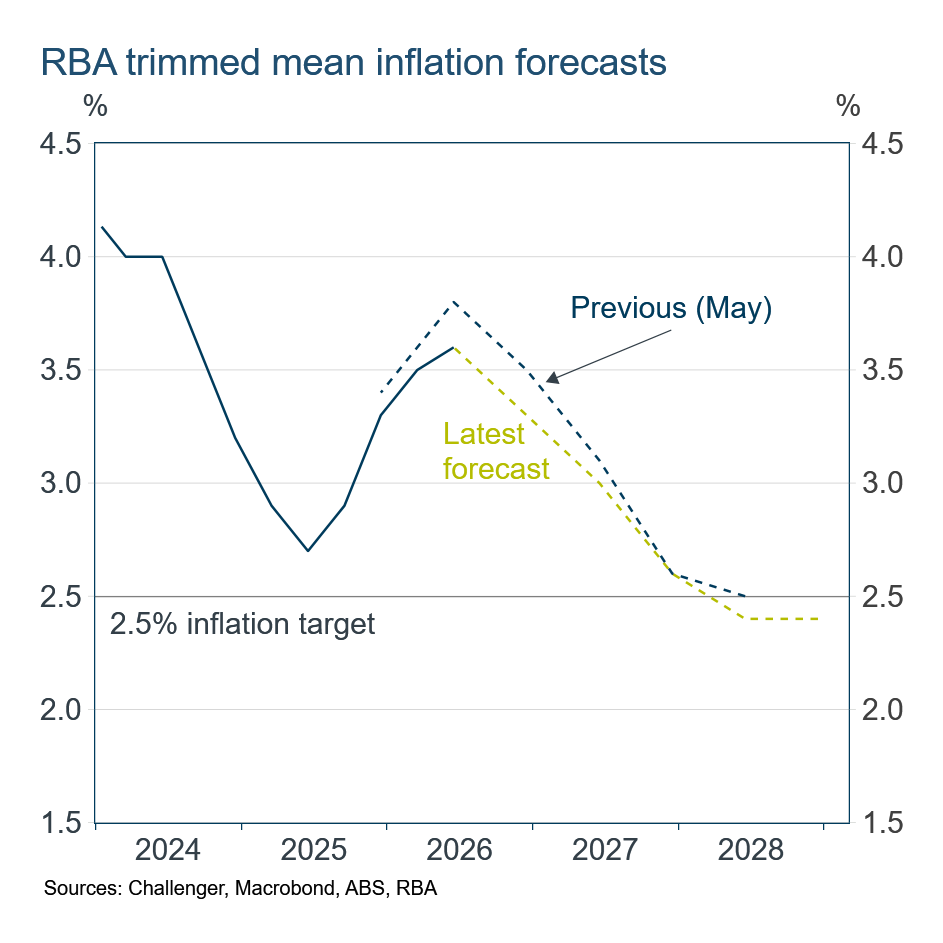
Trimmed mean inflation similarly slows from here and, like CPI inflation, reaches 2.5% in early 2028. However, the forecasts imply that the RBA expects quarterly trimmed mean inflation to average 0.8% in the second half of 2026, following 0.8% in each of the first two quarters of this year. An upside miss would suggest a reacceleration in inflation and, in the absence of a sharply weakening economy, would require a further cash rate increase to demonstrate that RBA policy remains consistent with its target.
The inflation forecasts are lower than in May, despite being based on a lower cash rate path, because the economy has slowed a little more than the RBA expected. In part this reflects that the housing market is cooling faster than expected, as seen in the sharp slowdown in monthly housing loan approvals data shown by the RBA but unfortunately no longer published by the ABS.
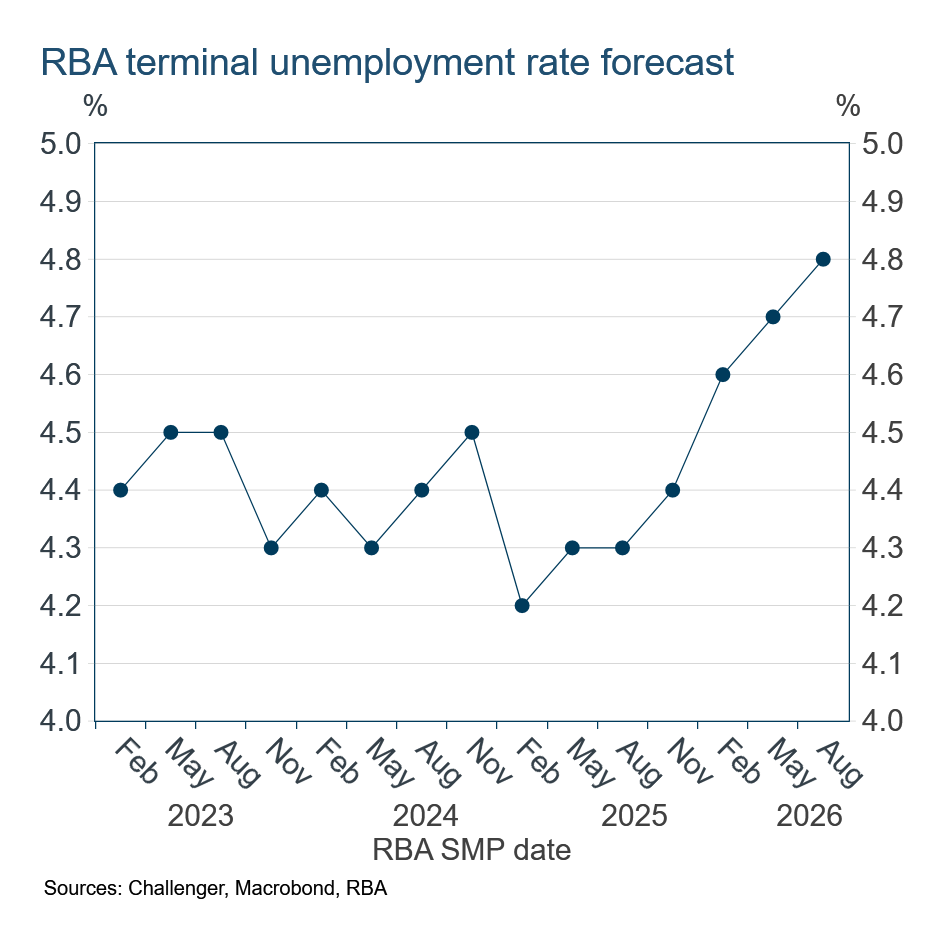
The RBA once again increased its forecast for the terminal unemployment rate, which is now expected to reach 4.8% by mid-2028. Allowing for wide margins of uncertainty, the Governor noted that this is within the estimated range for the NAIRU, the unemployment rate that would indicate the labour market is no longer ‘tight’. The RBA has consistently revised its NAIRU estimate higher over the past year.
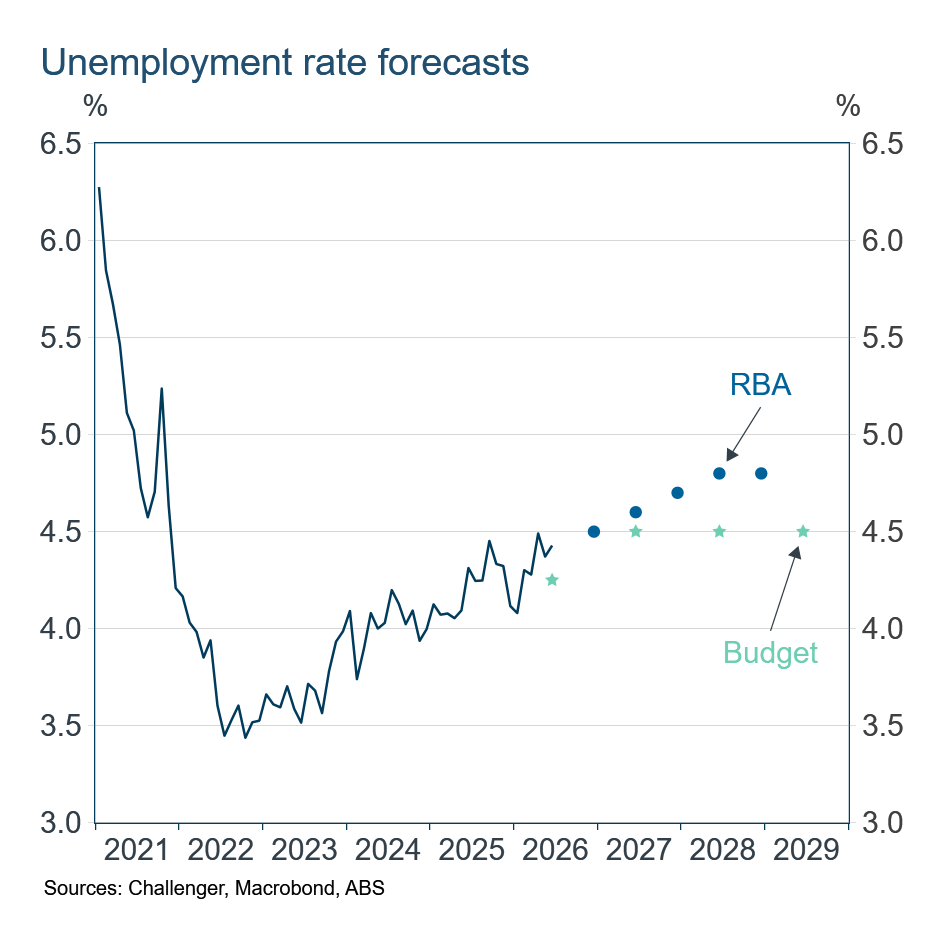
The RBA’s higher unemployment forecasts make the Government’s Budget forecasts, which are only a few months old, look even more naively optimistic. Higher unemployment than the Government projected implies a larger Budget deficit and more debt issuance, putting some upward pressure on long-term yields.
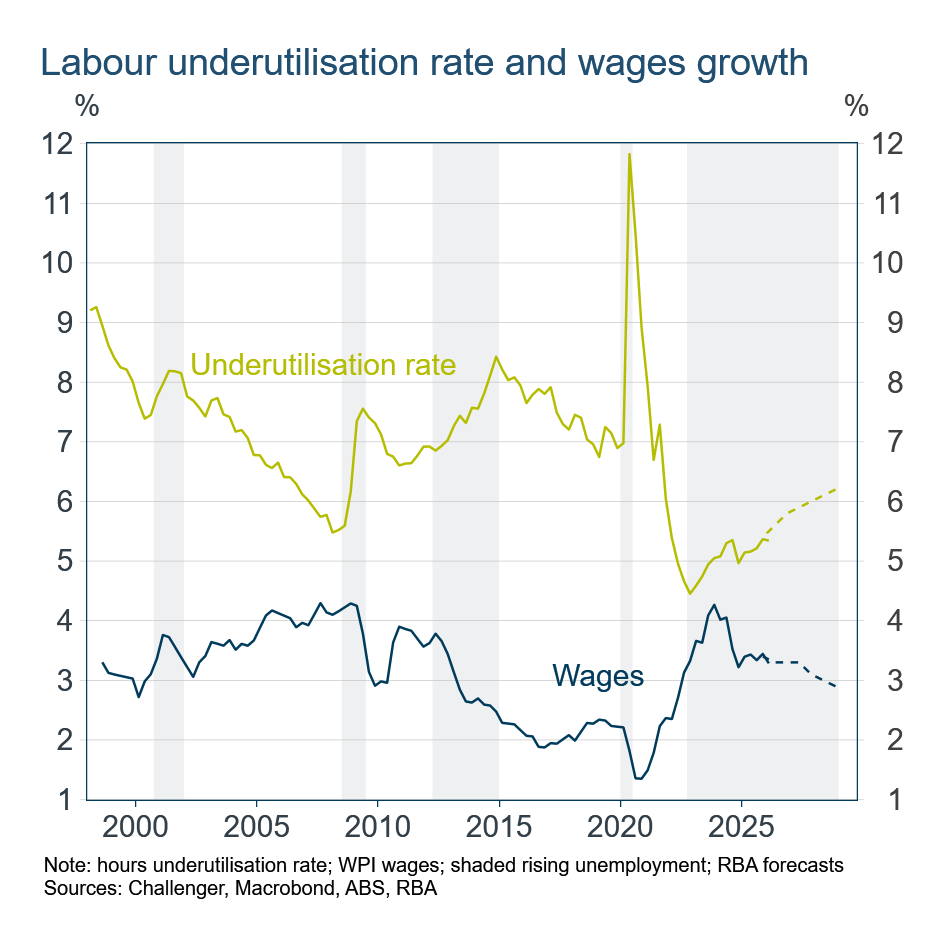
The labour underutilisation rate is projected to rise by more than the unemployment rate. This implies that the share of people working fewer hours than they would like will increase by more than unemployment, which is unsurprising given weakening labour demand. This growing slack in the labour market will slow wages growth, while keeping it just a little above inflation.
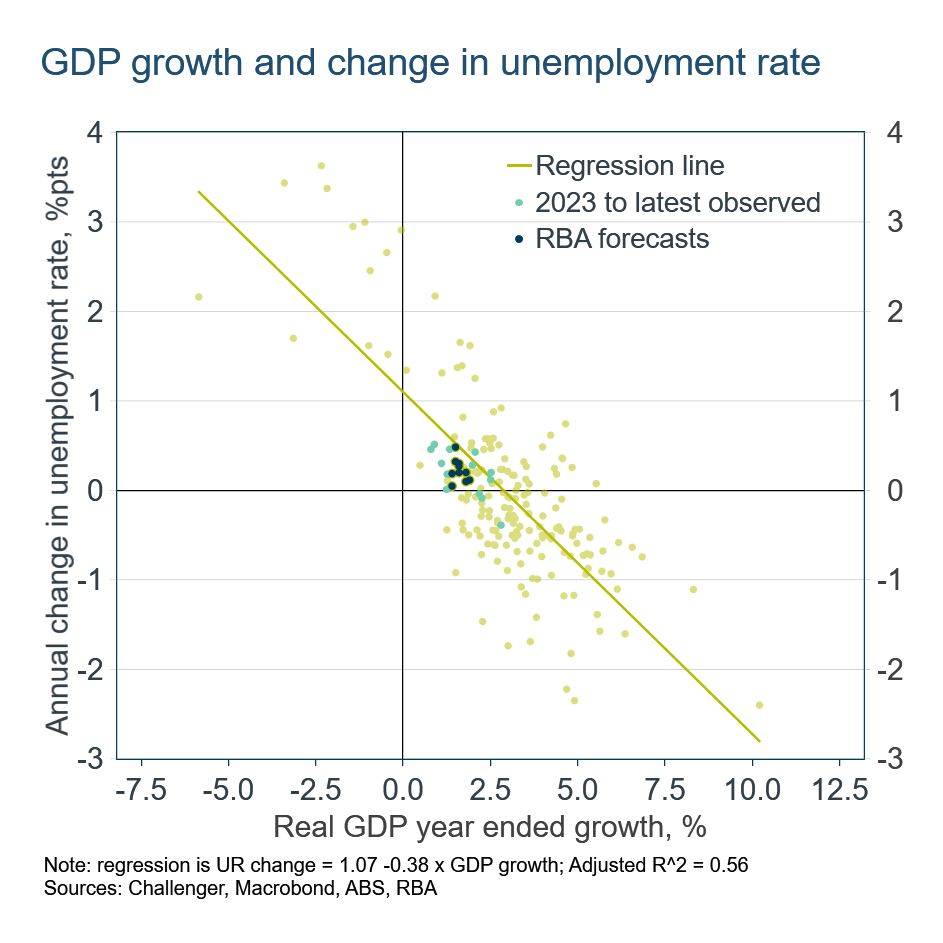
The increase in the unemployment rate is consistent with the weak projections for GDP growth. This relationship between GDP growth and the change in the unemployment rate is known as Okun’s law. If anything, unemployment has risen a little less over the past couple of years than would normally have been expected given the weakness in GDP growth. The RBA expects this relationship to continue, consistent with recent anaemic productivity growth.