Subscribe to Macro Musing

To stay up to date on the latest economic insights, subscribe to Macro Musing on LinkedIn. 

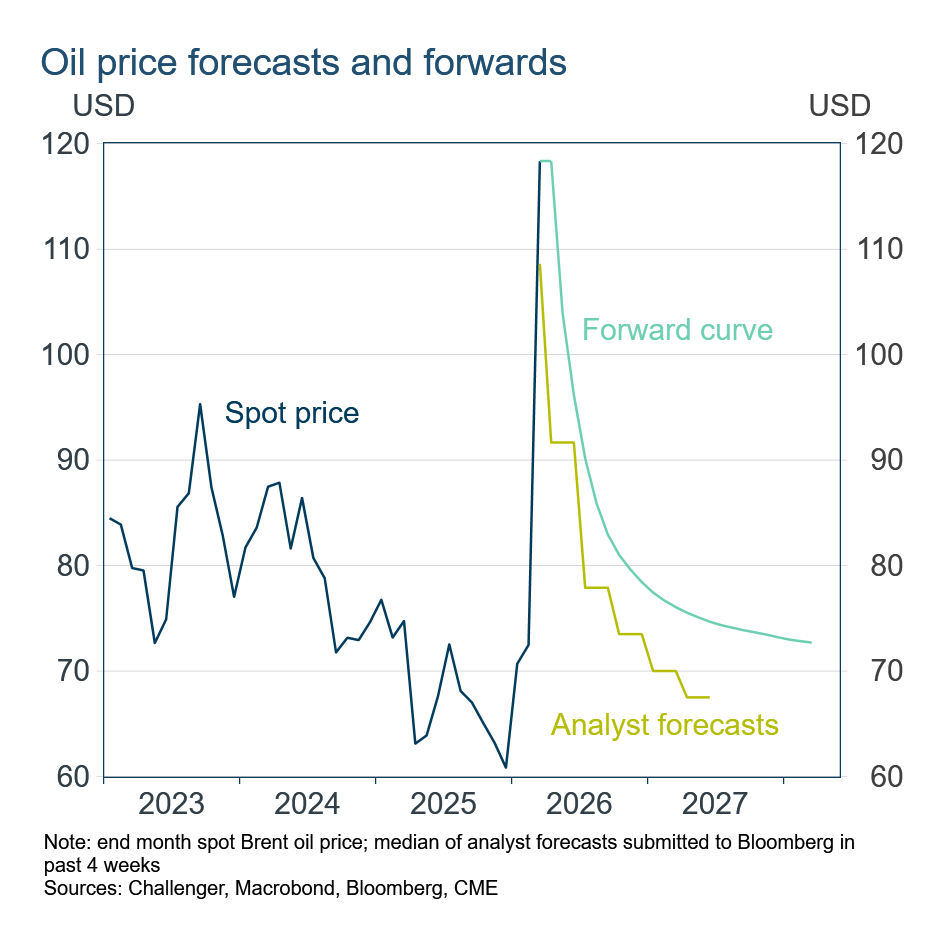
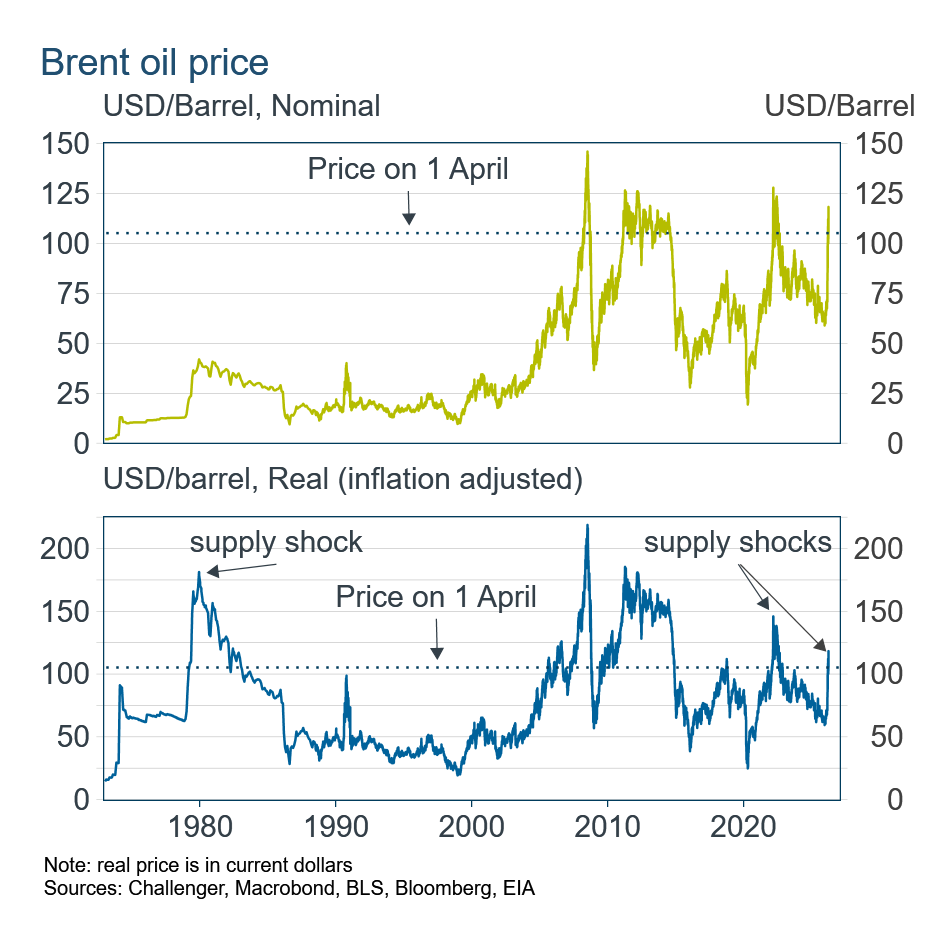
With ongoing uncertainty about the war in the Middle East the oil price has traded in a wide range over the past week. Brent has traded as high as US$119 this week, but with increased hope of an end to hostilities it has fallen to around $105 as I write (who knows what it will be when you read this).


How long oil prices remain elevated depends on when peace is achieved – or at least there is a ceasefire – in the Middle East. Brent forward contracts imply the price will decline to average $97 in the June quarter this year and fall back to just under $80 by the end of this year. Analysts’ forecasts seem more optimistic, although they may be somewhat stale – with some not updated for a few weeks – and therefore don’t reflect the most recent price surge. 

oil forwards

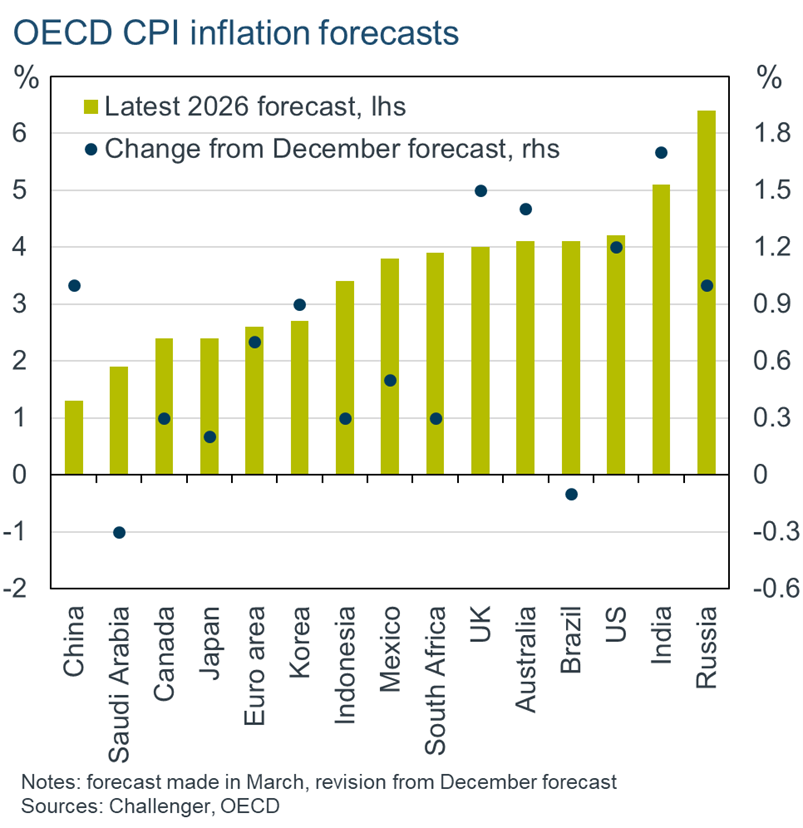
The surge in oil prices is increasing inflation globally. The OECD forecasts released this week include higher projections for inflation in 2026 for almost all countries. Inflation forecasts were increased – relative to the December forecasts – in Australia, the US and the UK by between 1.2 and 1.5%, mostly because of higher oil prices. In some countries the projected increase in inflation is smaller because of weaker domestic economic conditions, or because petrol is a smaller share of household spending.

OECD CPI forecast

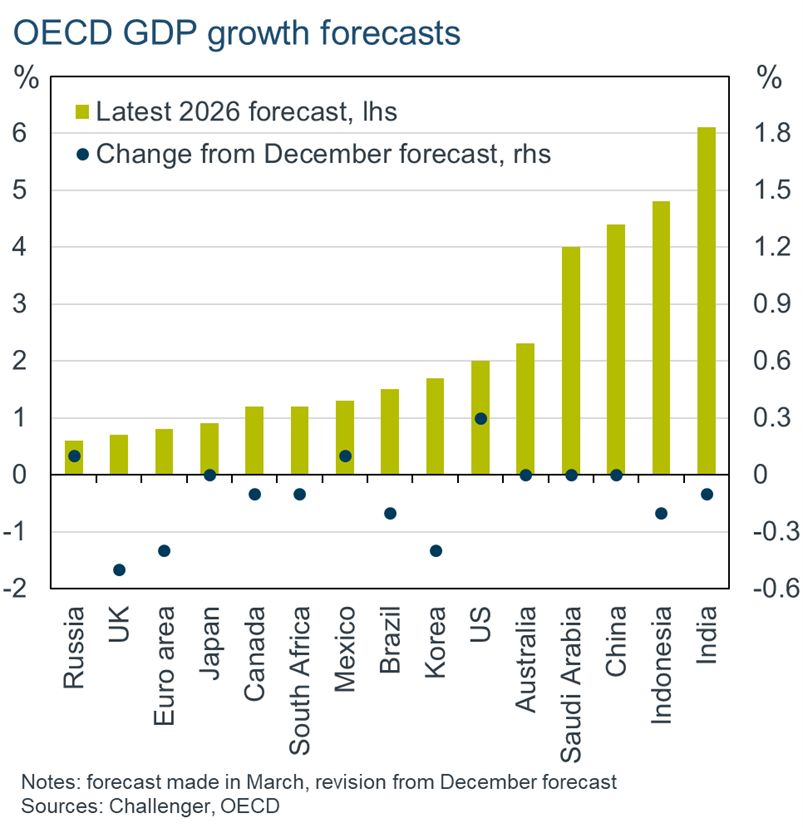
Higher oil prices will also lower economic growth this year, with the notable exception of some oil producing countries outside of the Middle East. However, downward revisions to growth are relatively modest for most countries, 0.2 percentage points or less. Larger downward revisions were made for the UK, the euro area and Korea, but this partly reflects other domestic developments. Forecast growth in Australia for 2026 was unchanged from the OECD’s December forecast at 2.3%.

OECD GDP forecast

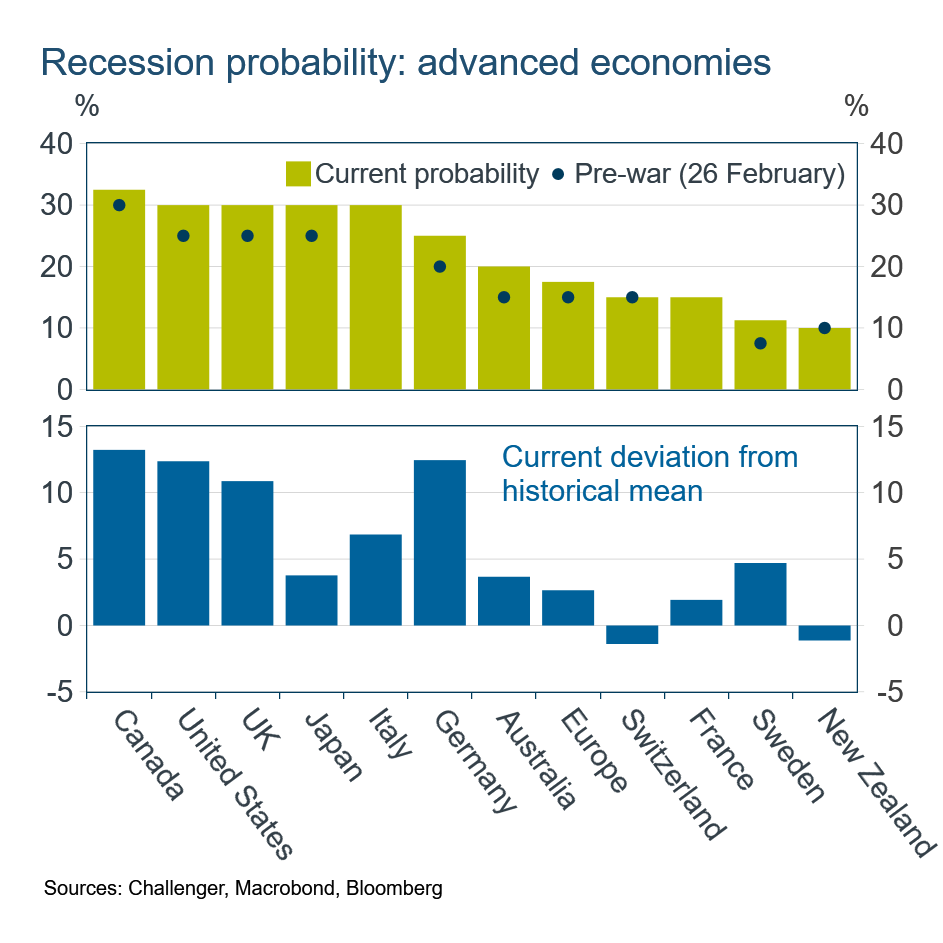
The oil price shock is unlikely to push economies into recession. Economists’ probability of recession have been revised only slightly higher for most economies since the start of the Middle East war. The estimated likelihood of recession is 10-13 percentage points higher than the historical average in the US, the UK, Canada and Germany. However, in most other countries recessions are not seen as particularly likely – that is, around their historical average.

Recession probability

An important reason why downward revisions to growth – and increased expectations of recession – are modest is that adjusting for inflation the oil price is not especially high. Even trading in the range $100–125 the oil price in real terms is below the peak from the Russian invasion of Ukraine in 2022 and well below the peak in the early 1980s, two previous notable shocks to oil supply. It is also well below the oil price before the Global Financial Crisis, which reflected strong demand rather than weak supply, and the price that prevailed in 2011–2014 which reflected a combination of strong demand and some disruption to supply.

real oil price

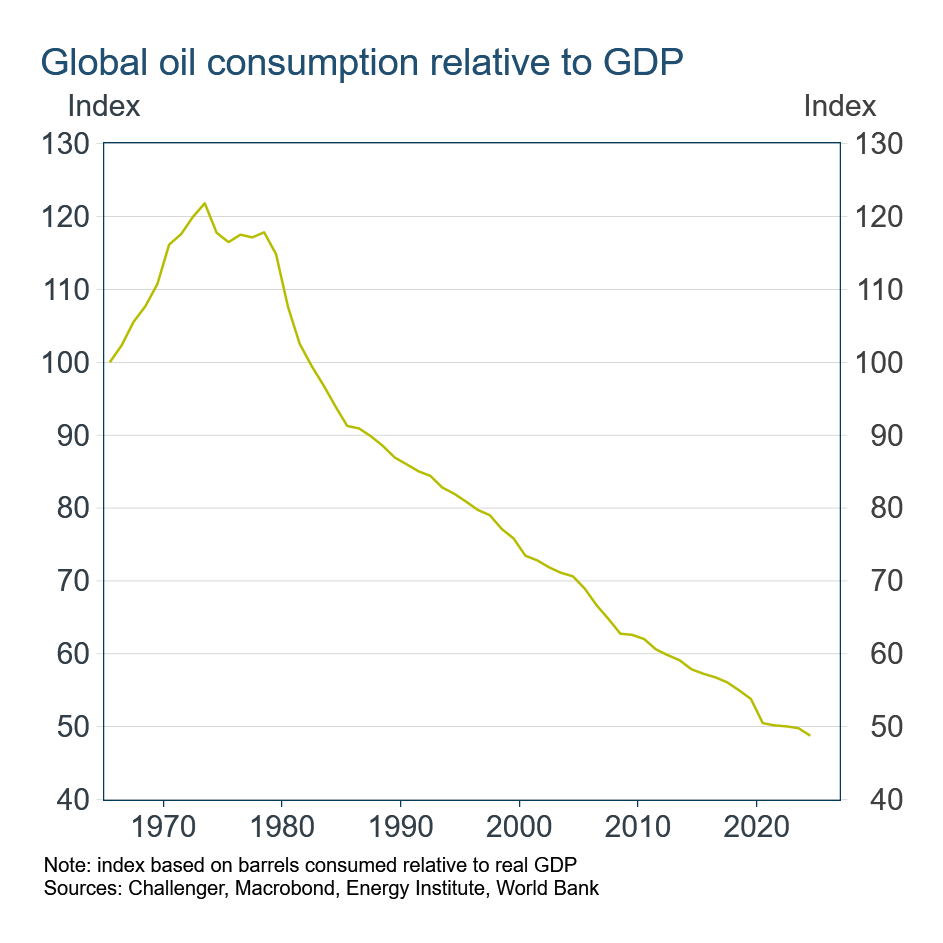
The other reason the higher oil price has had a modest impact on growth expectations is that oil is less important to economic activity than it has historically been. The number of barrels of oil consumed per unit of GDP is less than half what it was in 1980. Economies are more efficient in their energy use and more economic activity is service based.

Global Oil consumption

But with Easter upon us, one price that has fortunately fallen sharply in recent months is cocoa. With the prices of sugar and milk also relatively low, adjusted for inflation, the cost of chocolate ingredients is around its lowest level in recent years.
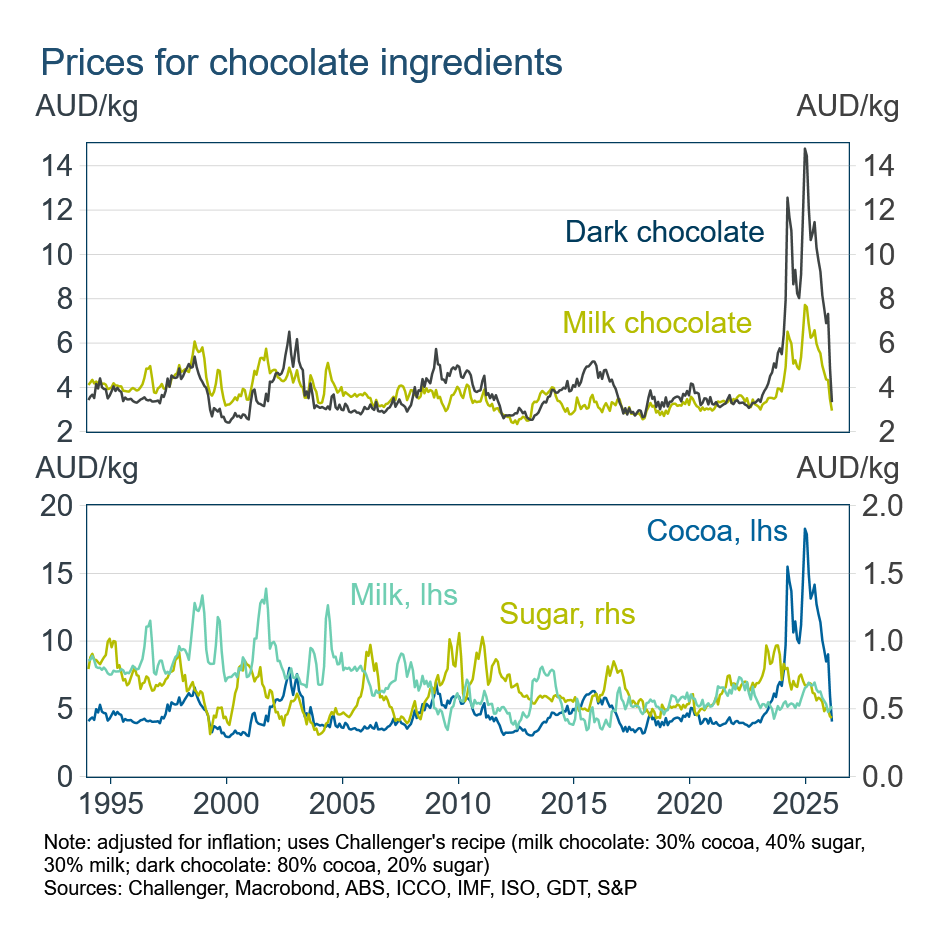
Chocolate ingredients

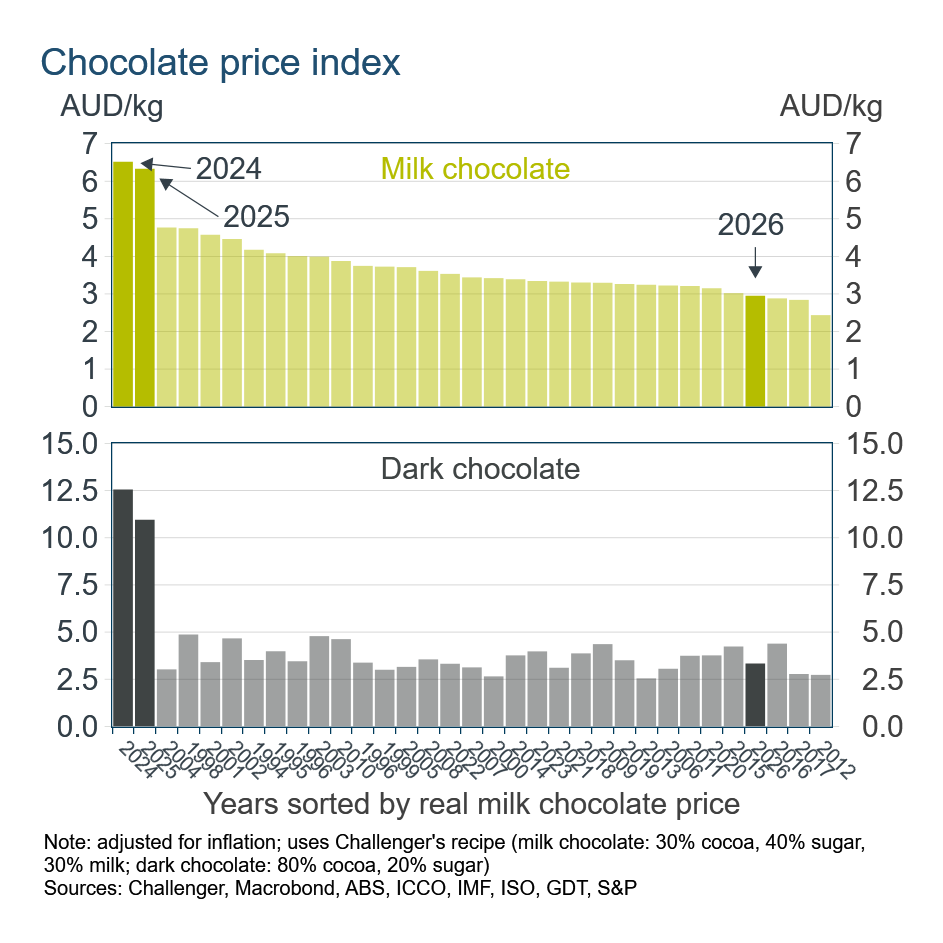
This is all good news for the Easter Bunny. The past two Easters have seen the highest cost of chocolate – or at least the two or three key ingredients – in three decades. The surge was particularly bad for dark chocolate because of its greater use of cocoa. By contrast, 2026 is shaping up as one of the cheapest Easters on record. 

Chocolate price index

Of course, that comparison is based only on the raw ingredients for chocolate. If the Easter Bunny needs to drive to transport ingredients or deliver chocolate, this year will be much more expensive with Australian-dollar oil prices around their highest Easter levels once adjusted for inflation. It will be a good year for the Easter Bunny to hop.
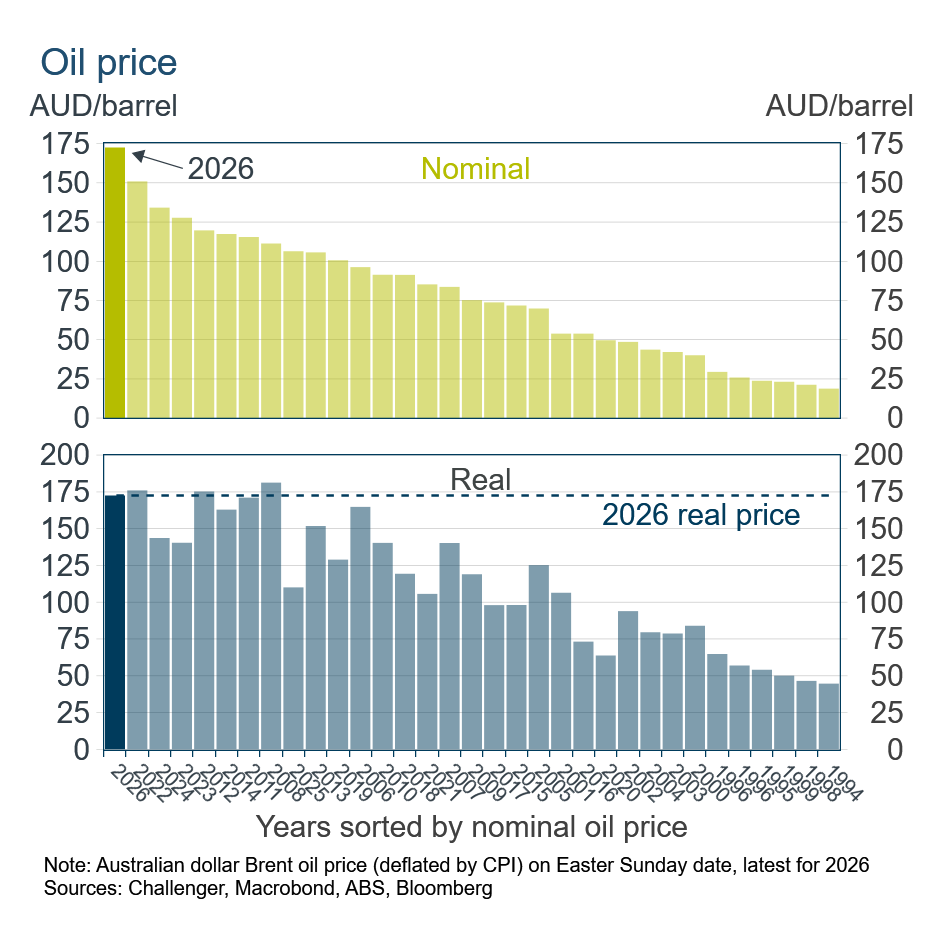
Oil prices at Easter dates

Related content

Loading...