

RBA, El Niño and the World Cup

Subscribe to Macro Musing
To stay up to date on the latest economic insights, subscribe to Macro Musing on LinkedIn.
The RBA held the cash rate steady yesterday and the Governor once again avoided giving guidance on whether the cash rate would be increased further. Inflation pressures are moderating as demand eases, but the question is whether it will slow fast enough for the RBA to view its inflation target as credible and avoid inflation expectations creeping higher. The RBA is not yet relaxed about inflation which is not surprising given its recent experience. The RBA was late in recognising the severity of the 2021 to 2023 breakout in inflation and, like other economists, was surprised by the resurgence in inflation over the past year. For now, the RBA will keep talking about inflation to remind us it is alert, if no longer alarmed.

Australia’s Bureau of Meteorology (BoM) and the US National Oceanic and Atmospheric Administration (NOAA) have both declared that an El Niño event is underway and expected to strengthen until at least the end of this year (BoM, NOAA). The Southern Oscillation Index (SOI), an indicator of El Niño, has fallen sharply and the BoM expects this to be a strong to very strong El Niño event, although it notes that other factors also contribute to weather conditions in Australia. The low SOI and expectations of a strong El Niño indicate rainfall in eastern Australia will fall significantly in coming months.
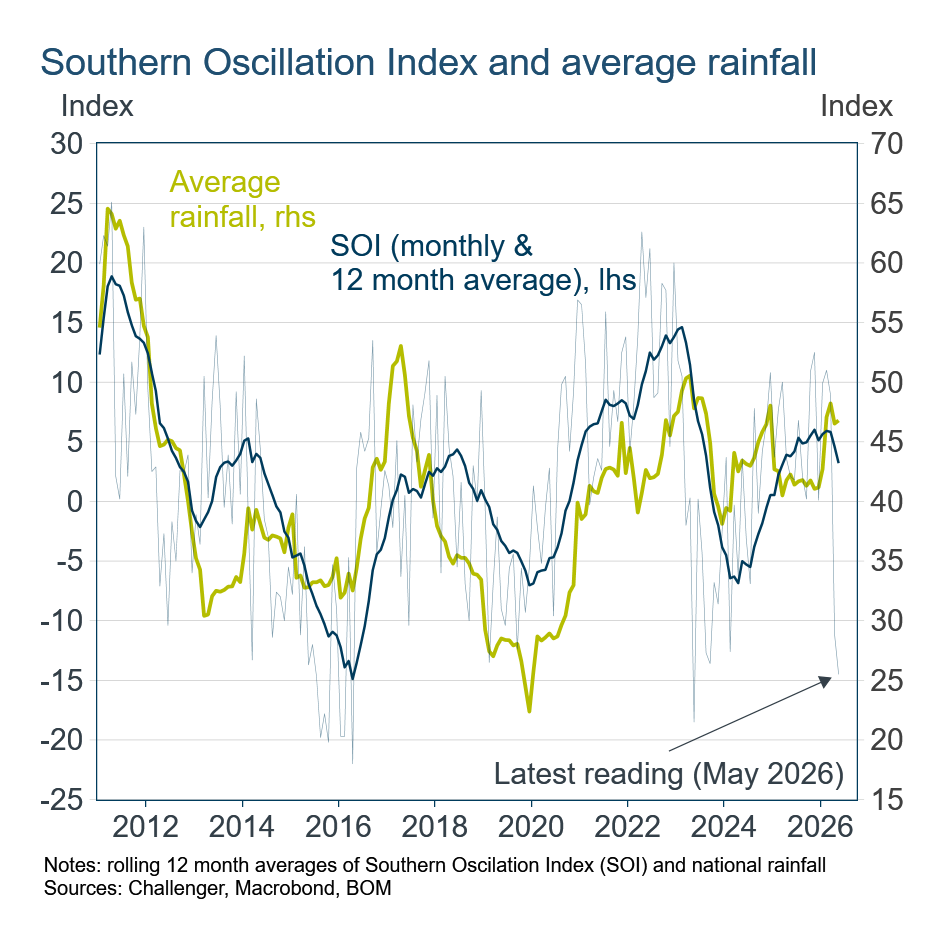
Fortunately, Australia has had good levels of rain so far this year. That means water storage levels in dams and tanks across the country are relatively high. Rainfall to date will also have helped with winter planting.
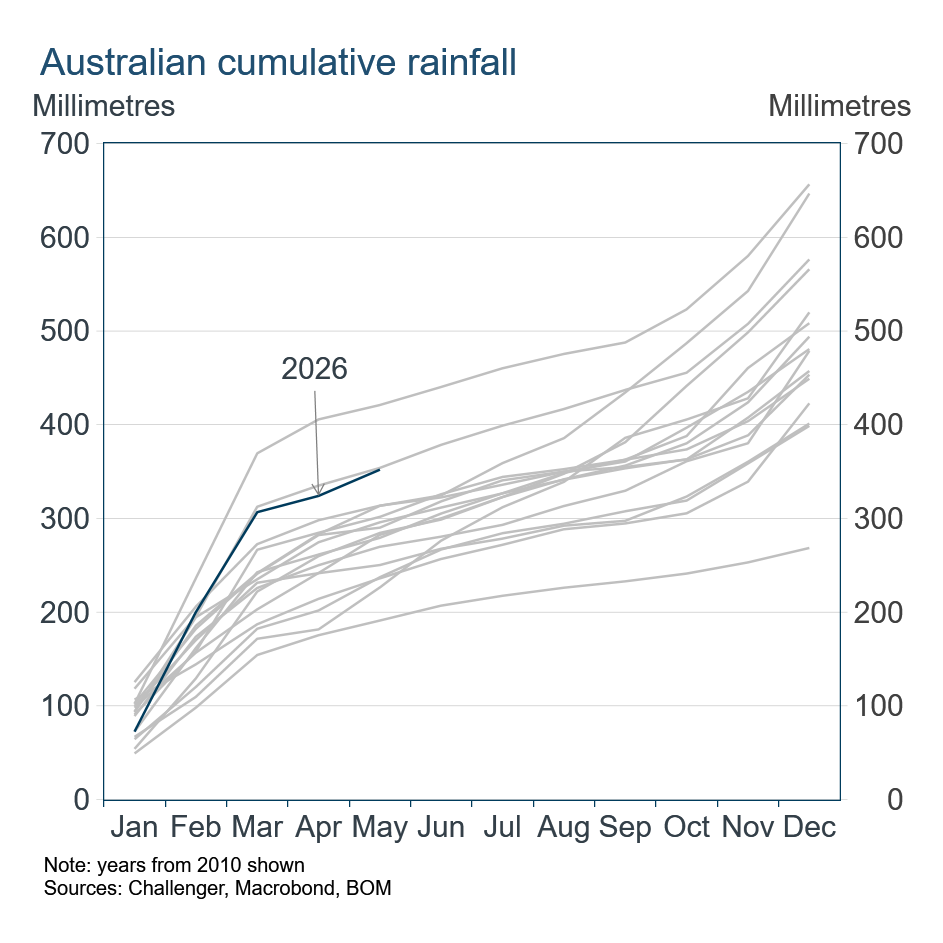
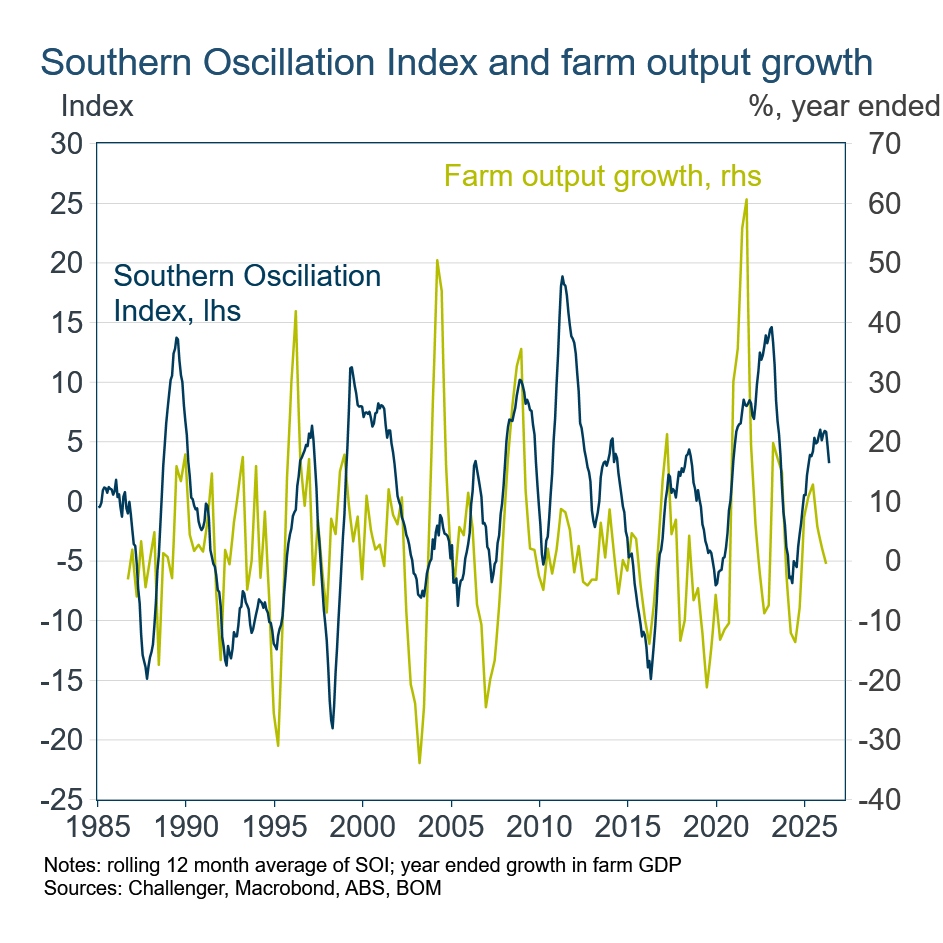
However, the fall in rainfall associated with El Niño and the low SOI will see farm output fall. Farm output varies widely with weather conditions, with 20% or greater falls or increases not unusual. While the effects for rural communities can be severe, the impact on the Australian economy is moderate given farm output has accounted for just over 2% of total GDP since the early 2000s, well down from over 15% in 1960.
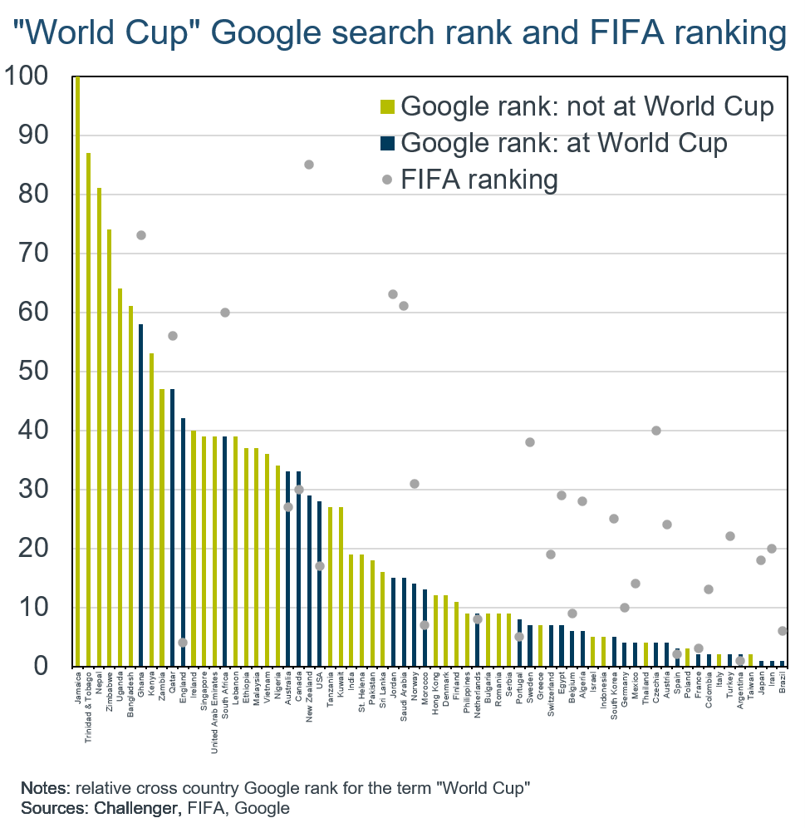
For anyone who hasn’t noticed, the Football (‘soccer’) World Cup has started in the United States, Canada and Mexico, with 48 countries competing. The World Cup is said to be the single-most viewed sporting event globally. When it comes to attention, it seems when you know, you already know. The countries with the highest share of Google searches for “World Cup” tend not to be at the World Cup, or they have teams with lower FIFA rankings.
Tournament favourites, those with the highest FIFA football rankings – Argentina, Spain, France, Portugal and Brazil – have low Google rankings. Clearly their populations already know and don’t need to search. One exception is England, whose team is ranked fourth in the world, but ranks behind only Ghana and Qatar in terms of Google rankings for countries at the World Cup. Australia, Canada, New Zealand and the USA are also a group of four participants with relatively high shares of Google searches for the World Cup. Clearly there’s something about Anglo Saxon countries.
Related content
Stay informed
Sign up to our free monthly adviser newsletter, Tech news containing the latest technical articles, economic updates, retirement insights, product news and events.