
Loading component...
Loading component...
Loading component...
Loading component...
Loading component...
Loading component...
Loading component...
Loading component...


To stay up to date on the latest economic insights, subscribe to Macro Musing on LinkedIn.
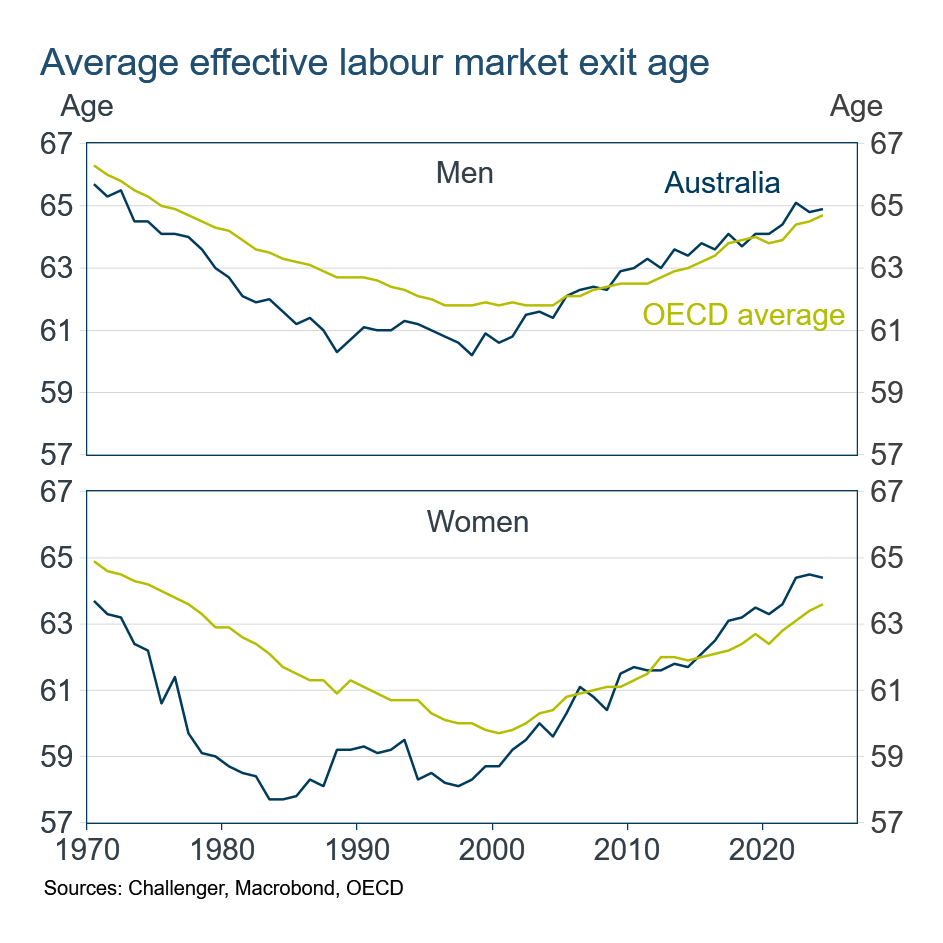
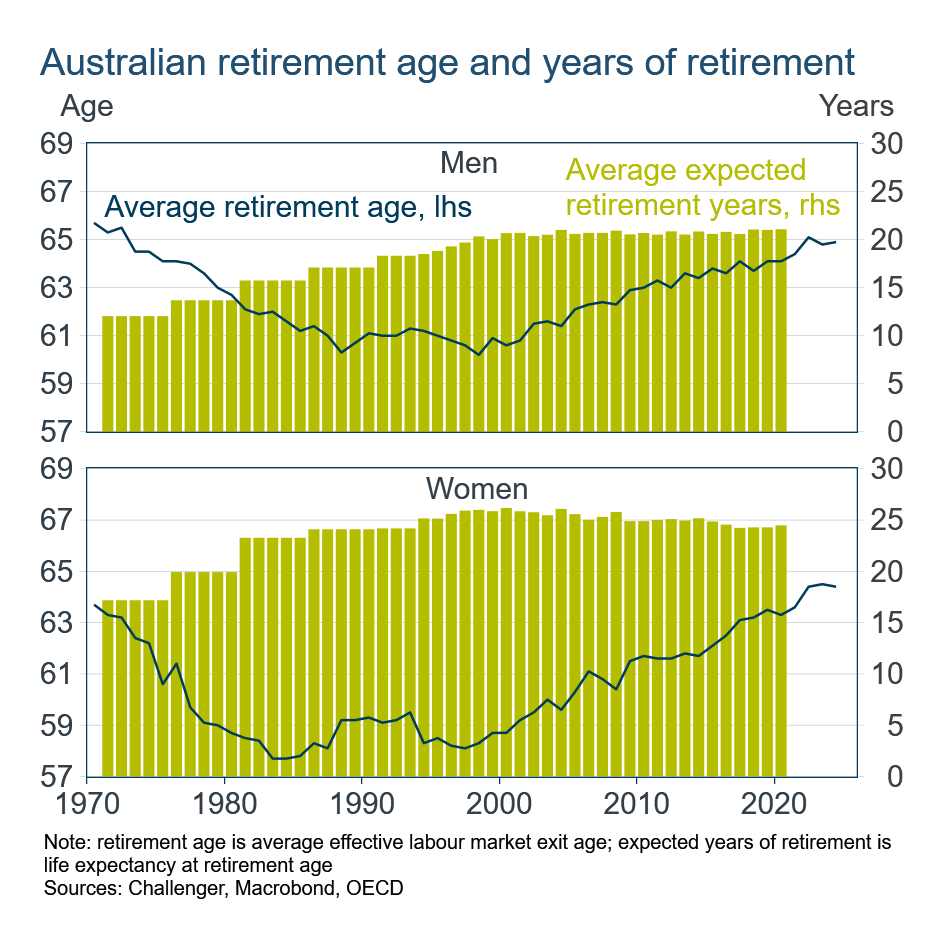
Data show that the average retirement age (‘exit from labour market’) has increased in Australia since 2000. This gradual increase in retirement age followed several decades of Australians retiring earlier, a pattern seen across OECD (‘rich’) countries.
The average retirement age for Australian men is 65, in line with the OECD average, having increased by around 4 years since 2000. For women it is a touch under 65, a little above the OECD average, having increased by almost 7 years.
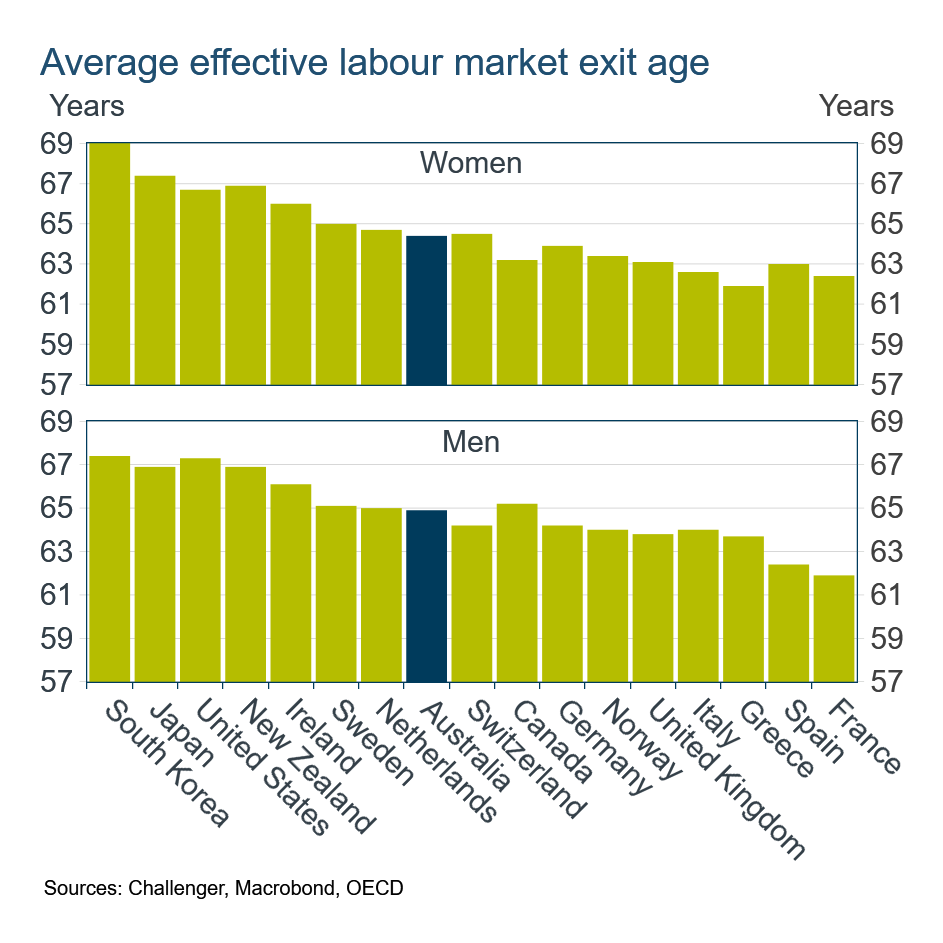
The average retirement age in Australia is a couple of years lower than in some culturally similar countries, such as the United States and New Zealand, for both men and women. However, it is a touch higher than in Canada and the United Kingdom. Retirement ages are influenced by policies and practices in each country even though countries have had similar trends over time reflecting the effects of increased wealth and greater longevity.
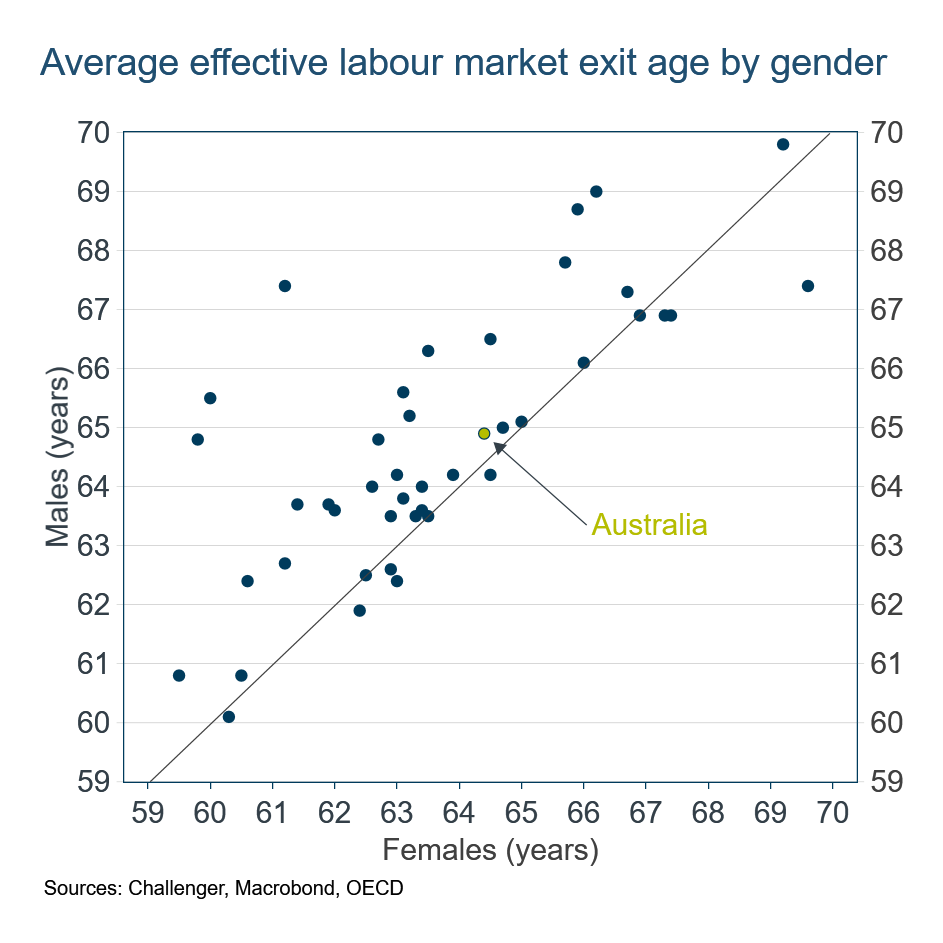
In most countries (OECD and non-OECD) average retirement age for men is higher than for women (i.e. dots are above the diagonal line in the chart below). In Australia average retirement ages are very similar for men and women (the dot is close to the line).
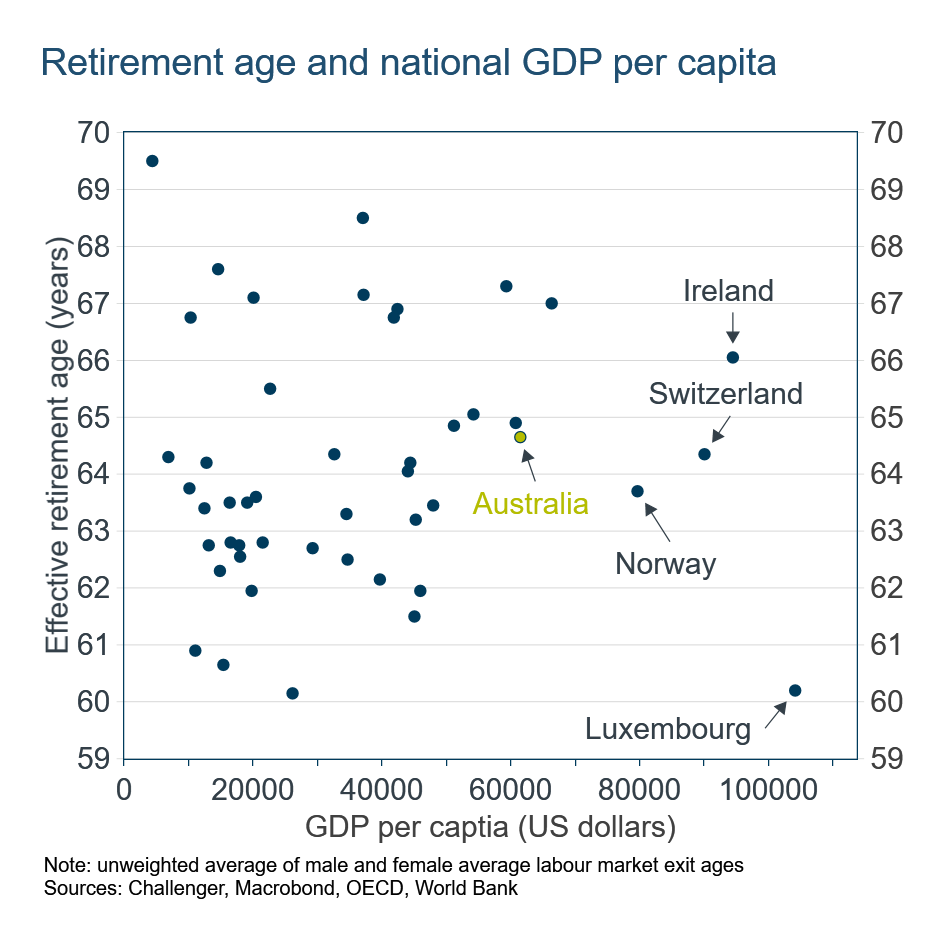
You might expect that people can afford to retire earlier if they are richer. But across countries there is no relationship between retirement age and GDP per capita (as a proxy for average income). Most countries with similar or higher GDP per capita to Australia have similar retirement ages, with the exception of Luxembourg which has the highest incomes, and the lowest retirement age. All of a sudden Luxembourg is looking very appealing.
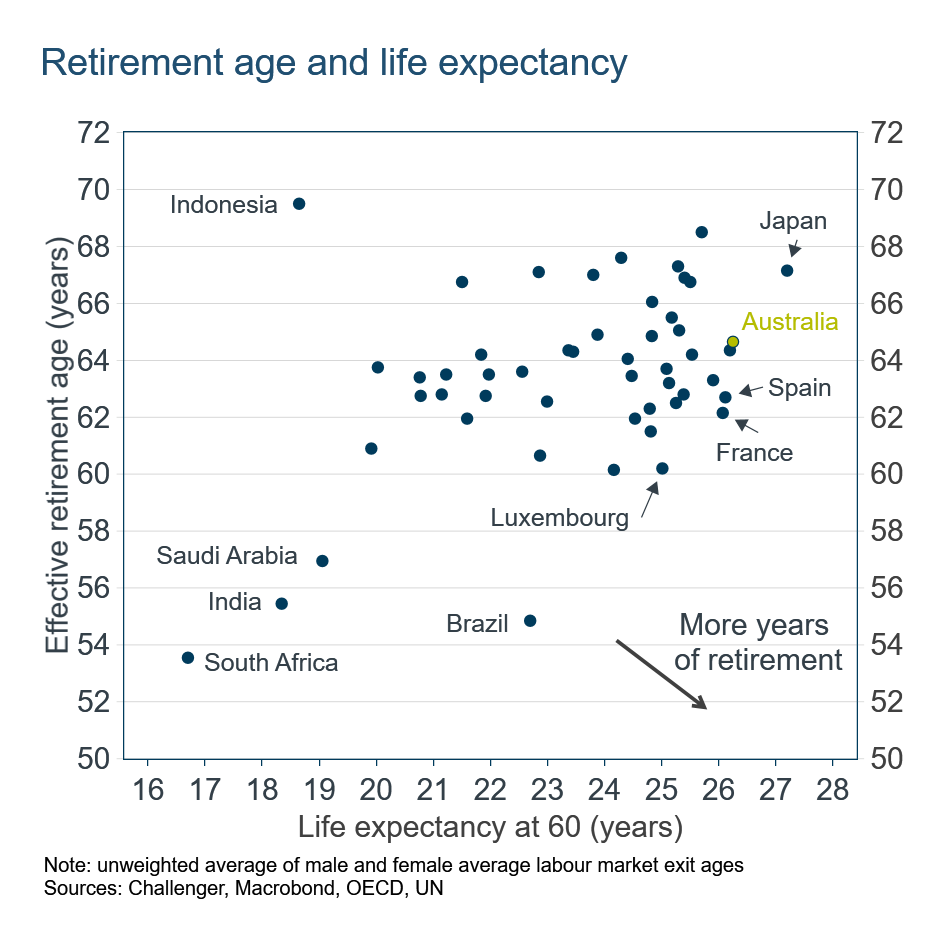
Retirees in countries with higher life expectancy and lower average retirement ages will tend to have more years in retirement. In Australia retirees can look forward to on average more than 20 years of retirement after finishing work. This is among the longest period of retirement across countries. The longest implied period of retirement is in Luxembourg, France and Spain.
In Australia the average retirement age has been increasing broadly in line with longevity since around 2000, keeping fairly constant the average expected years in retirement at around 20 years for men and 25 years for women (plus any increase in longevity over a person’s retirement years). Notably, women expect to spend around five years longer in retirement than men.
In the decades prior to 2000, average retirement years were increasing significantly as people were progressively retiring earlier, and living longer.
It is important to note, of course, that these are averages. Many people retire earlier or later, and have shorter or longer lives. For people nearing retirement there is significant uncertainty about how many years of retirement their superannuation will need to fund.