The contribution of international students on Australian migration

Subscribe to Macro Musing
To stay up to date on the latest economic insights, subscribe to Macro Musing on LinkedIn.
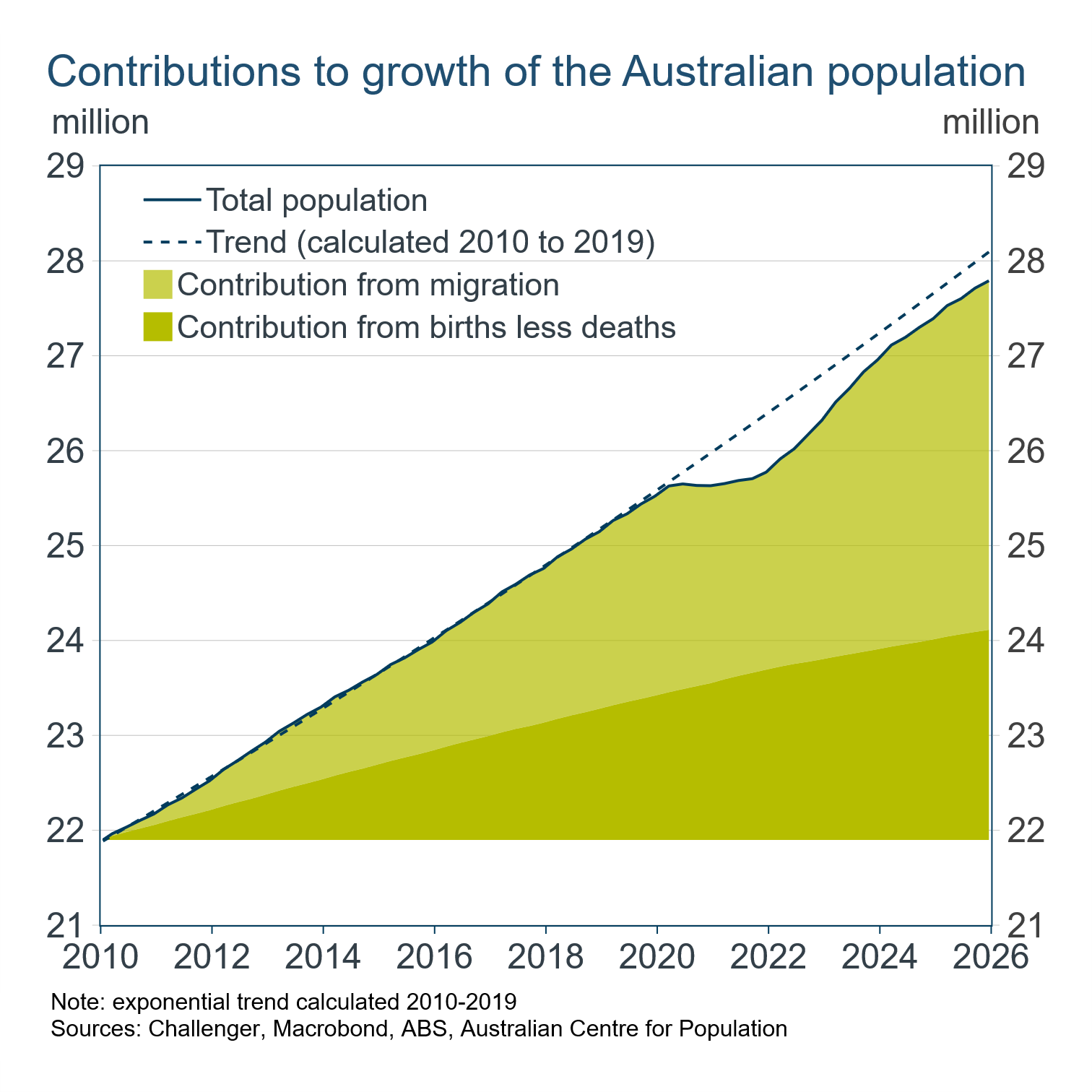
Migration is a hot political issue for several reasons, including the perception that it has contributed to the tight housing market. Changes in migration, driven by the closure and reopening of the border, account for significant swings in population growth. However, looking through these swings, population growth since the onset of the pandemic has been weaker than before the pandemic. Over the longer run, migration has accounted for an increasing share of population growth as a declining birth rate has reduced the contribution from natural increase, that is, births less deaths.
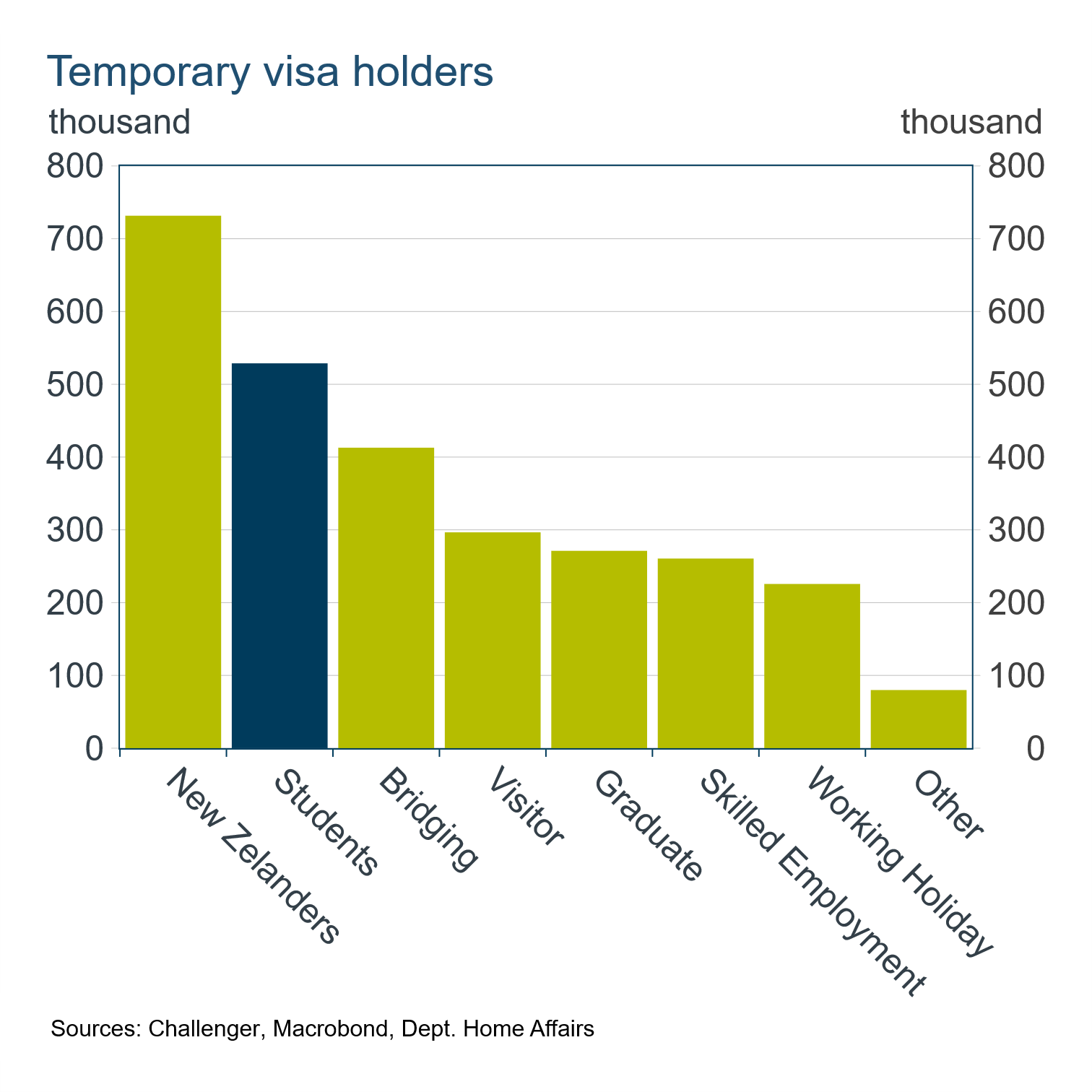
Of the 2.8 million temporary visa holders in Australia, more than 700 thousand are New Zealanders who automatically qualify for an indefinite visa that enables them to work or study in Australia. The second-largest category, at just over half a million, is international students. Another 270 thousand are in the graduate category, which enables international students who have completed an eligible course to work temporarily in Australia. The Government has announced changes that would restrict international students’ ability to transfer to other visa classes at the end of their studies.
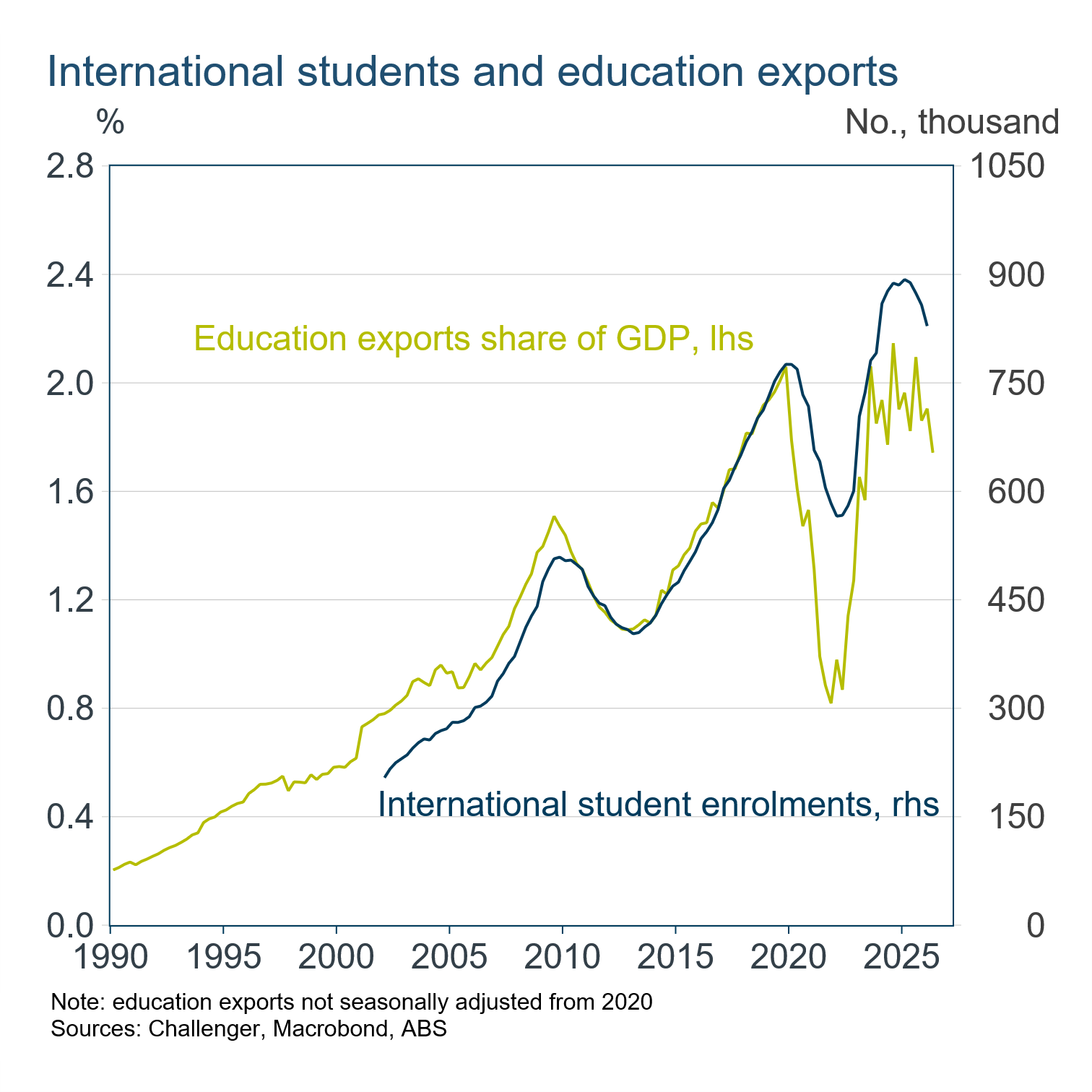
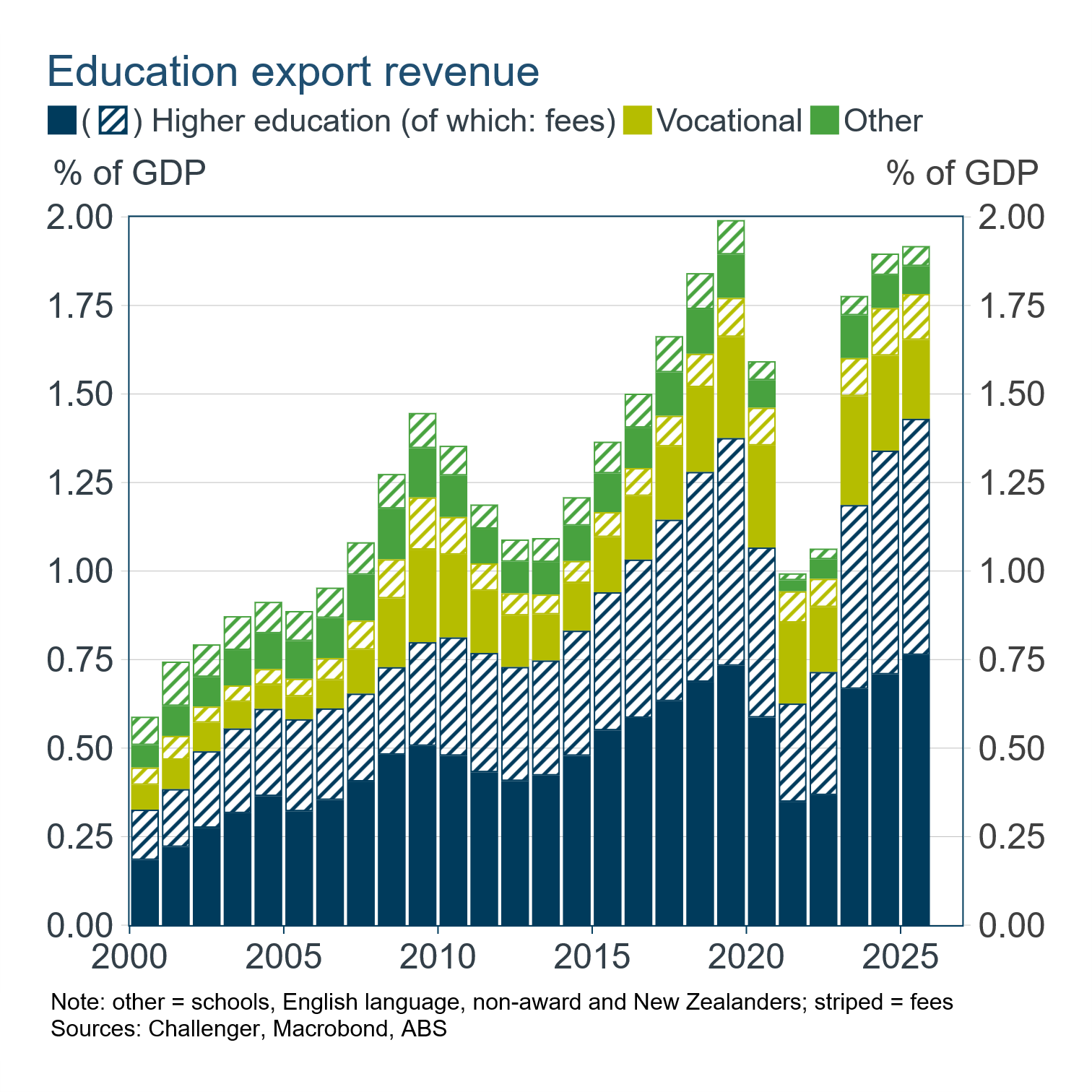
Education is Australia’s largest services export, bigger than tourism and accounting for 7% of Australia’s exports. However, after peaking at just over 2% of GDP before the pandemic, education exports have declined to around 1.8% of GDP. This reflects a fall in international student enrolments following changes to, and uncertainty about, visa eligibility and processing.
Higher education accounts for around three-quarters of Australia’s education export revenue. Of this, roughly half comes from higher education fees and the other half from students’ spending on goods and services while they are in Australia. For students undertaking vocational and other courses, fees account for a smaller share of their total spending, reflecting the lower cost of these courses.
There are almost half a million international student enrolments in higher education courses. The share of international student enrolments in higher education has risen over the past 18 months to 58%, after being stable at around half since 2012, other than a blip during the pandemic.
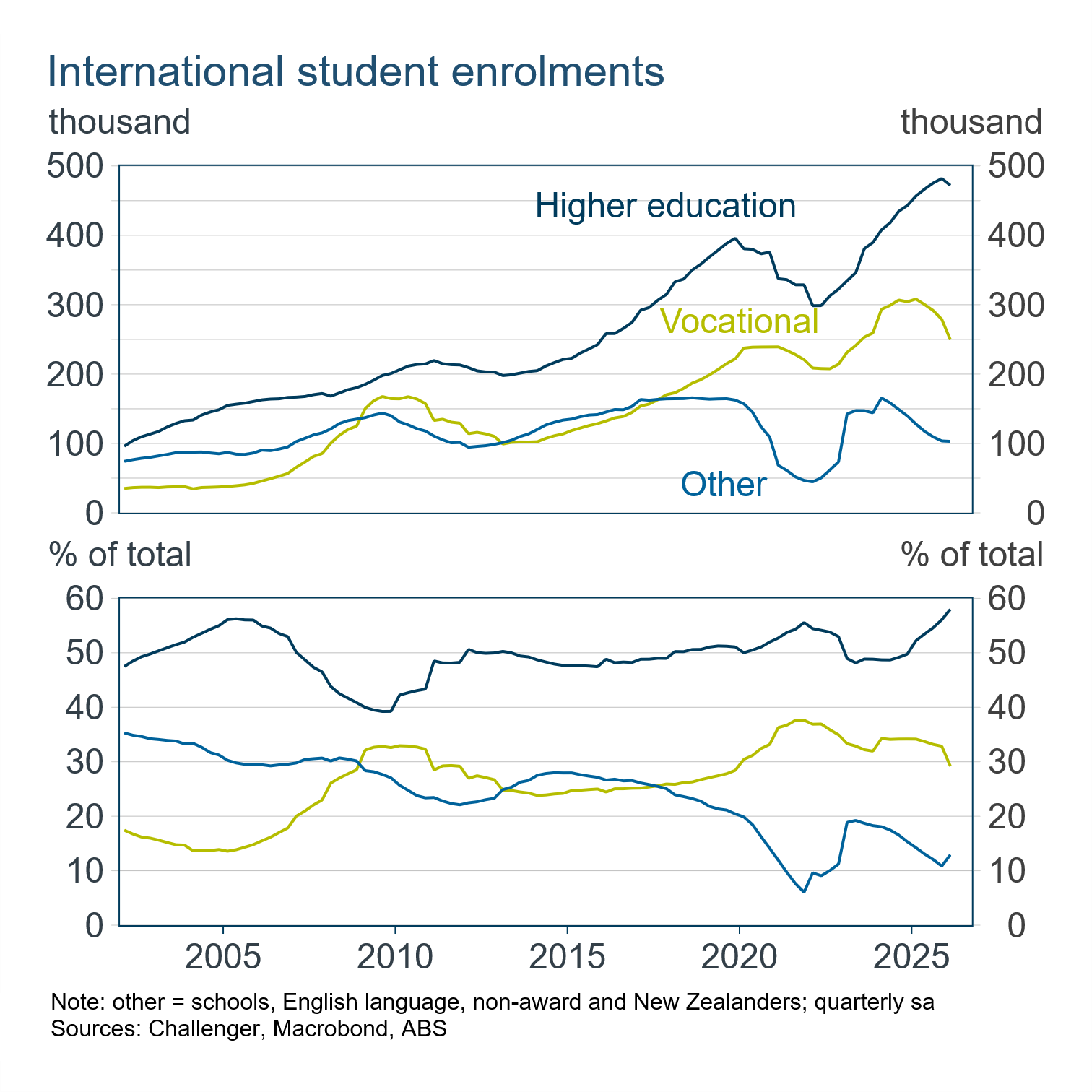
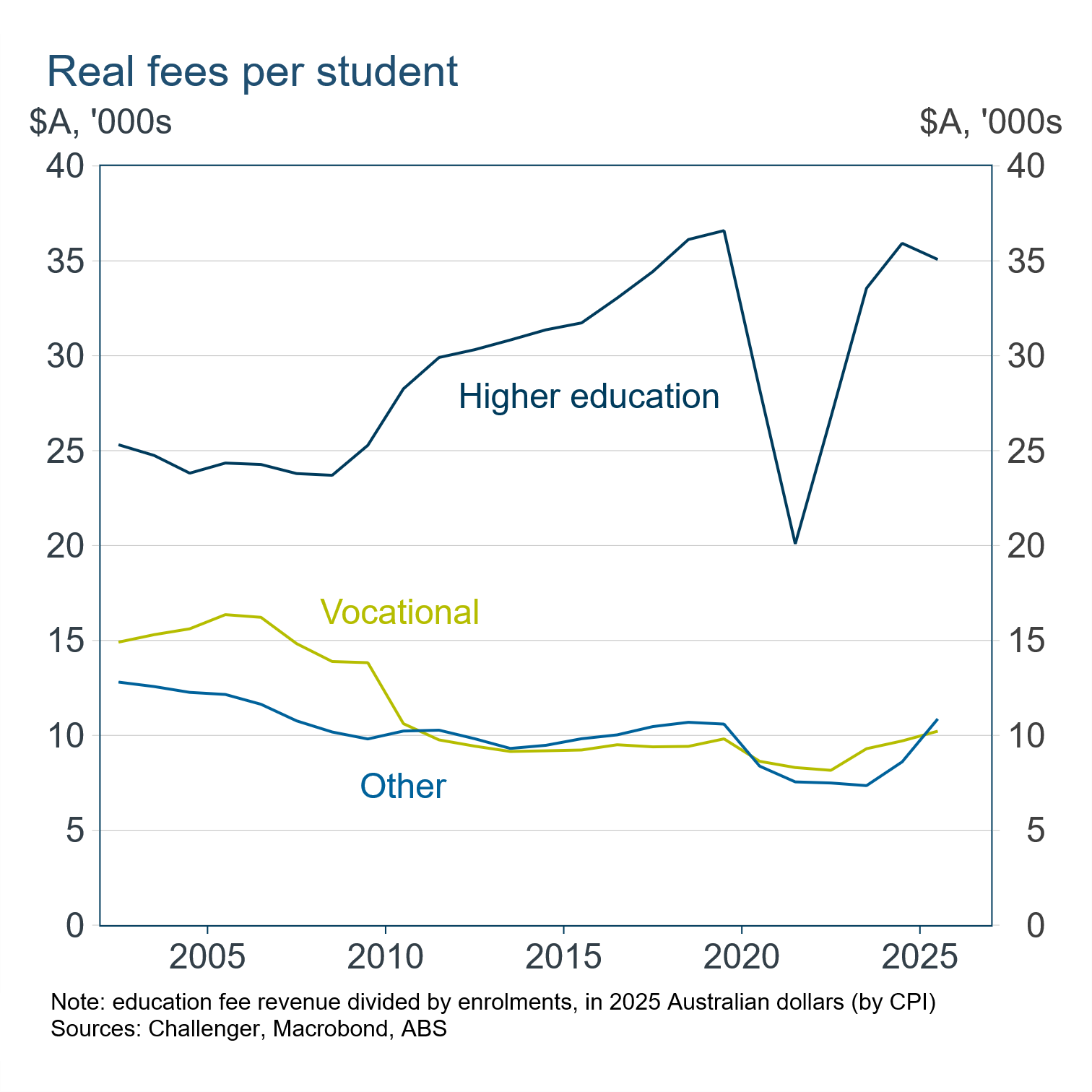
Annual fees for international students in higher education are significantly higher than for those in vocational and other courses. In part, this reflects some of the other courses lasting less than a year. Given the higher fees for higher education, for a given number of international students, Australia’s education exports are larger when a greater share of students is enrolled in higher education. Students with a higher education degree are also more likely to be high-productivity workers if they remain in Australia.
Australia’s education exports will contract if the number of student visas is constrained or Australia becomes a less attractive destination for international students because of restrictions on family members’ entry or on students’ ability to stay and work after completing their studies. The costs of having fewer students can be minimised by increasing the share undertaking higher education courses.