.png?h=720&iar=0&w=1280)
The impact of Australia's lithium mining and exportation

Subscribe to Macro Musing
To stay up to date on the latest economic insights, subscribe to Macro Musing on LinkedIn.
Lithium is a critical mineral and a key component of rechargeable batteries used in mobile phones, laptops, electric cars and renewable energy storage. Lithium has had a wild few years.
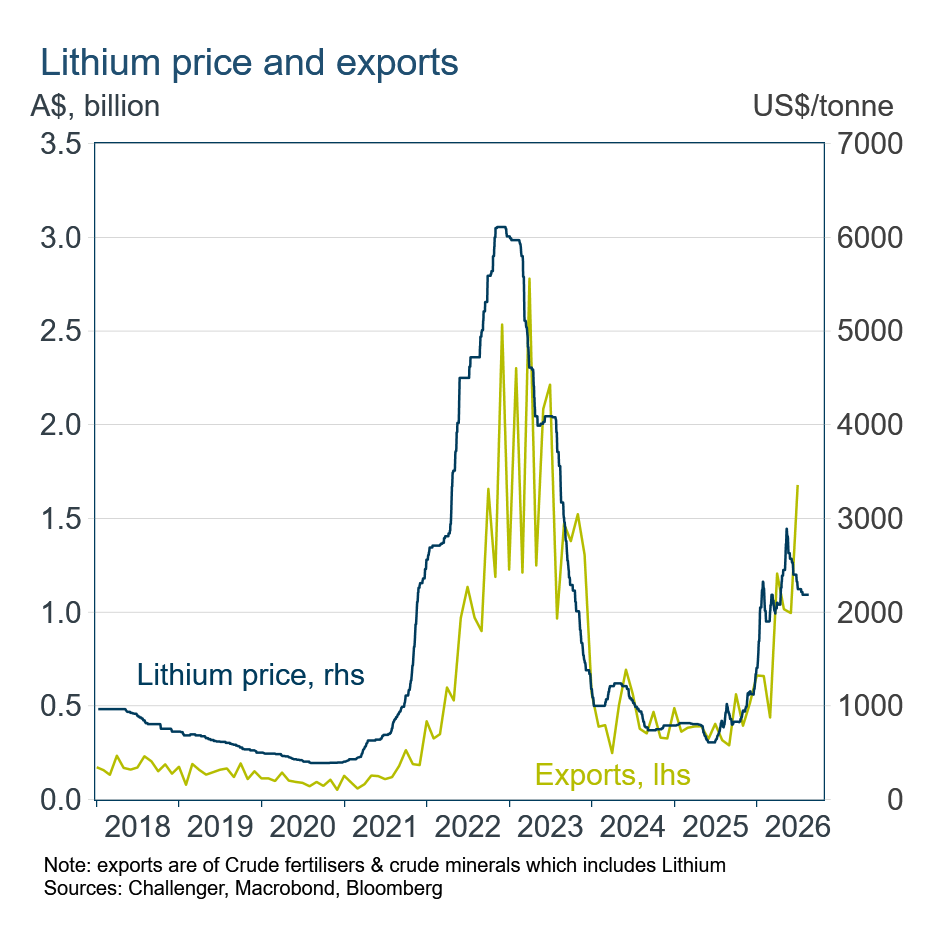
From 2021 to 2022, the price of lithium surged to more than US$6,000 per tonne, 12 times its late 2020 level. Rapid growth in demand for electric vehicles (EVs) met limited lithium supply after earlier low prices had discouraged investment. Panic buying amid strong demand and tight supply added to the increase. When EV demand failed to meet expectations, lithium purchases slowed and some EV manufacturers ran down inventories. Additional supply also came online. The price fell almost as sharply, settling in a range of US$700 to US$1,000.
The price surged again in late 2025 and early 2026, reaching almost US$3,000, as strong battery demand coincided with supply cuts. There is no doubt that the lithium price is highly responsive to changes in demand and supply. The value of Australian lithium exports has closely tracked the price, as price movements have swamped changes in mine output.
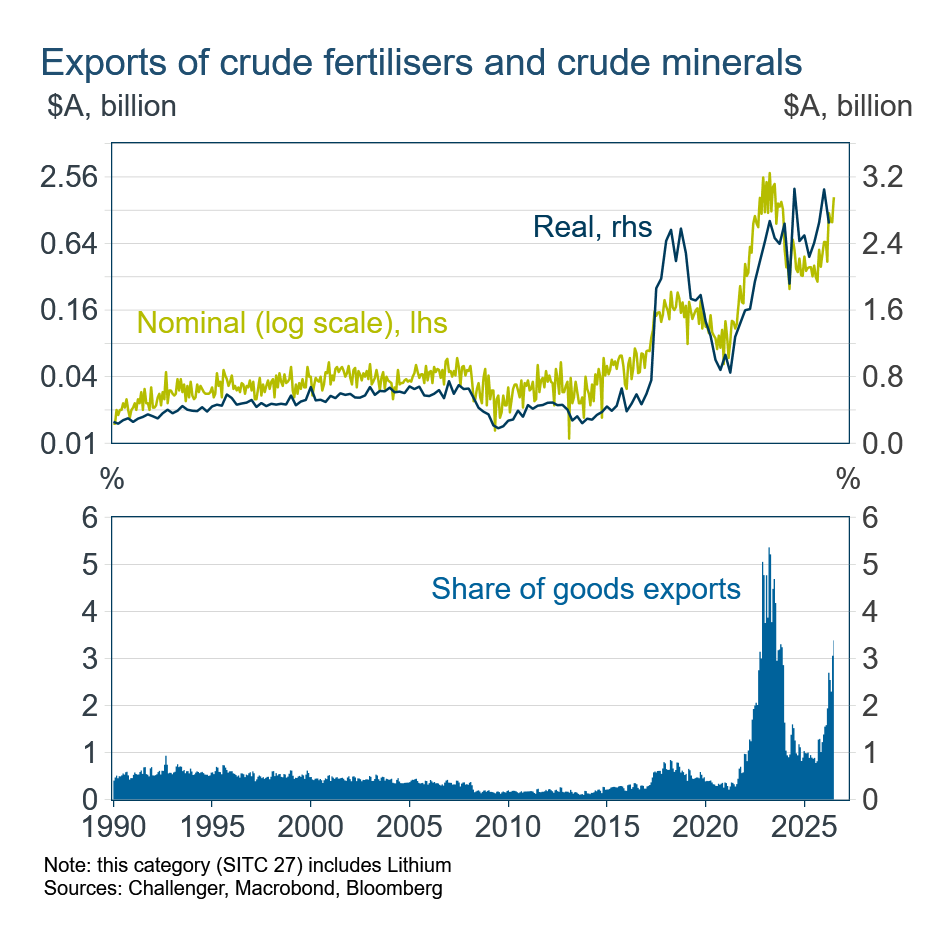
From the early 1990s, Australian exports in the category “crude fertilisers and crude minerals”, which includes lithium, grew steadily and remained around 0.25 to 0.5% of the value of Australia’s goods exports. That changed with the surge in lithium prices, when exports peaked at 6% of total goods exports. This year, they have increased to close to 3% of goods exports.
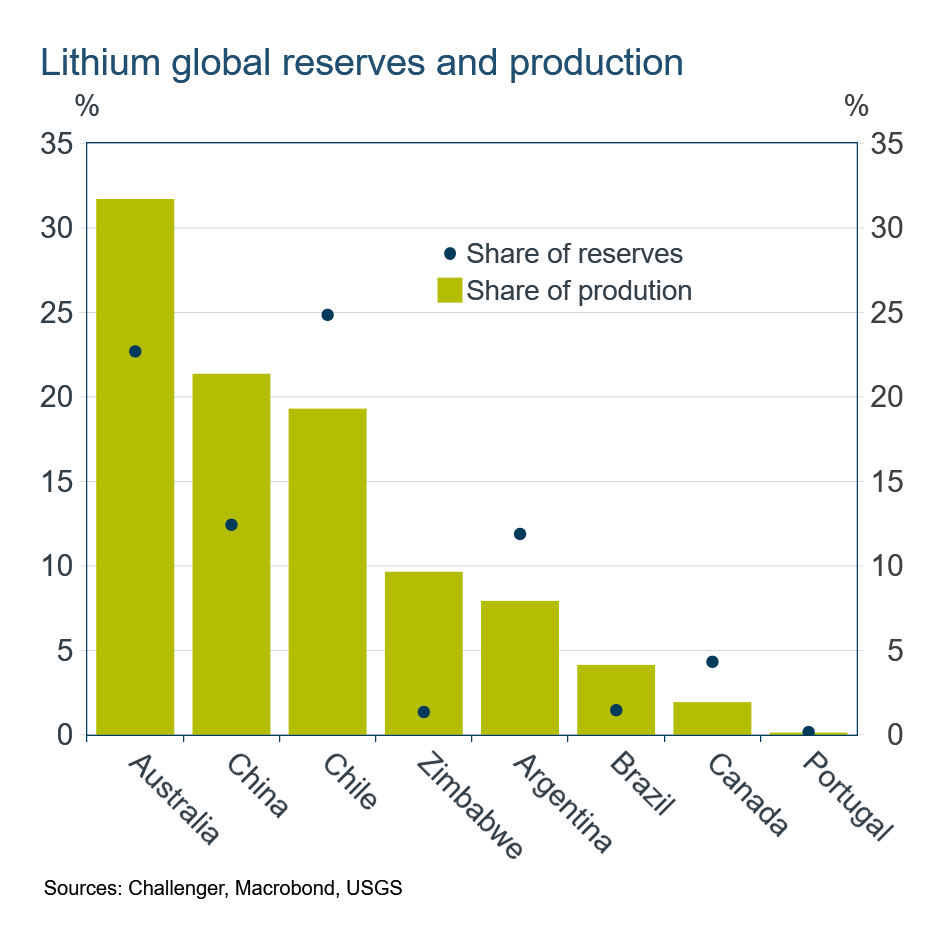
Australia is the world’s largest producer of lithium, accounting for around one-third of global production in 2025. Production is highly concentrated in a small number of countries, with China and Chile the second- and third-largest producers.
Australia has the second-largest proven reserves of lithium, behind Chile. Chile has large reserves near its borders with Argentina, another significant producer, and Bolivia, which also reportedly has large reserves despite producing very little lithium to date.
Australia’s lithium export earnings are forecast by the government to increase significantly, from close to A$5 billion in 2024–25 to almost A$7 billion in 2026–27. Global lithium demand is forecast to grow by almost 15% a year this year and next, lifting prices and Australia’s export volumes.
Australian lithium mines primarily extract spodumene concentrate, which is then processed to produce lithium hydroxide, used in batteries, or lithium carbonate, used in some batteries but more commonly in medicines and glass production. Australia primarily exports spodumene concentrate, although some Australian lithium mines are beginning to produce lithium hydroxide in response to growing global demand.
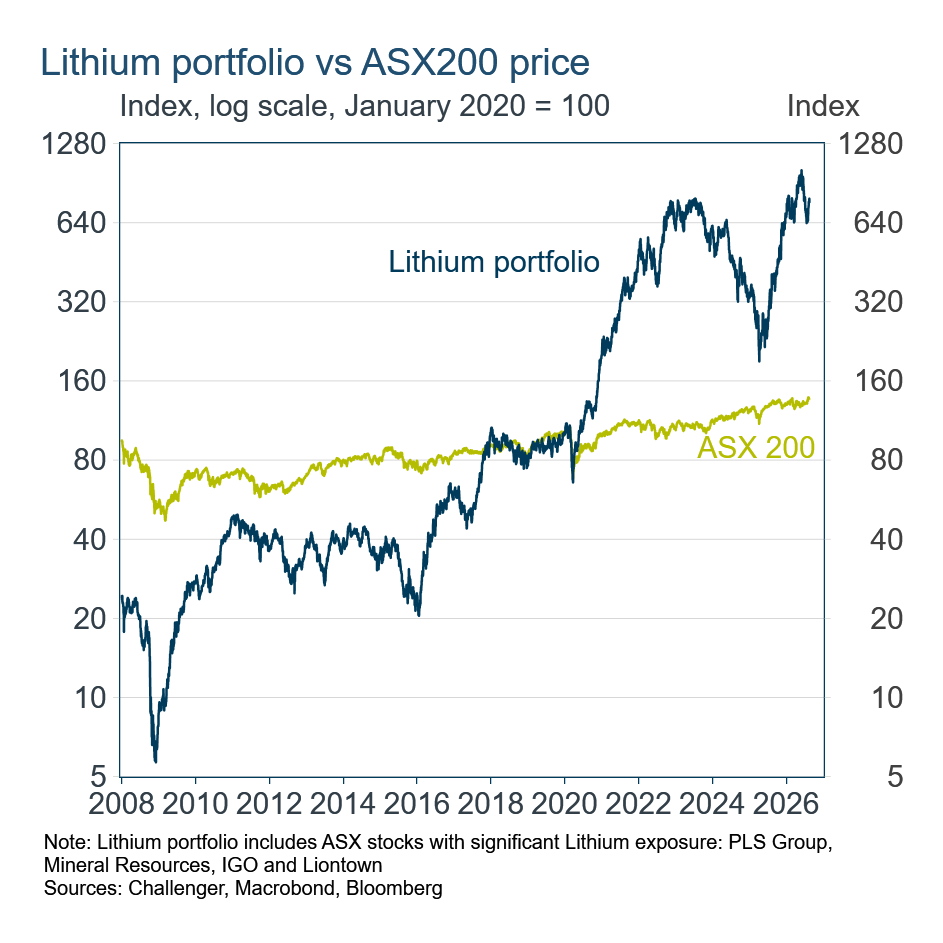
The dramatic run-up in lithium prices and demand has been a huge boost for Australian lithium miners. A market-cap-weighted portfolio of four lithium miners, PLS Group, Mineral Resources, IGO and Liontown, has increased in value by 700% since early 2020. That rise has come with stunning volatility, including losses of around 75%. Investing in lithium is definitely not for the faint-hearted.