

To stay up to date on the latest economic insights, subscribe to Macro Musing on LinkedIn.
This week hundreds of economists, including 15 Nobel prize winners, signed a letter warning about AI’s potential threat to jobs. A broad range of economists signed, from those working for AI firms to those who have been more sceptical about the economic implications of AI. While not all economists agree on how likely it is that AI will lead to mass redundancies, most agree there is at least some chance of that extreme outcome.
Just as most of us insure our home even if we do not know how likely it is to burn down, given there is some chance of widespread job losses we need to develop policies and frameworks now. Hopefully the Australian Government’s AI framework announced this week will make progress on how to manage potential radical changes for the workforce. The implications are broad. Widespread unemployment would require much greater expenditure on retraining programs and unemployment benefits or replacement income, and so would require increased tax revenue from a smaller number of workers. This would be further complicated if a greater share of revenue in the economy accrued to AI firms located offshore.
To date, there is little evidence that AI has led to significant redundancies. But just as AI is developing rapidly, so too will its employment implications.
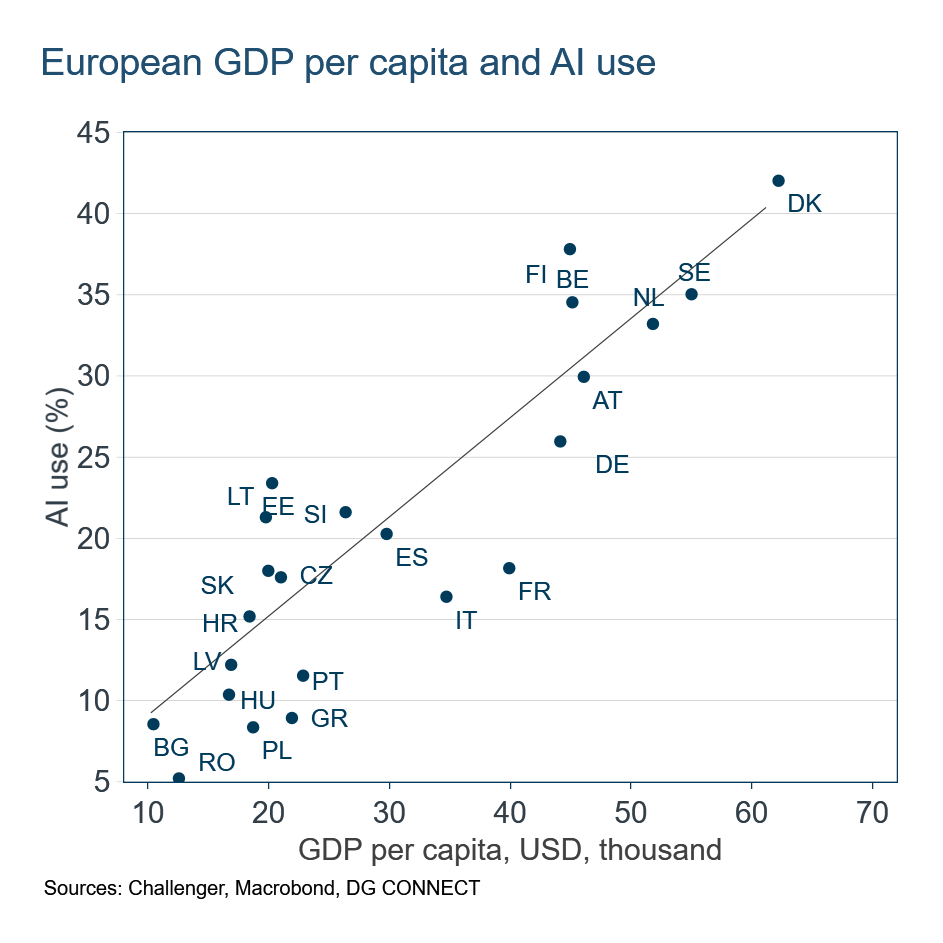
AI is being adopted more rapidly by wealthier countries, and within countries by people with higher incomes. To ensure we have a productive workforce, and a fair society, it will be important to develop AI skills broadly across the population.
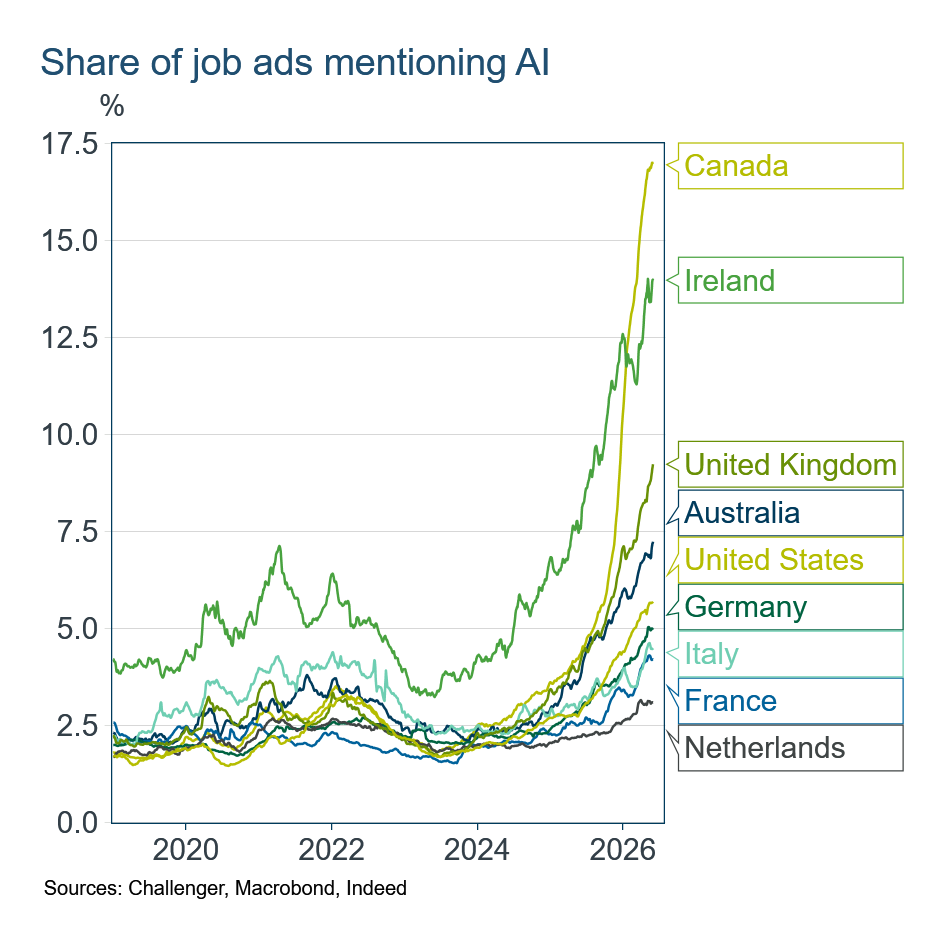
Across countries there has been a significant increase in the share of job ads mentioning AI. The trend toward more AI at work is undoubtedly real, even if these data may not be entirely representative given some puzzles, including a trough across countries in 2024 and a low share in the United States which is at the forefront of AI development.
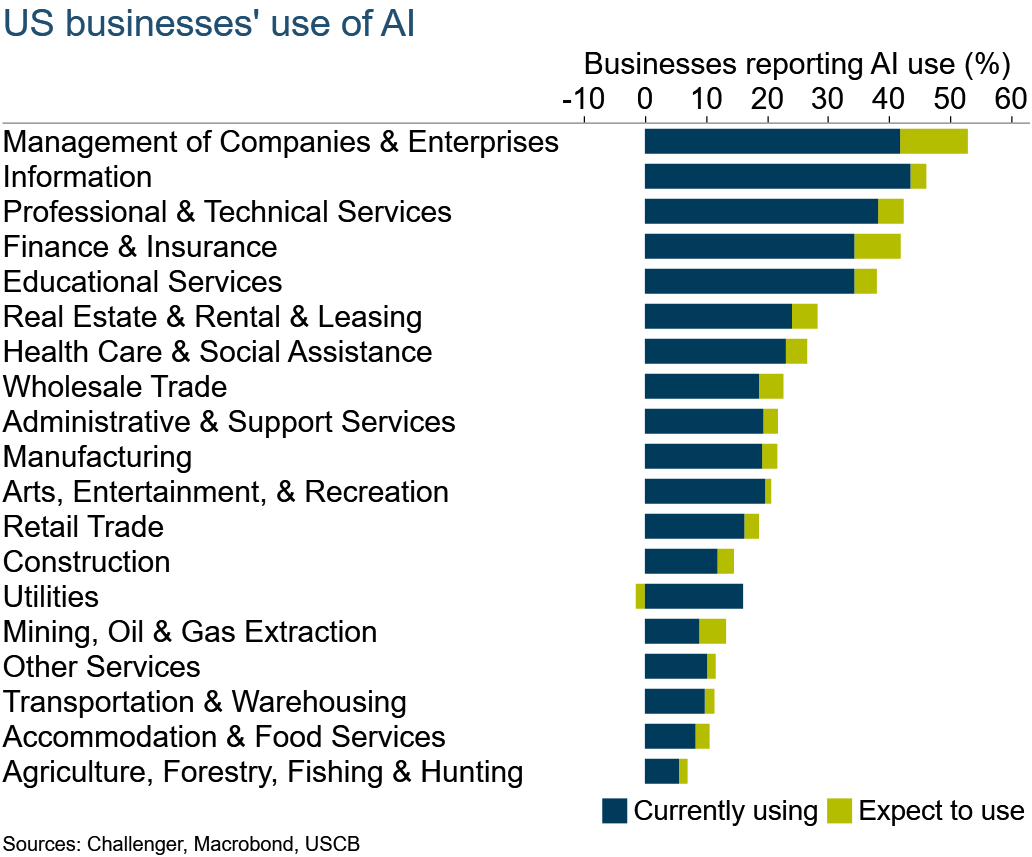
In the United States, the rate of AI adoption across industries shows which types of work can benefit most from using AI. In the leading industries, including information, finance & insurance and education 30 to 40% of businesses are using AI. What is surprising is that so few businesses report that they intend to begin using AI. That suggests adoption may be slower than AI proponents expect, or that many firms may have to adapt rapidly or risk falling behind more efficient AI-using competitors.
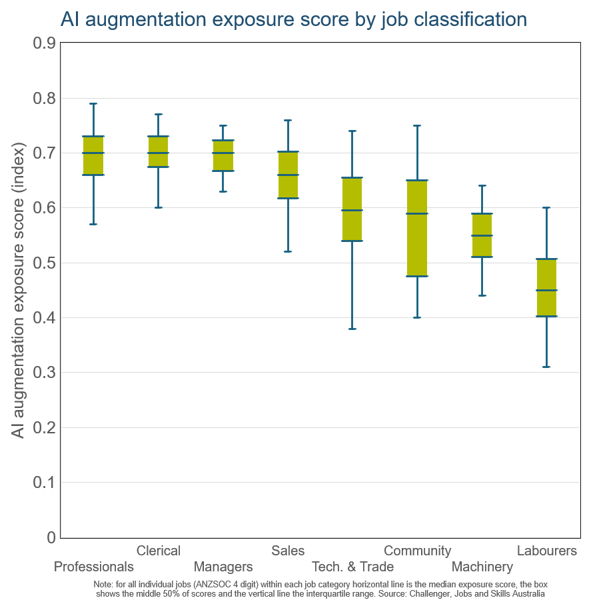
Australian data show the types of jobs that can benefit most from using AI. Not surprisingly, this is led by professionals, clerical workers and managers. The top three AI augmentation scores are for intelligence and policy analysts, advertising and marketing professionals, and economists.* However, there is a wide range. Some individual jobs within Technicians and Trades Workers, and Community and Personal Service Workers, have a much greater ability to benefit from using AI, such as architectural technicians and welfare support workers.
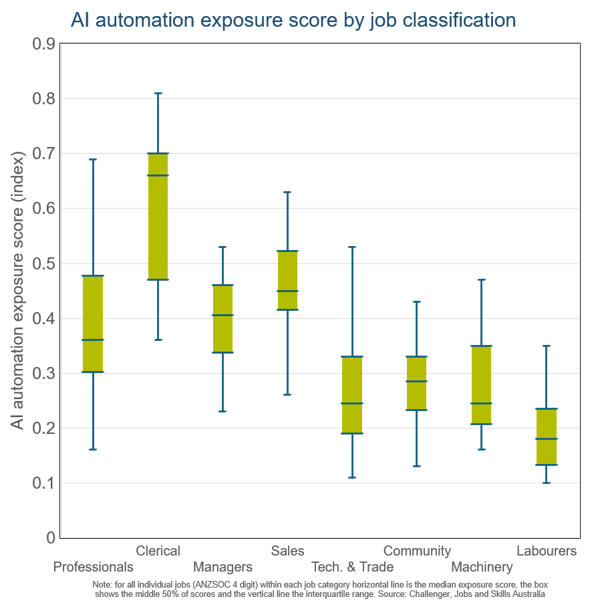
Things look very different when we consider the jobs most likely to be automated by AI, potentially leading to widespread job losses. On this metric clerical workers face the greatest risk of AI replacing their jobs. This includes roles such as telemarketers and call centre workers. However, even some professional jobs such as financial dealers and software programmers have high AI automation scores.
Job losses attributable to AI have so far been smaller than industry leaders such as OpenAI’s Sam Altman had expected. However, the significant fall in software employment demonstrates how quickly AI can develop and replace workers. That makes it all the more important for society to be ready.
* AI was used in the production of this work. 😊