

The rise of EVs in Australia

Subscribe to Macro Musing
To stay up to date on the latest economic insights, subscribe to Macro Musing on LinkedIn.
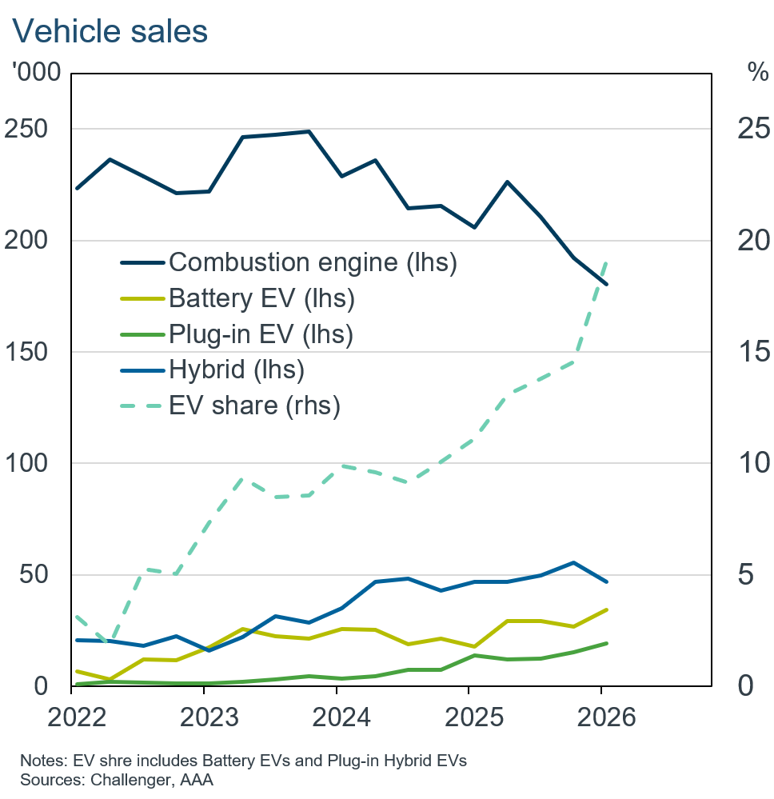
Electric vehicles (EVs) account for almost 20% of vehicle sales in Australia, up sharply from only 2% four years ago.
The shift from internal combustion engine (ICE) vehicles to EVs is a significant economic shock, creating opportunities and challenges for many domestic companies and the economy more broadly. It is:
• changing the countries we import cars from and the demand faced by car dealer networks,
• reducing the demand for car servicing and petrol stations,
• opening opportunities for recharging networks, in shops, workplaces and other locations,
• reducing our reliance on imported fuel,
• increasing the demand on our electricity network,
• increasing the depreciation rate of vehicles used as collateral for financing.
While sales of (battery only) EVs and plug-in hybrid EVs have grown very strongly, the increased share of EVs in total sales also reflects a fall in sales of ICE vehicles which had jumped after slumping during the Covid pandemic.
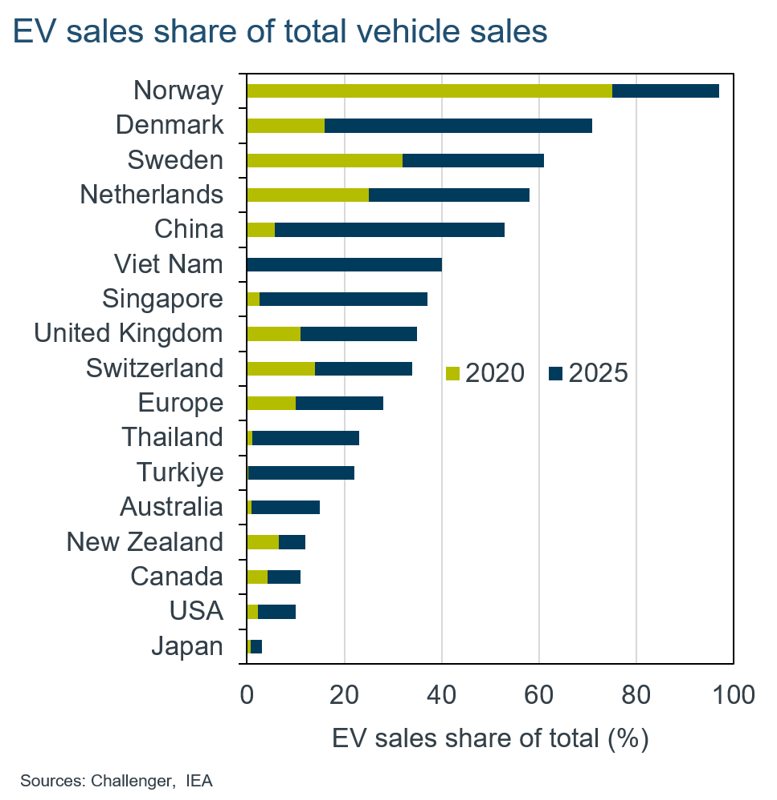
While the share of EVs in total vehicle sales has grown strongly, Australia still lags much of the world in the shift to EVs. The standout is northern Europe, with EVs accounting for 97% of vehicles purchased in Norway. EV penetration is also increasing in Asia with EVs accounting for more than half of vehicle sales in China and a growing share in Singapore and Vietnam. By contrast, while one-quarter of vehicle sales in Europe are EVs, other traditional vehicle manufacturer markets such as Japan, the United States and Canada have low EV sales, highlighting the inertia that can come with entrenched manufacturing interests.
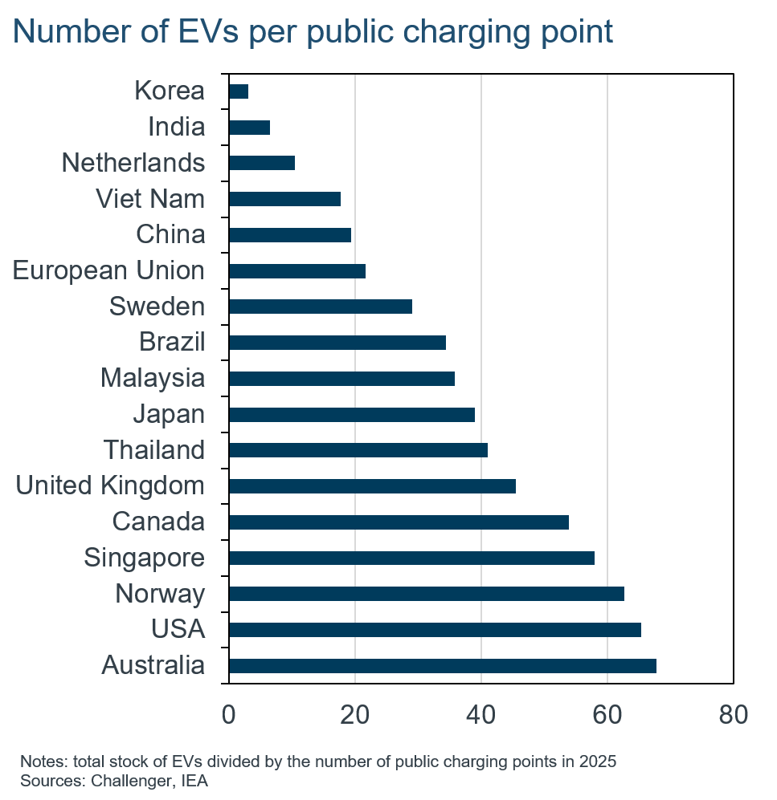
As penetration of EVs grows, so too must the charging infrastructure. Across 42 countries over 15 years of annual data, growth in the stock of EVs has gone hand-in-hand with growth in the number of public charging points, with neither EVs nor charging points growing ahead of the other.1 Uptake of EVs clearly depends on easy access to a widespread charging locations.
Australia has more EVs per public charging point than almost all other countries with available data. New Zealand and the United Arab Emirates, which are not shown on the graph, are the only exceptions. This reflects growth in charging points not keeping up with growth in EVs. Four years ago there were twice as many public charging points per EV in Australia.
A low penetration of public charging points has not impeded EV uptake in Norway because most Norwegians charge their EVs at home, as do many Australians. However, a widespread network of fast chargers is needed for EV drivers to travel long distances, so the paucity of public charging points can slow EV uptake in Australia.
The connection between EV uptake, access to public charging and distances travelled is highlighted by the share of EV registrations by location. The share of EVs among registered vehicles has grown much more rapidly in metropolitan locations, with lower shares in regional and rural locations, and very little uptake in remote locations.
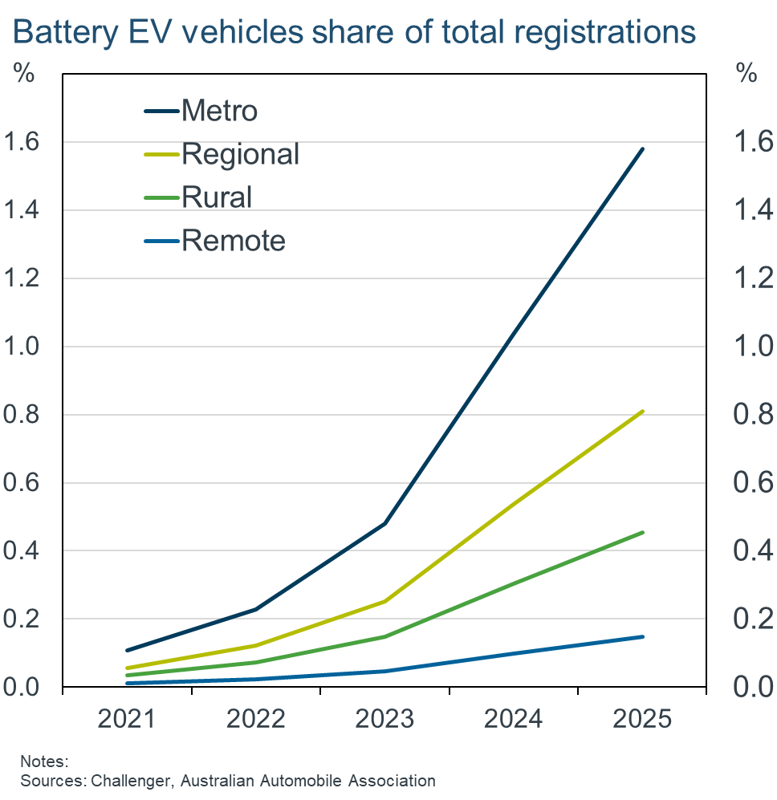
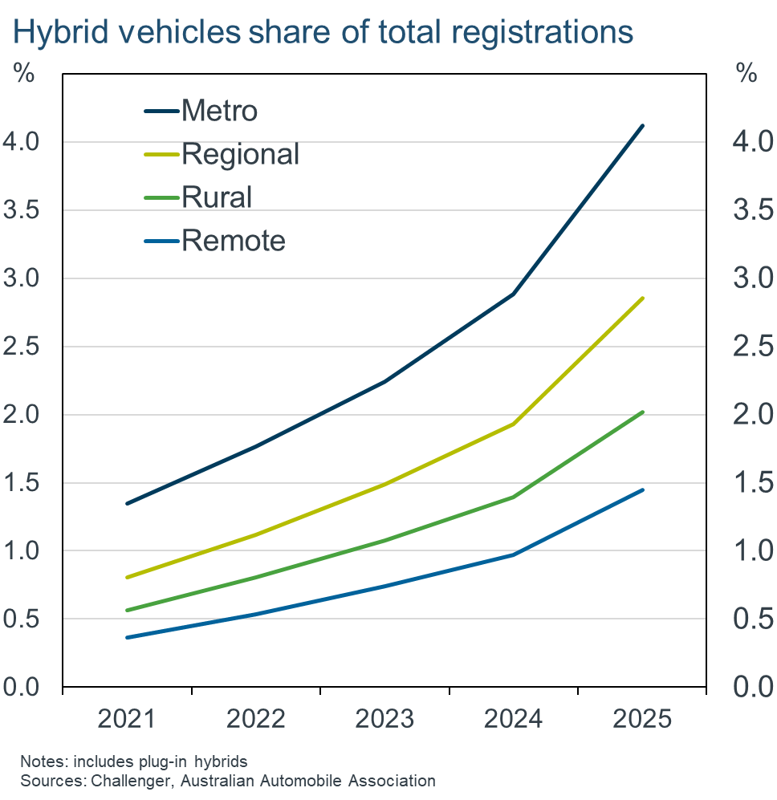
There is a similar, but less extreme, pattern for hybrid vehicles, suggesting that people living in rural and remote locations are not surprisingly more comfortable owning a vehicle that uses petrol alongside a battery. Uptake of EVs in more rural locations will depend on further increases in the EV range and more fast public charging points in remote locations.
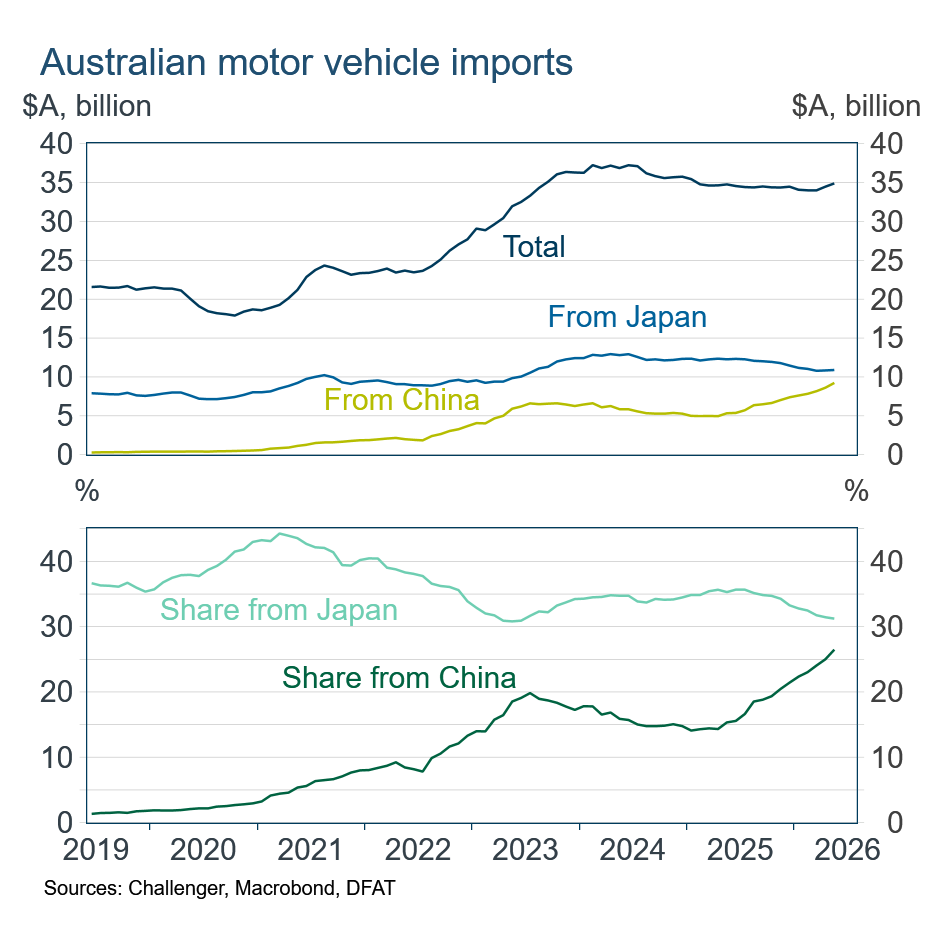
As sales of EVs have grown, so too have imports from China. Around three-quarters of EVs sold in Australia are manufactured in China, including many models sold by non-Chinese manufacturers such as Tesla, BMW, Volvo and Polestar. The share of vehicle imports from China, by value, has increased from less than 5% in 2021 to over one-quarter in early 2026. On current trajectories, China could even overtake Japan as the largest source of vehicle imports later this year.
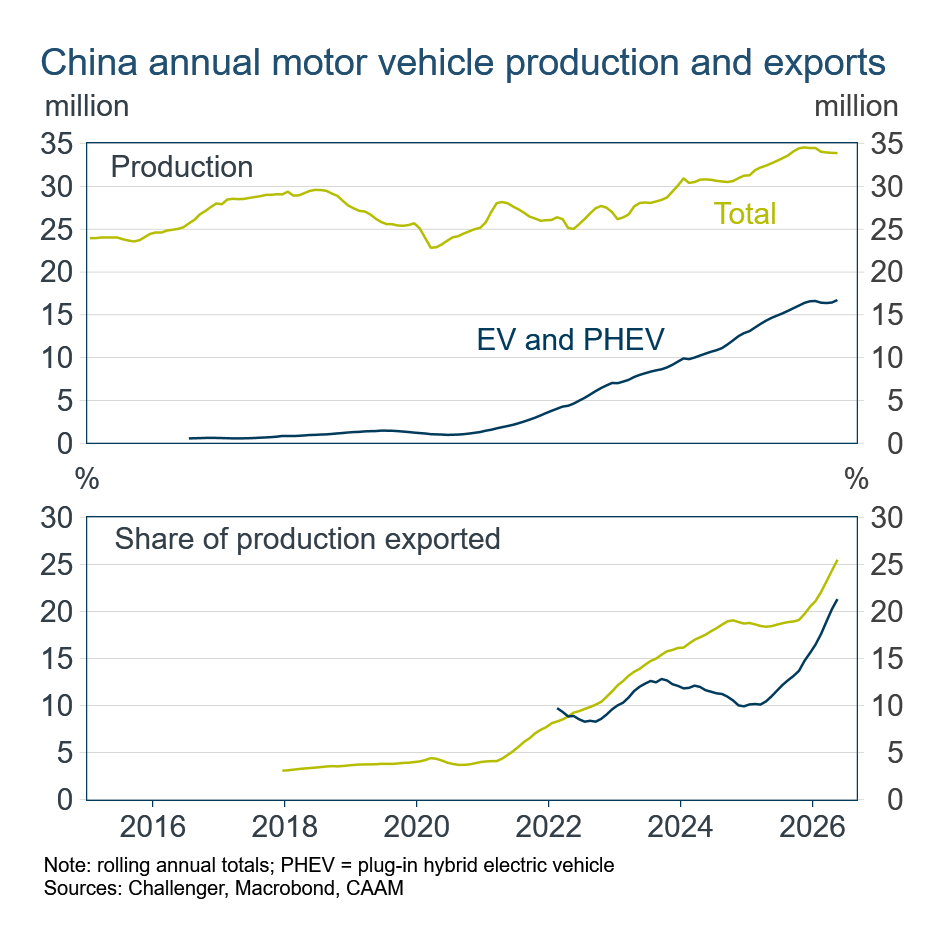
Increased purchases of EVs and increased vehicle imports from China are part of the same trend. The growth of Chinese EV production since 2020 has been phenomenal with half of vehicles produced in China now EVs. This has occurred alongside rapid growth in Chinese exports as the quality and international acceptance of Chinese vehicles has grown, and domestic demand in China has softened. In 2021 less than 5% of vehicles manufactured in China were exported. Today one-quarter are exported. A slightly lower share of EVs are exported, reflecting stronger demand for EVs in China.
Related content
Stay informed
Sign up to our free monthly adviser newsletter, Tech news containing the latest technical articles, economic updates, retirement insights, product news and events.