Why is Australia's household debt so high?

Subscribe to Macro Musing
To stay up to date on the latest economic insights, subscribe to Macro Musing on LinkedIn.
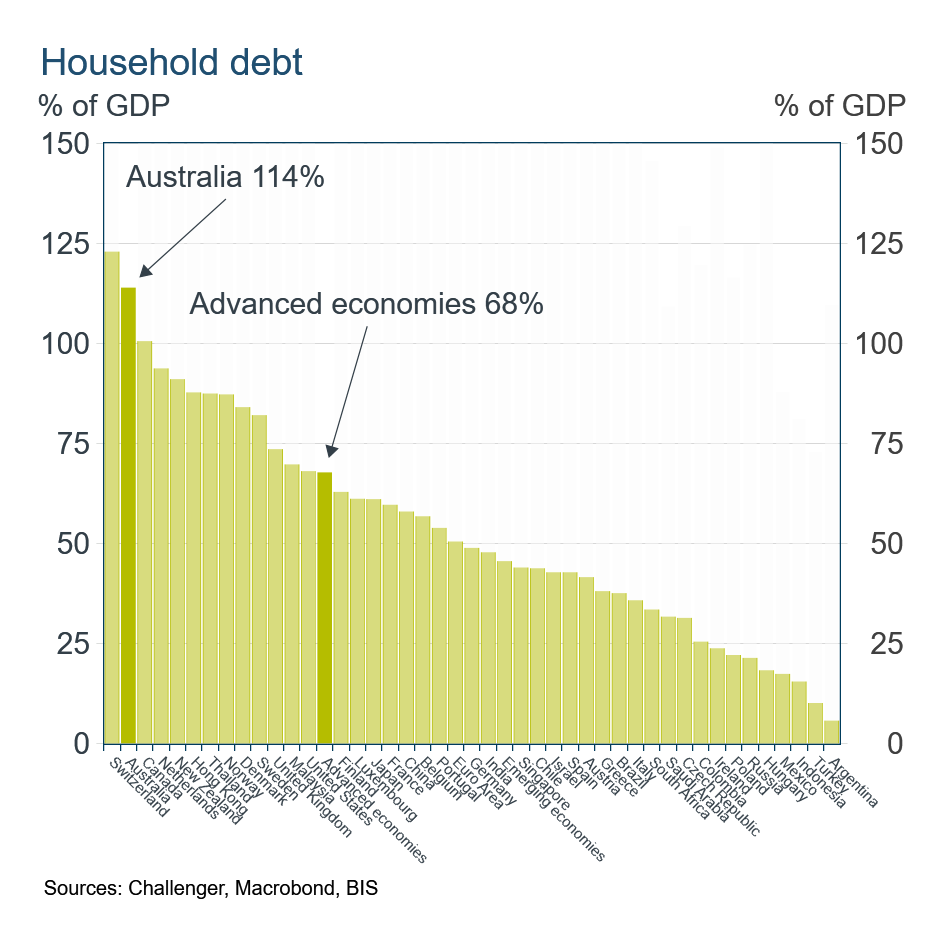
Australia has the second highest ratio of household debt to GDP in the world at 114%. It trails only Switzerland and is well above the 68% average for advanced economies. This is frequently highlighted as a risk for the Australian economy and financial system. So why is Australian household debt so high, and how worried should we be?
There are three main factors that explain Australia’s high household debt.
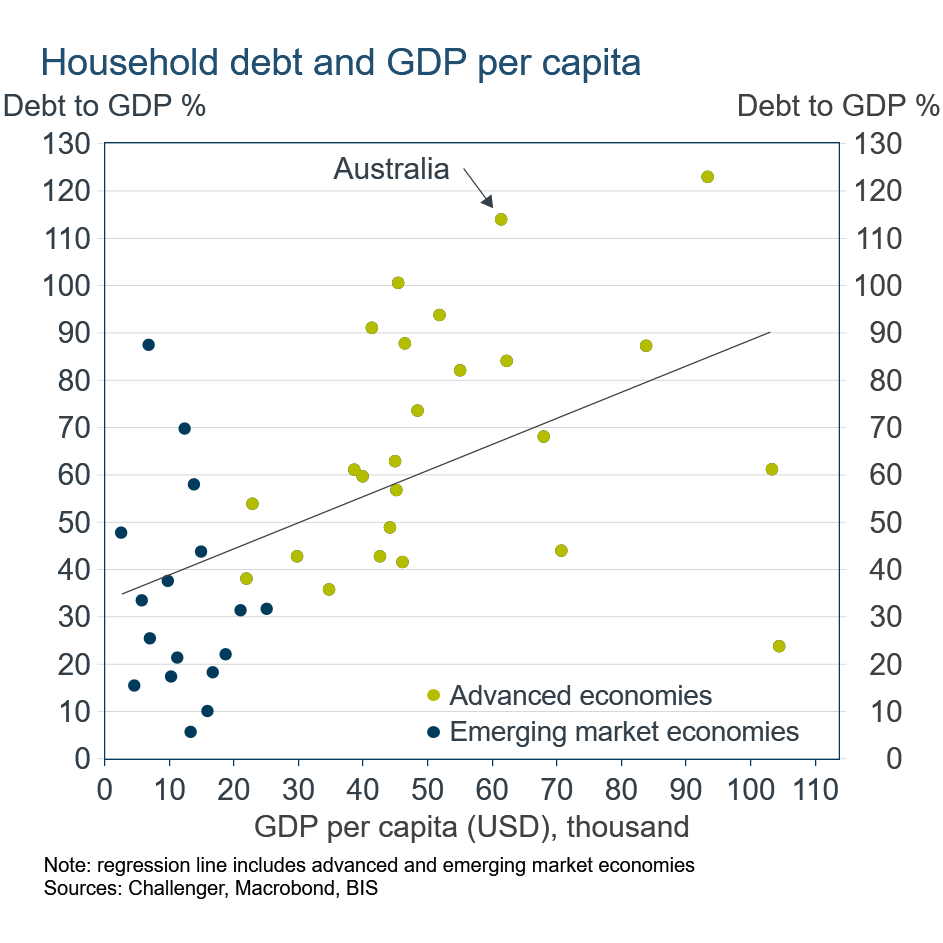
1. Australia is rich. Countries with higher incomes (GDP per capita) tend to have higher household debt to GDP. As incomes rise, the share spent on necessities declines freeing up more income for housing, which is a long-lived asset typically purchased with debt.
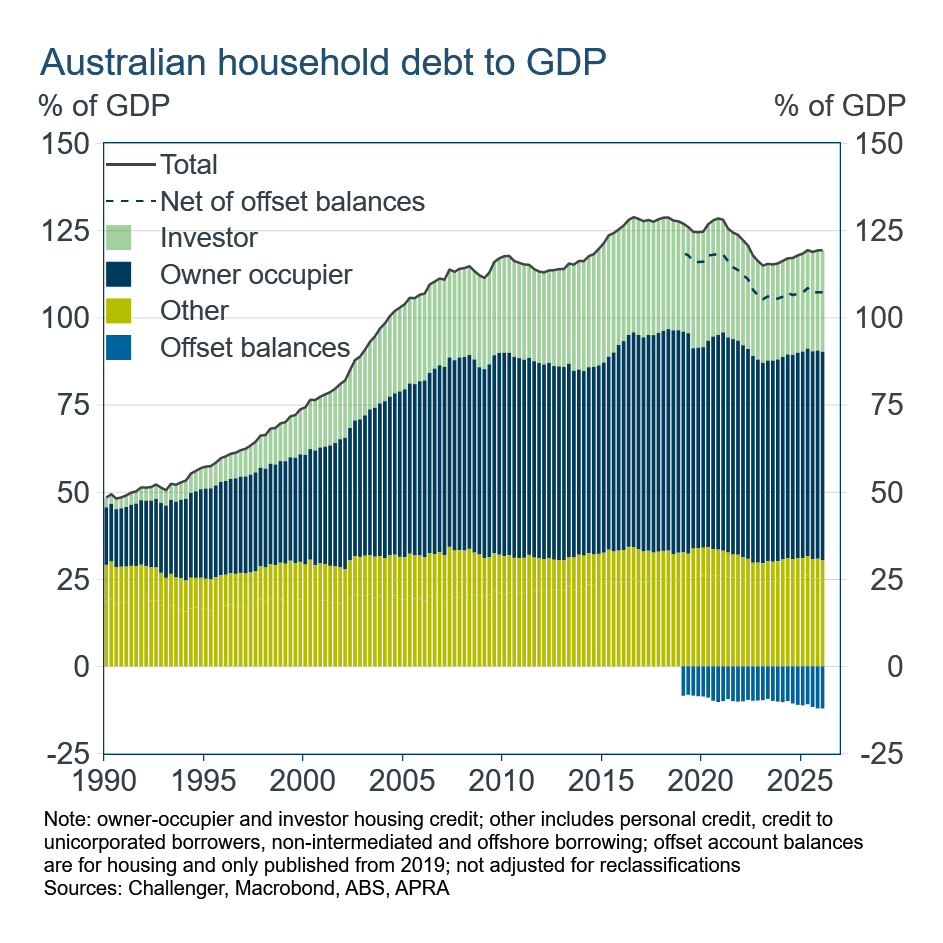
2. Offset accounts are widely offered with Australian mortgages and are a tax-effective way to save. Offset balances have grown significantly since these accounts became widely available in the early 2000s and now total 12% of GDP. They are much less common in other countries, where fixed-rate mortgages are often the norm and tax and mortgage structures are less favourable to offset accounts.
3. Investor borrowing accrues directly to households in Australia because households directly own most rental properties. In other countries rental properties are more commonly owned by corporations or the not-for-profit sector so the debt used to finance rental property ownership is not recorded on household balance sheets. Investor debt in Australia is 29% of GDP.
Australia’s household debt to GDP is about 45 percentage points higher than you might expect based on our GDP per capita. That gap roughly equates to the sum of offset balances and investor housing credit.
We might be able to justify Australia’s high household debt, but that does not mean we can dismiss the risk.
Several factors reduce the risks from high household borrowing, as noted in the RBA’s FSR: unemployment is low; many households are ahead on their scheduled mortgage payments; most borrowers have substantial equity in their property and the share of borrowers with risky characteristics, such as high loan-to-valuation ratios, is low.
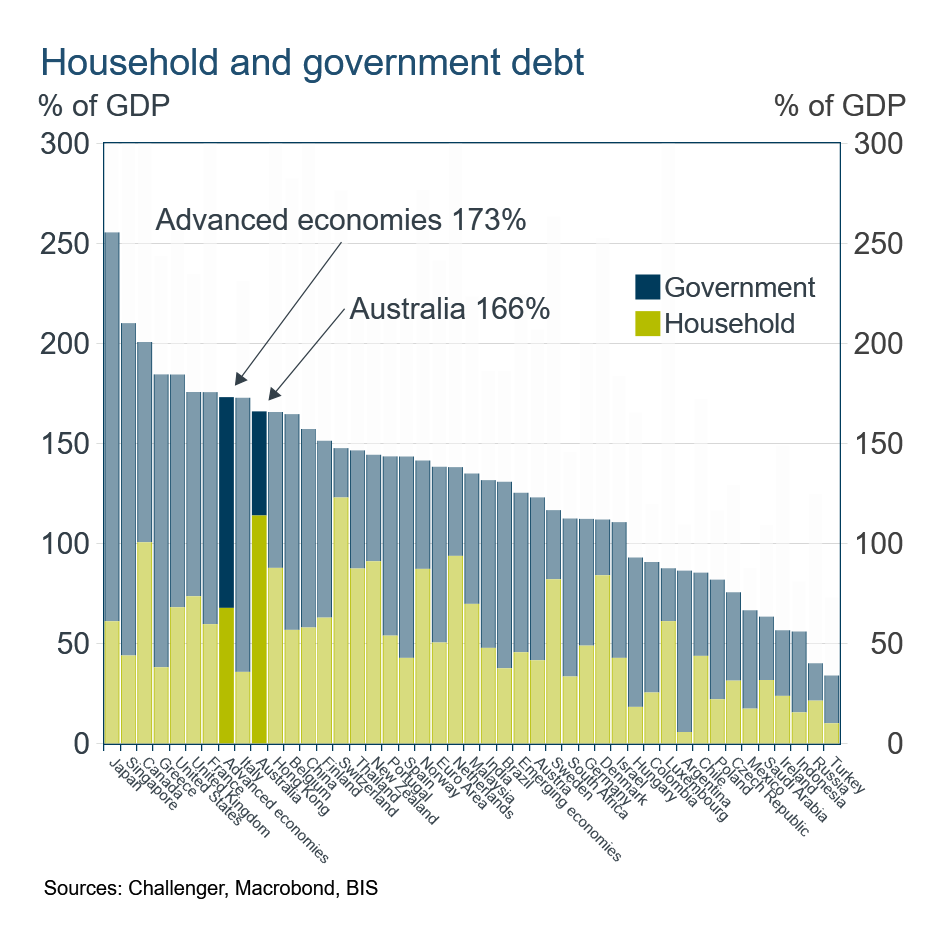
However, there is always a risk that a large enough economic and financial shock could result in widespread household financial stress and difficulties meeting mortgage repayments. One consolation is that Australia has relatively low government debt, which provides space for fiscal stimulus or to address bank losses. Australia’s ratio of combined household and government debt is below the advanced economy average.
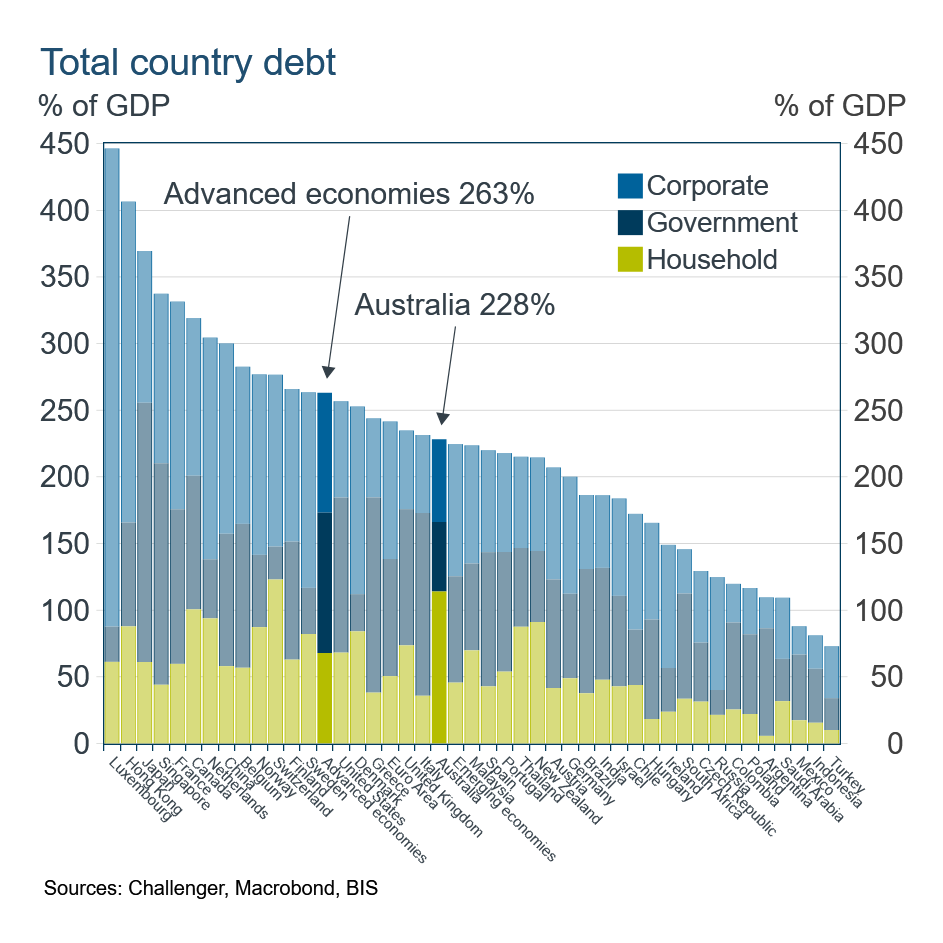
Australia also has relatively low corporate debt and sits well below the advanced country-average for the total of household, government and corporate debt. In a relative sense at least, the Australian Government has greater capacity to respond to an economy-wide debt shock.
The Government’s capacity to respond to shocks is critical to the resilience of economic growth and living standards. Eroding that capacity through persistent budget deficits would be detrimental to our long-term prosperity.
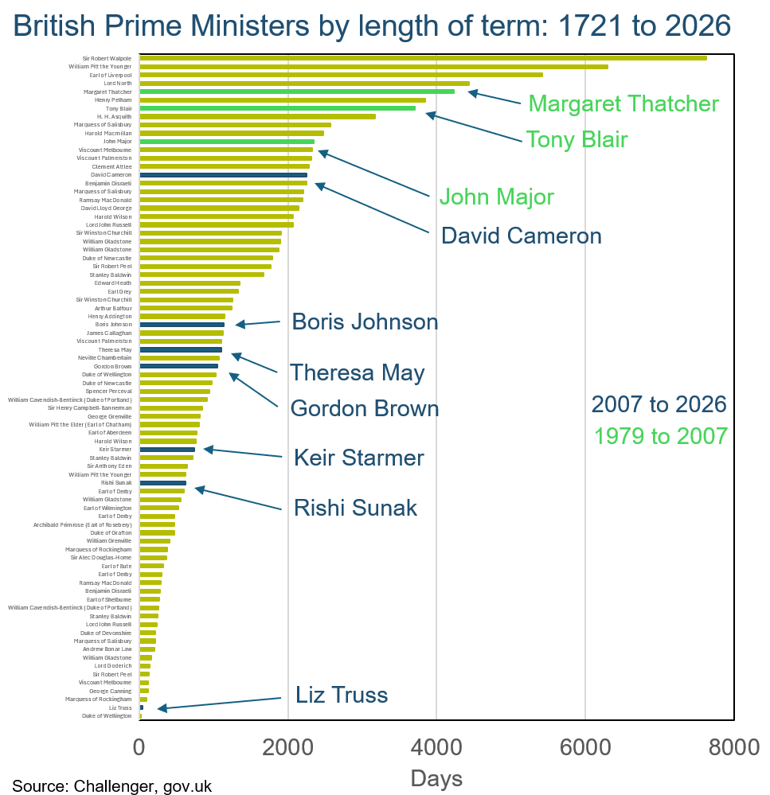
A brief extra on UK politics. Andy Burnham this week became the United Kingdom’s latest Prime Minister in what has seen the famous door at 10 Downing St portrayed as a virtual rotating door.
Prior to Burnham, starting with Gordon Brown, there were seven PMs over 19 years, with an average term of 995 days, shorter than the 1,391 day average across all PMs. However, ranked by length of PM’s terms most of these seven were around the middle of the pack; Liz Truss is an extreme exception.
Rather than the recent period being one of exceptional instability, it is the remarkable stability of the period prior to these seven PMs that stands out. At the end of the 20th century there were just three PMs in 28 years, with all three among the 11 longest serving PMs in more than 300 years. That has probably distorted our expectations.