Will there be another rate hike?

Subscribe to Macro Musing
To stay up to date on the latest economic insights, subscribe to Macro Musing on LinkedIn.
The RBA increased the cash rate for a fourth time this year, as expected. The focus was always going to be on what the RBA said, and therefore whether another hike is likely or it might be done. On that front, you’d have to say things didn’t go so well for either the RBA’s communication or the market’s interpretation of it.
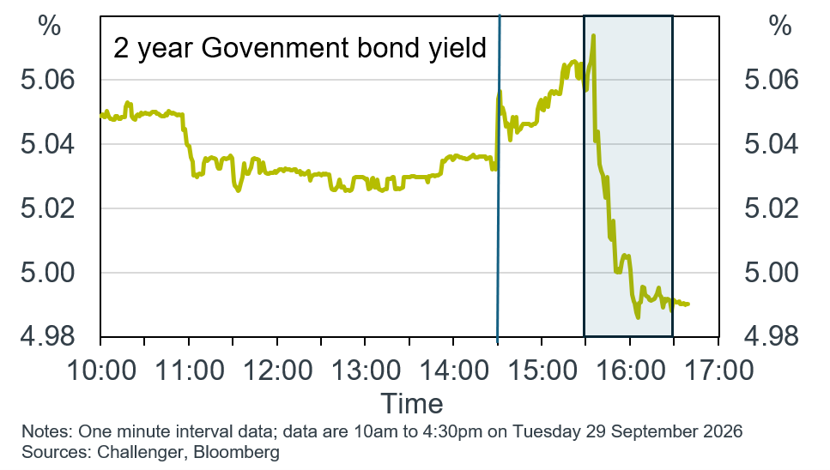
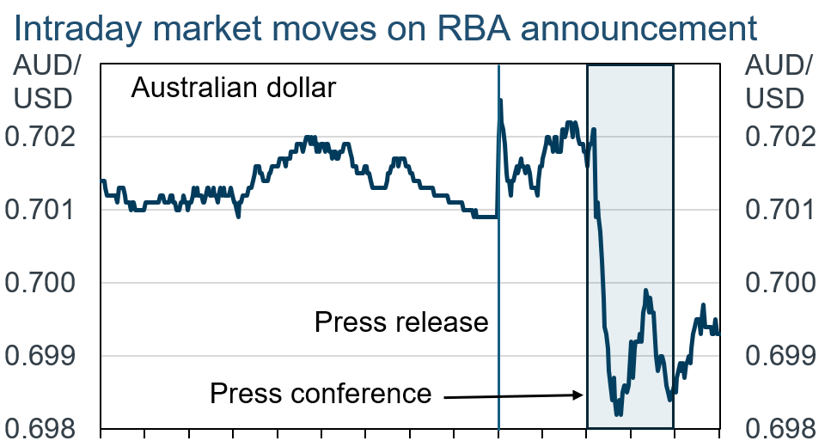
The 2:30pm press release explaining the decision was hawkish. Every reference to inflation said it was too high or highlighted upside risks, while the labour market was moving as expected. The market judged a November hike to be more likely, prompting a jump in the Australian dollar and two-year bond yields, which are strongly influenced by expectations for the cash rate.
But the press conference from 3:30 to 4:30pm was interpreted as dovish, and the market more than reversed course, with the Australian dollar and bond yields falling. Safe to say, the market, which has tended to pay more attention to the press conference than the press release, thought it had been sold a grand-final-worthy dummy pass.
So should we believe the press release or the press conference? The press release is collectively written by the entire Board and the RBA’s communications experts. It is workshopped down to the commas. It says exactly what the RBA wants to say. If the press conference elaborates on an anodyne press release, it provides useful detail. But when the press conference seemingly goes in the other direction, it is more likely to reflect either a market misunderstanding or an RBA attempt to soften, but almost certainly not reverse, the market’s initial reaction to the press release. And that, I think, leaves us where we started the day. The next move is uncertain and data dependent.
Read on for my thoughts on why the RBA hiked and whether it will hike again.


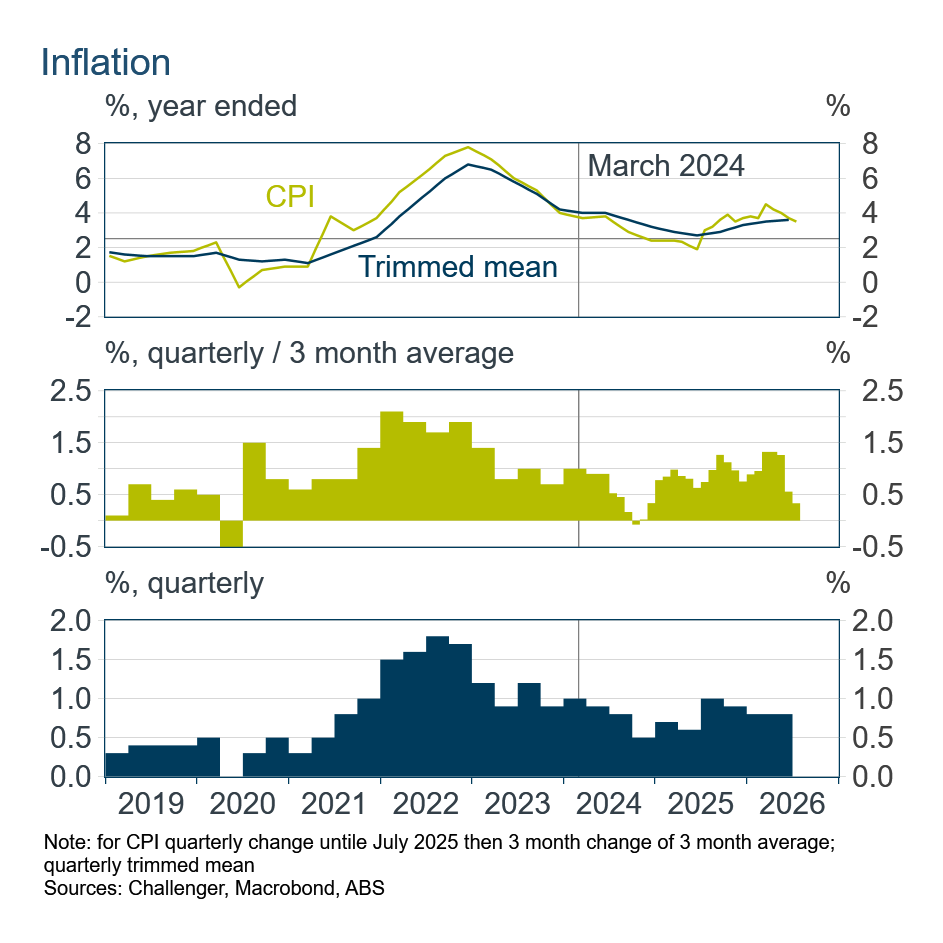
The first question is why the RBA hiked when conditions don’t look that different from early 2024, when it decided it had finished tightening. Headline inflation in recent months has been lower than in 2024, but it has been pushed around by oil and petrol prices. More importantly, trimmed mean inflation is actually a touch softer than it was in 2024.

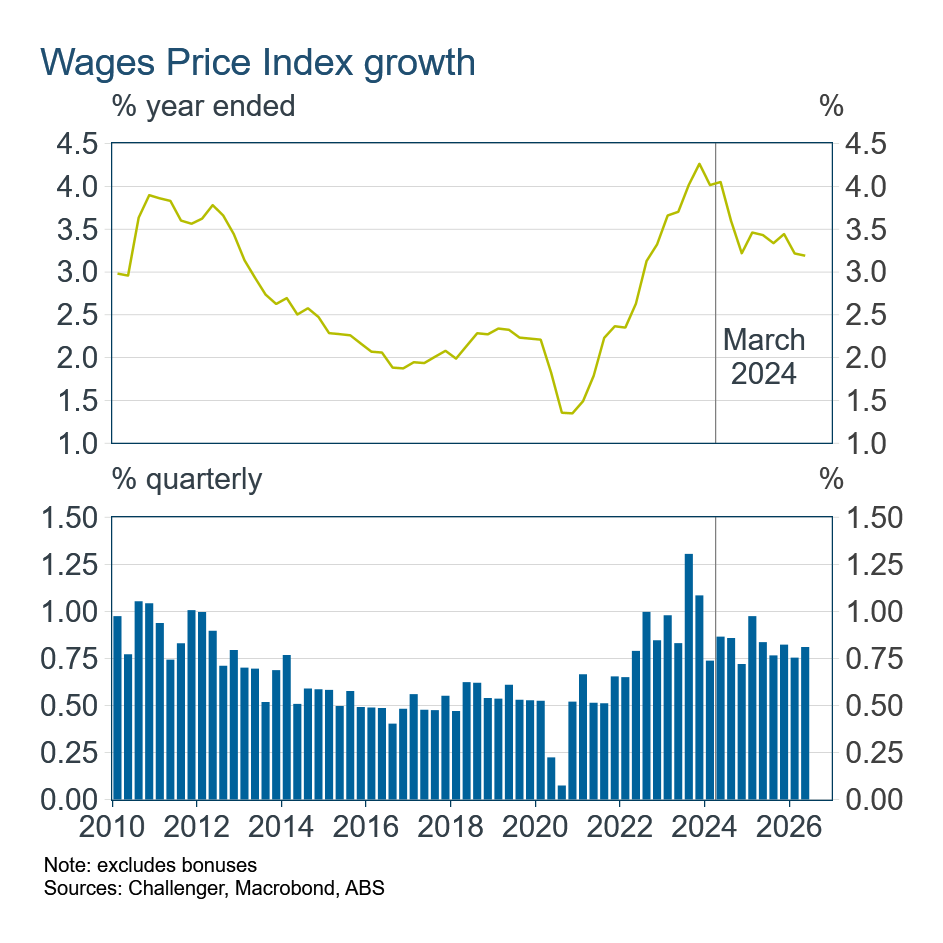
Of course, the RBA is forward looking, so it cares about the drivers of inflation: wages, spare capacity and productivity. Quarterly wages growth is also around the same rate as it was in March 2024.

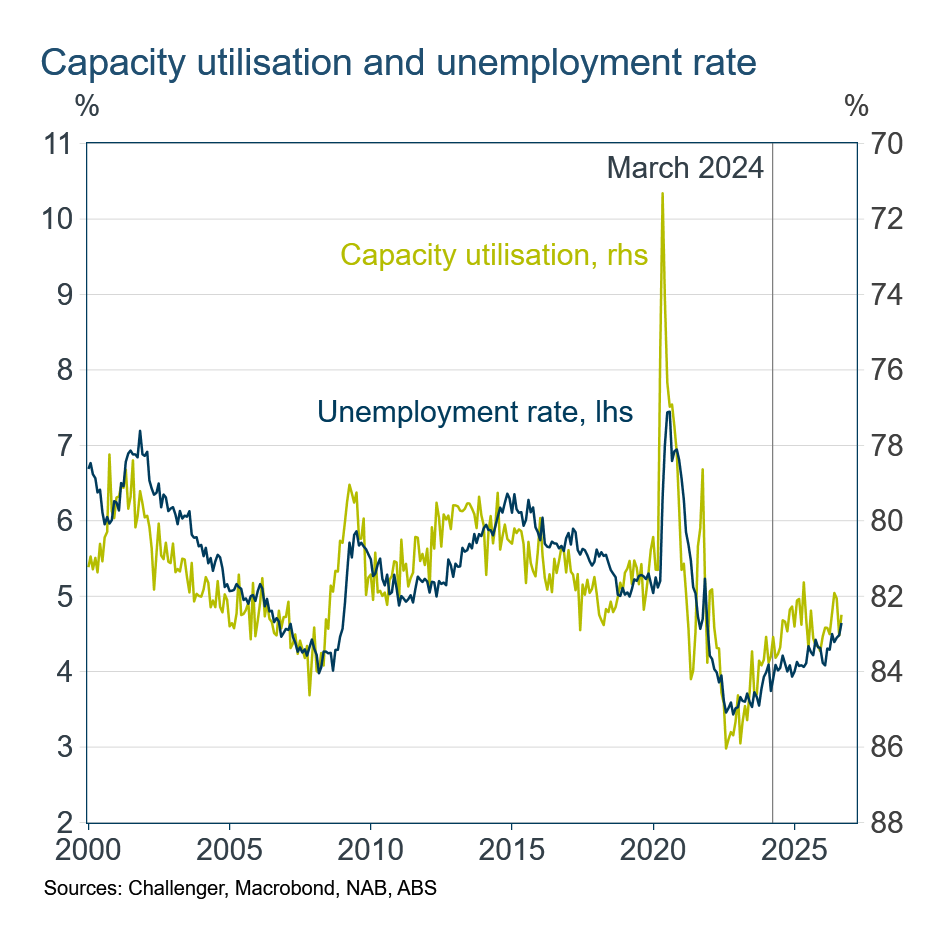
Further, the unemployment rate is higher and businesses report more spare capacity than they did in March 2024.

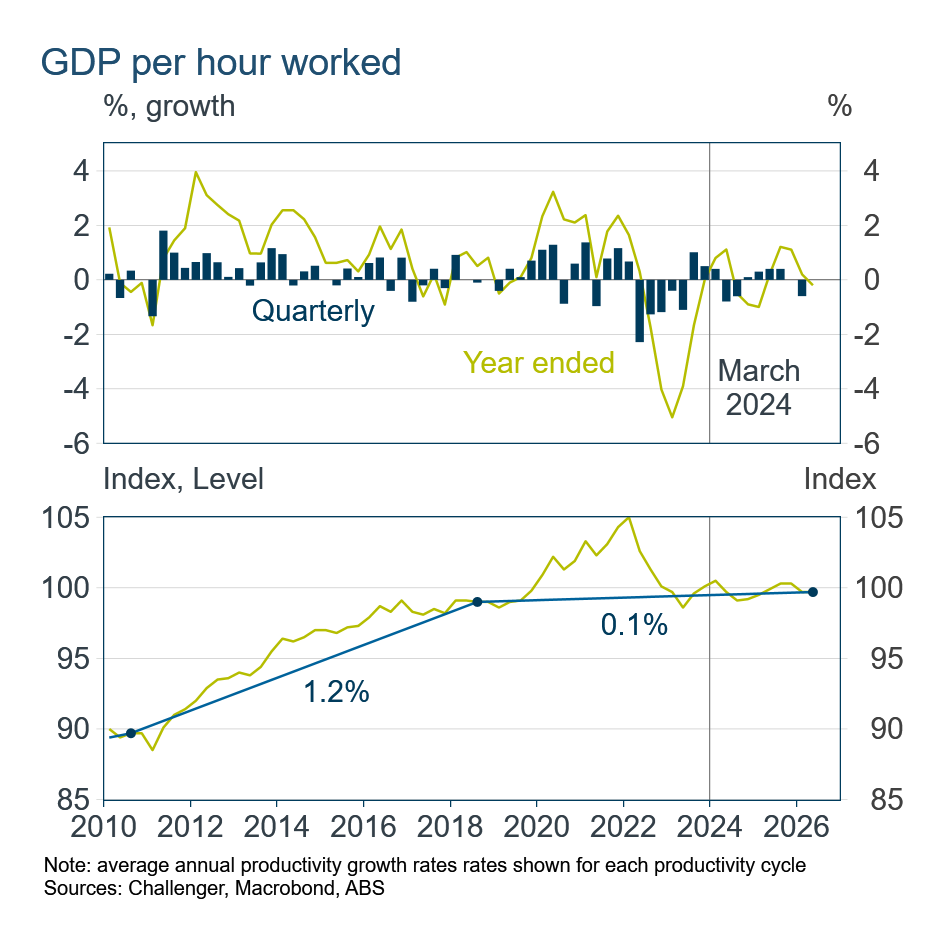
Productivity growth is virtually zero now, just as it was in March 2024. One difference is that the RBA is probably now more resigned to low productivity growth, despite still ‘projecting’ 0.7% growth in its forecasts. In 2024, it more genuinely expected productivity growth to bounce back after the disruption of the pandemic period.
While these observable data look pretty similar to early 2024, the RBA’s estimates of the NAIRU and the neutral rate, two key variables that are inferred rather than observed, have increased.
The NAIRU, or ‘full employment’, is the unemployment rate that puts neither upward nor downward pressure on inflation. In 2024, the RBA thought it was in the range of 4 to 4½%, whereas more recently it has indicated that it is likely closer to 4¾%. That means the increase in unemployment has not slowed inflation as much as you might have thought at face value.
The neutral rate is the level of the cash rate that is neither restrictive nor expansionary. The RBA has stated that it estimates the neutral rate has increased since the pandemic.
The increases in the NAIRU and the neutral rate both imply that a higher cash rate is needed for any given set of economic conditions.
The increase in inflation in the second half of 2025 implies that policy before then was not tight enough, specifically that the easing in 2025 was too early or too fast. While that appears obvious with hindsight it was not necessarily the wrong decision at the time. Based on the slowing in inflation and wages growth, easier monetary policy seemed justified in 2025. But, we now know that demand was still stronger than supply, so we can better judge that policy was not as tight as the RBA thought.

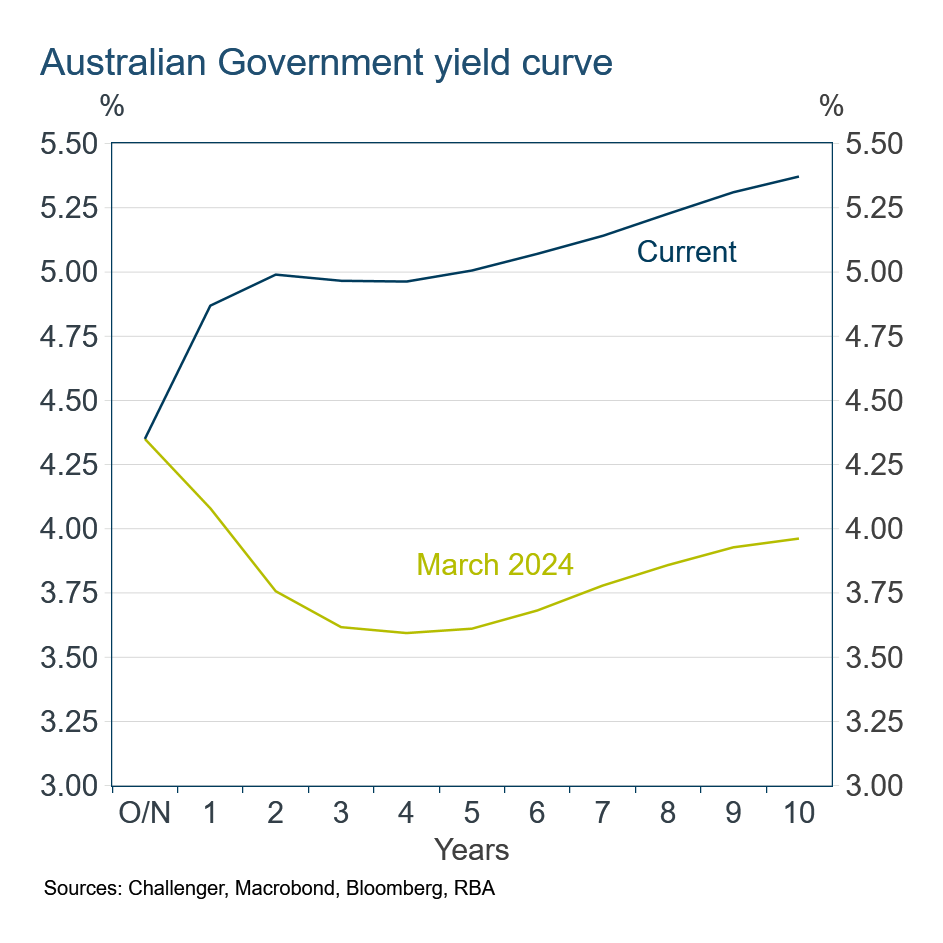
In 2024, the market expected the next move in the cash rate to be down, so the front end of the yield curve was downward sloping. Now, the market expects there may be more hikes. In addition, the long end of the curve has been pushed substantially higher globally by heavy borrowing from hyperscalers and profligate governments. Those long-term interest rates are very attractive for investors, but they have a much less restrictive impact on the Australian economy than in other countries because most borrowing in Australia is at variable interest rates.

The RBA is focused on not repeating the 2025 policy ‘error’ that led to resurgent inflation. Inflation has been above target for most of the past five years, so the policy risks are heavily skewed: persistently high inflation would push inflation expectations higher, making the economy much harder to manage.
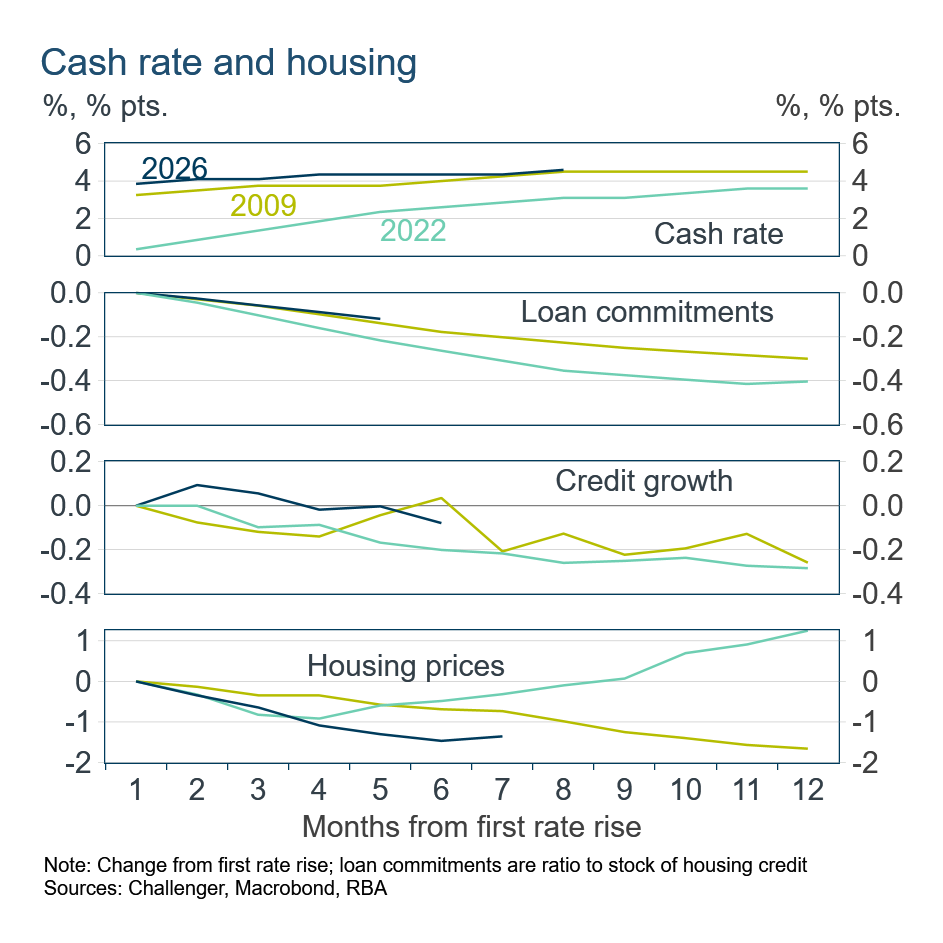
So how is the cash rate currently affecting the economy? As the RBA has said, policy is restrictive. The transmission of cash rate increases is progressing much as it did in 2009, when the cash rate rose to 4.75% in response to trimmed mean inflation peaking at 4.8%. Commitments for new housing loans, housing credit growth and housing prices have all slowed at a similar pace to 2009.

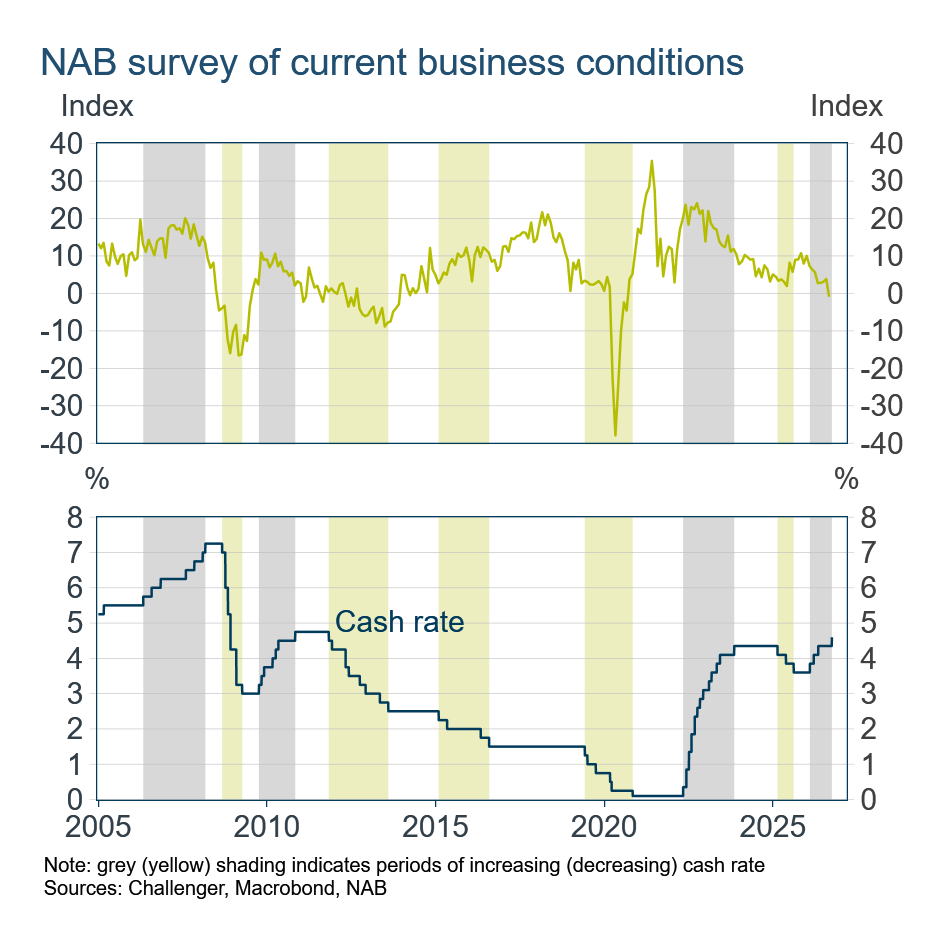
Similarly, business conditions have eased at a similar pace in the current cycle and the 2009 episode. Monetary policy is working. The question is whether the RBA has the patience to let inflation slow gradually, given that five years of high inflation have skewed the policy risks. A further hike, which would come in November, is touch and go. Any sign of resurgent inflation, or of economic activity not slowing as expected, would force the RBA to hike.